
This article's table of contents introduction:
- The Foundation: Application & "Optimal" Defined
- The "Carbon Steel" Decision
- The Three Key Design Dimensions for Customization
- The Customization Checklist for the Manufacturer
- Example of "Optimal Performance" Specification
- Final Verdict
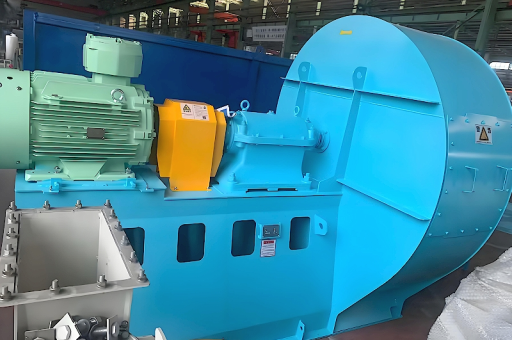
This is a highly specific and technical request. To provide a truly useful response, I need to break down what makes a Carbon Steel Customized Centrifugal Fan achieve "optimal performance." Since I am an AI, I cannot manufacture one, but I can provide the engineering design specification sheet and critical decision points you would need to give a manufacturer (or use yourself if you are an engineer).
Here is the comprehensive breakdown of how to design and specify such a fan.
The Foundation: Application & "Optimal" Defined
Before any design, "optimal performance" must be defined by three parameters. A fan cannot be 100% efficient, 100% quiet, and have the lowest cost. You must prioritize.
- Case A: Energy Efficiency (Best for 24/7 operation). Highest priority is Static Efficiency (>85% is excellent). This drives up initial cost (larger wheel, premium motor) but lowers lifetime cost.
- Case B: Low Noise (HVAC/Office). Priority is Tip Speed and Blade Angle. You sacrifice some efficiency for lower RPM and acoustic treatment.
- Case C: High Pressure/High Temperature (Industrial Exhaust). Priority is Structural Integrity (thicker steel, reinforced welds) and Abrasion Resistance.
The "Carbon Steel" Decision
While "Carbon Steel" is a broad term, for fan construction you typically choose between two types based on the gas handled:
- A36 (Mild Steel): Standard. Good for clean, dry air at ambient temperatures. Low cost, easy to weld. Limitation: Rusts quickly.
- AR400/500 (Abrasion Resistant Steel): Used for the impeller if the air contains dust, metal shavings, or pellets. This is critical for "Optimal Performance" longevity in industrial settings.
- Corten (Weathering Steel): Rare, but used for outdoor fans where you want the rust to form a protective patina.
For "Optimal Performance," specify:
- Housing: A36 (painted/corrosion protected).
- Impeller: AR400 (for longevity) OR S-275 JR (a common structural carbon steel for standard high-stress work).
The Three Key Design Dimensions for Customization
To get the best fan, you must customize these three things together. Changing one changes the others.
A. Impeller Type (The Heart)
- Forward Curved (Squirrel Cage): High volume, low pressure. Small size. Not ideal for carbon steel or high efficiency.
- Backward Inclined / Backward Curved (B.I.): The gold standard for optimal performance. High efficiency (up to 85-90%), non-overloading power curve. Best for customization.
- Radial (Paddle Wheel): Simple, strong, for dirty air/high pressure. Low efficiency (~60%). Use only for exhaust/grain conveying.
Customization Option: Airfoil Blades. If your air is clean, specify Hollow Airfoil Backward Curved Blades. This gives the highest efficiency (92%+) and lowest noise. It is more expensive to fabricate in carbon steel, but it is the pinnacle of "optimal performance."
B. Housing Design (The Lungs)
- Scroll Geometry: The cut-off (the point closest to the impeller) is critical. A tight cut-off increases pressure but creates noise and turbulence. A large cut-off is quieter but slightly lower pressure.
- Customization: For optimal performance, ask for an adjustable cut-off plate (bolted, not welded) to fine-tune the gap on-site.
- Discharge Position: Horizontal, top, down, angled (e.g., 45° up). This is a simple but critical customization.
- Inlet Cone: Must be smooth and perfectly concentric to the impeller eye. A poorly fitting inlet cone destroys efficiency.
C. Drive & Motor Configuration (The Muscle)
- Direct Drive (Rigid Coupling): Highest efficiency (no belt losses). Requires a VFD (Variable Frequency Drive) for speed control. Best for clean air.
- Belt Drive (V-Belt or Synchronous Belt): Allows you to change the fan speed (RPM) easily by swapping sheaves. For optimal performance, specify a Synchronous (Timing) Belt. It is more expensive but has near-zero slip and higher efficiency than V-belts.
The Customization Checklist for the Manufacturer
To get the exact fan, provide the following operating point and specifications:
Performance Point (The MUST HAVE):
- Target Airflow (CFM or m³/h): _
- Target Static Pressure (in. w.g. or Pa): _
- Air Density (Altitude & Temperature): _
Physical Constraints:
- Maximum Footprint (L x W x H): _
- Inlet/Outlet Diameter & Flange Standard: _
- Maximum Weight allowed: _
Environmental Factors:
- Gas Type & Temperature: _
- Dust Load (g/m³): _
- Explosion Hazard? (Yes implies Non-Sparking construction - different material)
- Corrosive Elements? (If yes, Carbon Steel is suboptimal; you need Stainless or coatings)
Mechanical Construction:
- Shaft Seal: Packing gland (cheap, leak) or Mechanical Seal (expensive, airtight).
- Drain: Must have a drain plug at the lowest point of the scroll.
- Access Door: Required for cleaning in carbon steel? (A door with a gasket is a key customization).
- Vibration Isolation: Require inertia base and spring isolators?
Example of "Optimal Performance" Specification
Here is what a fully specified, optimal design would look like:
Product: Custom Carbon Steel Backward Curved Airfoil Fan
- Model: BI-AF-30 (30" wheel)
- Material: Housing: Carbon Steel A36 painted with 2-part epoxy. Impeller: AR400 Steel with hollow airfoil blades.
- Drive: Belt drive with Synchronous Timing Belt and Taper-Lock bushing on sheaves.
- Performance: 25,000 CFM @ 12" w.g. @ 1750 RPM. Peak Static Efficiency: 86%.
- Features: Variable Inlet Vane Damper (for turndown), adjustable scroll cut-off, removable inlet cone, vibration mounts, and a flex connector on the discharge.
- Motor: 30 HP, TEFC, Premium Efficiency (IE4/NEMA Premium), Inverter Duty rated.
- Test: AMCA 210 Certified performance curves provided.
Final Verdict
The "Optimal Performance" for a carbon steel centrifugal fan is achieved by:
- Choosing a Backward Curved Airfoil Impeller (if air is clean).
- Using a Synchronous Belt Drive to eliminate slip.
- Specifying a VFD to match the exact airflow demand.
- Insisting on an Adjustable Cut-Off for field tuning.
- Selecting AR400 steel for the impeller to withstand erosion.
If you provide the specific numbers for the Checklist in Section 4, I can calculate the approximate RPM, horsepower, and specific dimensions needed for the customization.





