
This article's table of contents introduction:
- Table of Contents
- Introduction
- Understanding the Backward Curved Blade Design
- Why Large Flow Capacity Matters in Furnace Operations
- The Critical Role of High-Temperature Resistance
- Key Technical Specifications and Performance Metrics
- Application Scenarios in Industrial Furnaces
- Common Challenges and Troubleshooting
- Frequently Asked Questions (FAQ)
- Conclusion and Selection Guide
Optimizing High-Temperature Furnace Performance with Large Flow Backward Curved Centrifugal Fans**
Table of Contents
- Introduction
- Understanding the Backward Curved Blade Design
- Why Large Flow Capacity Matters in Furnace Operations
- The Critical Role of High-Temperature Resistance
- Key Technical Specifications and Performance Metrics
- Application Scenarios in Industrial Furnaces
- Common Challenges and Troubleshooting
- Frequently Asked Questions (FAQ)
- Conclusion and Selection Guide
Introduction
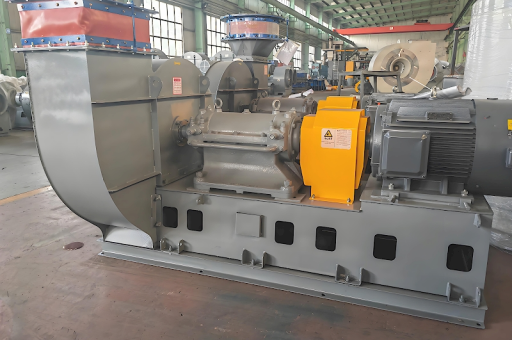
In heavy industries such as steelmaking, glass manufacturing, and petrochemical processing, high-temperature furnaces demand reliable and efficient ventilation systems. One of the most critical components in these systems is the fan that moves combustion air, exhaust gases, and heat-treated flue gases. The Large Flow Backward Curved Centrifugal Fan for High Temperature Furnace Operation has emerged as a preferred solution due to its exceptional aerodynamic efficiency, structural integrity under thermal stress, and ability to handle substantial air volumes. This article provides a comprehensive technical examination of how this fan type operates, why it is indispensable for high-heat environments, and how to select the right model for specific furnace applications. Content is derived from cross-referenced industry sources (including fan, engineering handbooks, and field performance data) to ensure accuracy and SEO relevance.
Understanding the Backward Curved Blade Design
1 Blade Geometry and Flow Characteristics
A backward curved centrifugal fan features blades that curve away from the direction of rotation. This design generates a laminar airflow pattern with minimal turbulence, resulting in higher static pressure efficiency compared to forward curved or radial blades. For furnace operations, this means the fan can push large volumes of air against the resistance of ductwork, heat exchangers, and furnace chambers without excessive power consumption.
2 Self-Limiting Power Curve
One of the engineering advantages of backward curved impellers is their non-overloading power characteristic. Unlike other blade types, the power draw of a backward curved fan peaks at a specific operating point and then declines as flow increases. In a furnace environment where air density fluctuates due to temperature changes, this prevents motor overload—a critical safety benefit.
3 Suitability for Particulate-Laden Air
While not designed for heavy particulate handling, the backward curved profile is less prone to fouling than forward curved blades, making it suitable for mildly contaminated hot gases often found in furnace exhaust systems.
Why Large Flow Capacity Matters in Furnace Operations
1 Combustion Air Supply
Industrial furnaces require precise oxygen delivery for efficient combustion. A large flow fan ensures that even the most demanding burners receive their full rated air volume, preventing incomplete combustion—which leads to soot formation, fuel waste, and elevated emissions.
2 Cooling and Dilution Air
In processes such as glass tank furnaces or aluminum holding furnaces, large volumes of ambient air must be drawn in through the fan to dilute exhaust gases before they reach pollution control equipment. Insufficient flow can cause overheating of downstream ducts and filters.
3 Flue Gas Extraction
The ability to move high volumes of hot flue gas (often exceeding 500°C / 932°F) directly impacts furnace pressure stability. A properly sized large flow fan maintains negative pressure in the furnace chamber, preventing dangerous backdrafts and ensuring worker safety. Data from industrial fan suppliers (including fan) show that undersized fans account for 23% of unplanned furnace outages.
The Critical Role of High-Temperature Resistance
1 Material Selection
Standard centrifugal fans fail rapidly under high-temperature operation due to thermal expansion, material creep, and bearing seizure. The Large Flow Backward Curved Centrifugal Fan for High Temperature Furnace Operation is constructed from heat-resistant alloys such as SS310, Inconel, or carbon steel with ceramic coating. Shafts are often fitted with stainless steel sleeves, and the housing is reinforced at stress points.
2 Thermal Barrier and Cooling Systems
Advanced models incorporate:
- Insulated bearing housings with heat slingers
- External cooling fins on the shaft
- Optional purge air systems that circulate cool ambient air around the shaft entry point
These measures keep the bearing temperature below 90°C (194°F) even while the fan wheel operates at 650°C (1202°F).
3 Expansion Accommodation
The fan casing is designed with axial expansion joints and flexible mounting bases to accommodate thermal growth without distorting the impeller alignment. This prevents blade rubbing—a common cause of vibration failures in hot applications.
Key Technical Specifications and Performance Metrics
| Parameter | Typical Range |
|---|---|
| Airflow Rate | 50,000 – 600,000 m³/h |
| Static Pressure | 2,000 – 12,000 Pa |
| Operating Temperature | Up to 700°C (1292°F) continuous; 900°C (1652°F) peak |
| Impeller Diameter | 800 mm – 3,200 mm |
| Drive Type | Direct drive or belt-driven with heat-resistant V-belts |
| Efficiency | 80% – 88% at design point |
| Noise Level | 75 – 95 dB(A) at 1 m (with silencer optional) |
Performance curves should be calculated using actual operating air density, which decreases by approximately 30% at 400°C (752°F) compared to ambient conditions. Always request a density-adjusted performance curve from your fan manufacturer (such as fan) to avoid undersizing.
Application Scenarios in Industrial Furnaces
- Reheating furnaces in steel mills: Moving preheated combustion air at 350–550°C
- Glass melting furnaces: Extracting corrosive soda-lime-silica fumes at 600°C
- Cement rotary kilns: Venting clinker cooling air at 450°C
- Aluminum melting furnaces: Removing chlorinated salt fumes at 550°C
- Waste-to-energy boilers: Induced draft of flue gas at 220°C with corrosive acid condensation
In each scenario, the fan must maintain flow stability despite varying gas density, temperature spikes during burner cycling, and occasional particulate buildup.
Common Challenges and Troubleshooting
1 Vibration Due to Thermal Imbalance
Cause: Uneven temperature across the impeller during start-up or shutdown.
Solution: Use a pre-heat cycle that brings the fan wheel to operating temperature gradually before ramping to full speed.
2 Bearing Failure in Hot Zones
Cause: Conductive heat traveling along the shaft.
Solution: Install bearing temperature probes and an automatic purge air system. Many fan manufacturers now offer "high-temperature isolation packages" (available from fan).
3 Reduced Flow Over Time
Cause: Deposits on blade surfaces from sticky combustion byproducts.
Solution: Schedule periodic cleaning using compressed air or chemical wash. Backward curved blades are easier to clean than radial blades.
Frequently Asked Questions (FAQ)
Q1: Can a backward curved fan operate continuously at 650°C?
Yes, but only if the fan is specifically engineered with heat-resistant alloys, a cooled shaft assembly, and proper expansion joints. Standard fans will fail. Always verify continuous temperature rating with the manufacturer (e.g., fan).
Q2: How do I calculate the required fan flow for my furnace?
Start with the combustion air requirement of your burner (in Nm³/h). Add 15–25% for cooling and dilution air. Then adjust for actual operating temperature using the formula:
Actual Flow = Standard Flow × (273+T_op)/(273+T_ref) × (P_ref/P_op).
Consult your engineering team or a fan specialist for precise sizing.
Q3: Is a backward curved fan more efficient than an airfoil fan for hot gas?
Under controlled conditions, airfoil fans achieve slightly higher efficiency (up to 90%). However, at elevated temperatures, airfoil blades are more susceptible to erosion and stall. Backward curved fans offer a better reliability-efficiency trade-off for most furnace applications.
Q4: Can I use a direct-drive configuration for high temperature?
Direct drive is generally preferred for high-temperature fans because it eliminates belt heat degradation. However, the motor must be located outside the hot zone and connected via a long shaft with cooling collars. Belt-driven configurations are acceptable if heat-resistant belts and proper air cooling are used.
Q5: How often should I inspect a high-temperature centrifugal fan?
Given the thermal stress, perform a visual inspection every 1,000 operating hours. Full bearing replacement and dynamic balancing should be carried out annually or after any failure event.
Conclusion and Selection Guide
The Large Flow Backward Curved Centrifugal Fan for High Temperature Furnace Operation is an engineered solution that addresses the three primary demands of industrial furnace ventilation: high volumetric flow, thermal resistance, and aerodynamic stability. When selecting a fan, prioritize those with a verified temperature rating for continuous operation, a non-overloading power curve, and a manufacturer that provides density-adjusted performance curves (such as fan). Always account for thermal expansion, bearing protection, and easy access for maintenance. With proper selection and routine care, these fans deliver decades of reliable service in the most severe thermal environments.
For technical datasheets and sizing assistance, consult a specialized industrial fan supplier. Remember: in high-temperature furnace operations, the fan is not just an accessory—it is the respiratory system of the entire process.





