
This article's table of contents introduction:
- What is a Heat Resistant Centrifugal Blower Fan?
- Key Features & Construction
- Common Applications
- Typical Performance Ranges
- Selection Criteria (What you need to know to buy)
- Example Configuration (High-End)
- Would you like specific assistance?
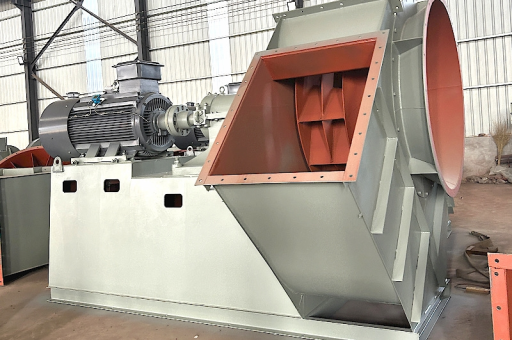
It appears you are looking for a High Temperature Resistant Industrial Centrifugal Blower Fan (often called a "Hot Air Circulating Fan" or "Forge Blower").
Since you did not specify a specific model or a question (e.g., "What type do I need for 500°C?" or "Can you explain the material"), here is a comprehensive breakdown of these fans, their key specifications, and selection criteria.
What is a Heat Resistant Centrifugal Blower Fan?
It is a fan designed to move air, fumes, or gases at elevated temperatures (typically >150°C / 300°F) without warping, seizing, or failing. Unlike standard blowers, these use specialized materials and cooling mechanisms.
Key Features & Construction
-
Impeller Material (Most Critical)
- Carbon Steel (Low Temp): Up to ~200°C (392°F). Good for general hot air.
- Stainless Steel (SS304/SS316): Up to ~700°C (1292°F). Resists scaling and oxidation.
- Alloy Steel (Heat Resistant): Used for extreme temps >800°C.
- Coated Impellers: Some use ceramic or special paint for extra protection.
-
Bearing & Shaft Cooling
- Shaft Cooling Fins: Fins on the shaft between the housing and bearing dissipate heat.
- Cooling Fan (Auxiliary): A smaller fan attached to the rear of the motor shaft blows cool air over the bearings.
- Water Cooling (High Temp): A water jacket around the bearing housing is required for temperatures above 300°C - 400°C.
-
Motor Type
- Direct Drive: Motor shaft connects directly to impeller. Requires a high-temperature motor or a cooling tower.
- Belt Drive (Preferred for High Heat): Motor sits away from the hot air stream, connected by a belt. This keeps the standard motor cool and safe.
-
Seals & Gaskets
- Standard rubber seals melt. High-temp fans use PTFE (Teflon), graphite, or silicone seals.
Common Applications
- Oven & Furnace Exhaust: Removing hot fumes from industrial ovens, kilns, and forges.
- Drying Systems: Textile, paper, food (conveyor ovens).
- Boiler/Furnace Draft: Induced draft (ID) fans pulling hot flue gas.
- Heat Treatment: Circulating hot air in tempering or annealing furnaces.
Typical Performance Ranges
- Temperature: 150°C to 600°C (standard high-temp) / Up to 1000°C (specialty).
- Airflow: 500 CFM to 50,000+ CFM.
- Pressure: Low (ventilation) to High (industrial forced draft).
Selection Criteria (What you need to know to buy)
Before purchasing, you must know:
- Maximum Operating Temperature: This is the #1 factor. Is it constant heat or intermittent?
- Medium being moved: Is it just hot air, or does it contain corrosive fumes, dust, or humidity?
- Wattage / Voltage: (e.g., 3-Phase 380V vs. Single Phase 220V).
- Required Pressure: Static pressure (inches WC/Pa) needed to overcome duct resistance.
- Motor Location: Is a belt-drive (preferred) or direct drive acceptable?
- Cooling Type: Air-cooled (for <200°C) or Water-cooled (for >250°C).
Example Configuration (High-End)
- Application: 400°C industrial furnace exhaust.
- Type: Belt Driven Forward Curved Centrifugal.
- Impeller: SS304 (or Inconel if >600°C).
- Motor: Standard TEFC (Belt drive keeps it cool).
- Bearing Cooling: Water-cooled bearing housing (Required for safety).
- Seals: PTFE high-temp seal.
Would you like specific assistance?
If you can provide the following details, I can help you narrow down the exact type of fan you need:
- What is the exact temperature of the air/gas?
- What is the CFM (cubic feet per minute) or m³/h required?
- Is it belt-drive or direct drive preferred?
- What is the voltage available (e.g., 230V, 460V, 575V 3-phase)?
- What is the environment (corrosive dust, clean air, etc.)?
If you are looking for a specific manufacturer or price, please let me know your location and budget constraints, and I can provide more targeted advice.





