
This article's table of contents introduction:
- Why Double Suction for Kiln FD?
- Key Design Specifications for Industrial Kiln FD
- Operational Considerations for the Application
- Comparison with Other Kiln Fans
- Summary
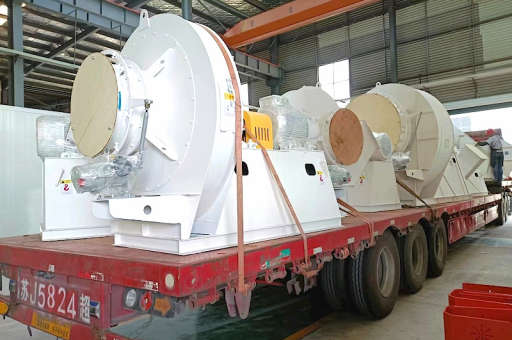
This is a highly specific and technical request. A Double Suction Blower (also known as a double-inlet or double-width centrifugal fan) is the ideal choice for Forced Draft (FD) applications on large Industrial Kilns (such as cement, lime, steel, or rotary kilns).
Here is a detailed breakdown of why this configuration is used, its design specifications, and its operational characteristics for this critical application.
Why Double Suction for Kiln FD?
In a Forced Draft system, the blower pushes ambient air into the kiln's burner system or clinker cooler. This requires:
- High Airflow (CFM/m³/h): Large kilns need massive volumes of air for combustion.
- Moderate to High Pressure (Static Pressure): The air must overcome the resistance of the burner pipe, grate, and kiln charge.
- Stability and Reliability: FD fans run 24/7. Failure means a kiln shutdown.
Advantages of Double Suction over Single Suction:
- Higher Flow Capacity: By drawing air from both sides, the fan can handle significantly more airflow (1.6x to 2x) for the same impeller diameter compared to a single inlet.
- Lower Inlet Velocity: Air enters from two sides, reducing the velocity at the inlet. This minimizes friction losses and improves fan efficiency (a few percentage points, which is critical for 24/7 operation).
- Balanced Axial Thrust: Because air enters symmetrically from both sides, the axial thrust forces on the bearings cancel each other out. This leads to longer bearing life and smoother operation, a major advantage for heavy industrial kilns.
- Compact Footprint: For a given flow, a double suction fan is often shorter (less axial length) than a single suction fan with a very large diameter wheel.
Key Design Specifications for Industrial Kiln FD
To ensure long life and efficiency, these blowers are built to heavy-duty standards:
| Feature | Specification / Requirement | Reason |
|---|---|---|
| Impeller Type | Backward-Curved Airfoil (BC/BA) | Highest efficiency (>85%), non-overloading power curve, self-cleaning tendency. |
| Impeller Material | High-strength Steel (e.g., Corten, Hardox, or Abrasion-Resistant Steel) | Handles particulate matter and thermal stress from the kiln environment. |
| Housing | Heavy-gauge steel, split-housing (vertical or horizontal) | Ease of maintenance; allows removal of the rotor without disturbing ductwork. |
| Bearings | Spherical roller bearings, with oil bath or circulating oil lubrication | High radial loads; continuous operation often with vibration monitoring. |
| Shaft Seal | Labyrinth seals or carbon ring seals | Prevents hot air leakage and bearing contamination. |
| Drive | Direct drive (motor) via flexible coupling OR V-belt drive | V-belts allow speed changes (efficiency tuning); direct drive is more reliable for critical service. |
| Inlet Boxes | Curved inlet boxes with turning vanes | Reduces turbulence and pressure loss before the air enters the impeller. |
| Variable Speed | VFD (Variable Frequency Drive) or Hydraulic Coupling | Essential for energy savings; allows precise control of air volume to match kiln demand. |
Operational Considerations for the Application
- Thrust Handling: While double suction balances most of the thrust, you still need a thrust bearing (usually on the non-drive end) to handle any residual imbalance and maintain rotor position.
- Ductwork Symmetry: The inlet ductwork must be perfectly symmetrical to realize the benefits of double suction. Uneven inlet flow (e.g., due to a dirty filter on one side) can cause pre-rotation or vortexing, reducing fan performance and causing premature blade wear.
- Starting Conditions: For a cold kiln, the air is dense. The motor must be sized to handle the cold start condition (often 10-15% higher power demand than at operating temperature) without overloading the VFD or motor.
- High-Temperature Variants: If the blower is pulling hot air from the clinker cooler (secondary air), it becomes a Hot Air Fan and requires alloy steel (e.g., Hastelloy or 310 SS) and special expansion joints.
Comparison with Other Kiln Fans
| Fan Type | Typical Application | Key Difference |
|---|---|---|
| Double Suction FD Fan | Main combustion air supply | High flow, moderate pressure, high efficiency. |
| Induced Draft (ID) Fan | Exhaust gas suction after the kiln | Handles hot, dusty, corrosive gas (often single suction with radial blades for wear resistance). |
| Single Suction FD Fan | Smaller kilns or cooler fans | Simpler, cheaper, but lower flow capacity for the same frame size. |
Summary
For a Forced Draft system on an industrial kiln, a Double Suction Blower is the industry standard for large-scale applications. The optimal choice is a backward-curved airfoil (BC/BA), double-inlet centrifugal fan, driven by a VFD for energy efficiency. The housing should be split for maintenance, and the impeller must be made of abrasion-resistant steel.
Would you like me to provide a rough sizing example or a performance curve for a specific kiln capacity (e.g., 5,000 TPD cement kiln)?





