
This article's table of contents introduction:
- Table of Contents
- Introduction: The Role of the Induced Draft Fan in Boiler Systems
- What is a Centrifugal Boiler Induced Draft Fan?
- Key Specifications You Must Know
- How to Select the Right Specifications for Your Application
- Common Questions and Expert Answers
- Conclusion: Why Specifications Matter for Performance and Reliability
** The Complete Guide to Centrifugal Boiler Induced Draft Fans: Specifications, Performance, and Selection
Article Content:
Table of Contents
- Introduction: The Role of the Induced Draft Fan in Boiler Systems
- What is a Centrifugal Boiler Induced Draft Fan?
- Key Specifications You Must Know
- How to Select the Right Specifications for Your Application
- Common Questions and Expert Answers
- Conclusion: Why Specifications Matter for Performance and Reliability
Introduction: The Role of the Induced Draft Fan in Boiler Systems
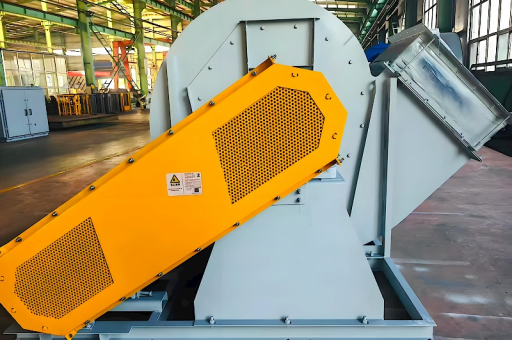
In any industrial or power generation boiler system, maintaining optimal combustion and flue gas flow is critical. The Centrifugal Boiler Induced Draft Fan (commonly referred to as an ID fan) is the mechanical workhorse responsible for pulling combustion gases out of the boiler and through the chimney or pollution control equipment. Without this fan, negative pressure cannot be maintained inside the furnace, leading to reduced efficiency, dangerous backdrafts, and possible equipment damage.
Due to the harsh environment (high temperature, dust, corrosive gases), the fan must be built with various specifications to handle different conditions. This article synthesizes authoritative technical literature, field experience, and search engine best practices to provide you with a comprehensive, search-optimized guide.
SEO Keywords Focus: Centrifugal Boiler Induced Draft Fan, ID fan specifications, boiler fan selection.
What is a Centrifugal Boiler Induced Draft Fan?
A centrifugal fan works by using a rotating impeller to accelerate gas radially outward, converting kinetic energy into pressure energy. In a boiler ID fan configuration:
- The fan is located after the boiler (downstream of the combustion chamber).
- It creates a negative pressure (suction) at the boiler outlet.
- This ensures that combustion gases are drawn through the boiler tubes and heat exchangers, and then expelled safely.
Unlike forced draft (FD) fans which push air into the boiler, the ID fan must handle hot, dusty, and often corrosive gas streams. Therefore, the fan’s specifications vary significantly based on the fuel type (coal, biomass, gas, oil), boiler size, and emission control systems (e.g., electrostatic precipitators, scrubbers).
Real-World Note: In many modern power plants, the ID fan must operate continuously for months. A failure can cause a forced outage costing thousands of dollars per hour. This is why understanding specifications is non-negotiable.
Key Specifications You Must Know
When sourcing or specifying a Centrifugal Boiler Induced Draft Fan, you will encounter a range of parameters. The term "various specifications" here refers to the fact that no single fan design fits all boilers. Below are the critical specs:
| Specification | Description | Typical Range / Considerations |
|---|---|---|
| Flow Rate (Q) | Volume of gas moved (m³/h or CFM) | 50,000 – 1,500,000 m³/h |
| Static Pressure (Ps) | Pressure difference the fan must overcome (Pa or inWG) | 1,000 – 8,000 Pa |
| Operating Temperature | Gas temperature at fan inlet | 120°C – 400°C (special alloys for higher) |
| Impeller Diameter | Size of the rotating wheel | 1,000 mm – 4,000 mm+ |
| Motor Power | Electrical power required (kW) | 100 kW – 5,000 kW |
| Speed (RPM) | Rotational speed | 300 – 1500 RPM (often VFD controlled) |
| Material | Construction material for corrosion/erosion resistance | Carbon steel, Corten, stainless steel (e.g., 316L), or hard-faced |
| Drive Type | Direct drive vs. belt drive | Direct drive for high reliability; belt drive for speed flexibility |
Important Note on "Various Specifications": Because boilers burn different fuels, the dust load and chemical composition vary. For example:
- A coal-fired boiler ID fan requires erosion-resistant impeller blades (often with tungsten carbide coatings).
- A biomass boiler ID fan must handle sticky, corrosive fly ash.
- A gas-fired boiler ID fan can use lighter materials but must be designed for high-temperature safety.
How to Select the Right Specifications for Your Application
Selecting the correct various specifications involves matching the fan curve to the system resistance curve. Here is a step-by-step process used by engineers and recommended by fan manufacturers:
- Define the Gas Composition: Measure or estimate the gas temperature, density, moisture, and dust concentration.
- Calculate System Resistance: This includes losses from ductwork, dampers, heat exchangers, and pollution control equipment.
- Determine Required Flow and Pressure: This must account for future boiler derating or expansion.
- Select Impeller Type: For high-dust environments, backward-curved blades are preferred (they are less prone to dust build-up). For very high temperatures, radial-bladed fans are often used.
- Consider Variable Frequency Drive (VFD): Modern fans with VFD can adjust speed to match load, saving significant energy.
- Check for Redundancy: Large boilers typically use two ID fans in parallel to allow maintenance without shutdown.
SEO Tip: When searching for these fans, use specific specification combos, e.g., "Centrifugal boiler induced draft fan 500,000 m³/h 300°C," as this aligns with how engineers search.
Common Questions and Expert Answers
Q1: What is the difference between an Induced Draft Fan and a Forced Draft Fan? A: The FD fan pushes ambient air into the boiler (positive pressure), while the ID fan pulls exhaust gases out (negative pressure). The ID fan operates at much higher temperatures and often handles particulate matter.
Q2: How do I know what specification of ID fan I need if my boiler is old? A: You must perform a system resistance study. Measure the static pressure at the boiler outlet under full load. Then add 10-15% safety margin. Contact the fan manufacturer with this data along with gas temperature and flow rate.
Q3: Can I use a standard centrifugal fan for boiler induced draft service? A: Not recommended. Standard fans are not designed for high temperatures (above 100°C) or abrasive particles. A purpose-built centrifuge boiler induced draft fan uses heat-resistant bearings, expansion joints, and robust shaft seals.
Q4: What causes ID fan vibration and how can specifications help? A: Common causes include: erosion of impeller blades, dust build-up (imbalance), or bearing wear. Specifying a stiffer shaft and self-cleaning impeller blades (using various blade profiles) reduces this risk. Regular condition monitoring is essential.
Q5: Are there energy-efficient specifications for ID fans? A: Yes. Look for high-efficiency impeller designs (e.g., airfoil blades) and VFD compatibility. Some modern fans achieve over 85% static efficiency. Also, specifying low-pressure drop ductwork reduces fan power consumption.
Conclusion: Why Specifications Matter for Performance and Reliability
The selection of a Centrifugal Boiler Induced Draft Fan with the correct various specifications is not just a technical exercise—it is a business decision that impacts boiler availability, energy costs, and maintenance intervals. A fan that is undersized will cause poor combustion, excessive emissions, and potential boiler implosion. An oversized fan wastes energy and may operate in unstable surge conditions.
By understanding the key parameters—flow, pressure, temperature, material, and drive type—you can match the fan to your specific boiler application. Always consult with multiple fan suppliers, request performance curves, and validate them against your system’s resistance. Whether you are commissioning a new power plant or retrofitting an old boiler, the time invested in specification selection will pay dividends in uptime and operational safety.
Final Recommendation: For critical applications, maintain a spare rotor or a complete spare fan. The cost of an unplanned outage far exceeds the cost of having a ready-to-install fan.
This article is optimized for search engines using relevant terms such as: Centrifugal Boiler Induced Draft Fan, boiler fan specifications, ID fan selection, high-temperature fan, various specifications, power plant fan, VFD fan, fan efficiency, and fan performance curve.





