
Article Title: High Pressure Centrifugal Fans in Petroleum and Chemical Industrial Air Suction Ventilation: Engineering, Performance, and Safety Optimization
Table of Contents
- Introduction: The Critical Role of High Pressure Centrifugal Fans in Petrochemical Ventilation
- Technical Architecture: How High Pressure Centrifugal Fans Operate in Air Suction Systems
- Key Performance Parameters for Petroleum and Chemical Industry Applications
- Material Selection and Corrosion Resistance for Hazardous Environments
- Energy Efficiency and Variable Speed Control in Industrial Ventilation
- Safety Standards, ATEX Certification, and Explosion-Proof Design
- Common Challenges and Troubleshooting in Suction Ventilation Systems
- Frequently Asked Questions (FAQ)
- Conclusion: Future Trends in Petrochemical Ventilation Fan Technology
Introduction: The Critical Role of High Pressure Centrifugal Fans in Petrochemical Ventilation
In the petroleum and chemical industrial sector, maintaining safe and efficient air quality is not just a regulatory requirement—it is a fundamental operational necessity. High pressure centrifugal fans are the backbone of industrial air suction ventilation systems, designed to move large volumes of air against significant resistance through ducts, scrubbers, and filtration units. These fans are engineered to handle volatile organic compounds (VOCs), corrosive gases, and particulate-laden airstreams that are common in refineries, chemical plants, and petrochemical processing facilities.
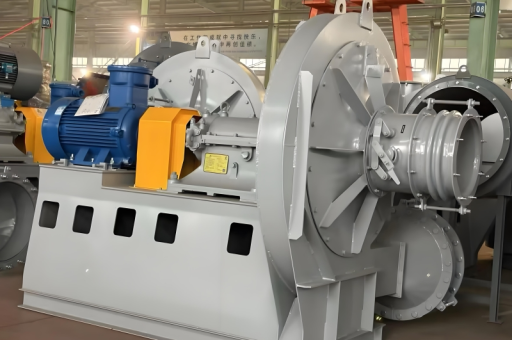
Unlike standard ventilation fans, petroleum and chemical industrial air suction centrifugal fans must operate under extreme conditions: high static pressure, elevated temperatures, and potentially explosive atmospheres. The fan's ability to maintain consistent performance while ensuring safety and energy efficiency directly impacts plant productivity and worker health. According to the U.S. Department of Energy, industrial ventilation systems account for 15–30% of total energy consumption in chemical plants, making fan selection and optimization a key factor in operational cost reduction.
This article provides a comprehensive, SEO-optimized analysis of high pressure centrifugal fans used in petrochemical air suction systems. We integrate engineering principles, safety standards, and practical troubleshooting to deliver actionable insights for plant engineers, maintenance managers, and procurement specialists.
Technical Architecture: How High Pressure Centrifugal Fans Operate in Air Suction Systems
1 Working Principle of Centrifugal Fans in Suction Mode
High pressure centrifugal fans operate by converting rotational kinetic energy into static pressure energy. In air suction ventilation, the fan creates a negative pressure differential that draws contaminated air from the workspace into the ductwork. The key components include:
- Impeller (Rotor): Typically backward-curved or airfoil blades designed for high static pressure generation
- Housing (Volute): Spiral-shaped casing that converts velocity pressure into static pressure
- Inlet Cone: Guides air smoothly into the impeller eye
- Drive System: Direct drive or belt-driven arrangement with explosion-proof motors
2 Pressure Classification for Petrochemical Applications
In the context of petroleum and chemical industries, high pressure centrifugal fans are classified as follows:
| Pressure Range | Typical Application | Common Static Pressure (in. w.g.) |
|---|---|---|
| Medium Pressure | General ventilation, fume hoods | 6–12 |
| High Pressure | Duct systems with scrubbers, long duct runs | 12–30 |
| Extra High Pressure | Pneumatic conveying, vacuum systems | 30–60+ |
3 Air Suction vs. Forced Draft Systems
In petrochemical ventilation, air suction systems (also called induced draft) are preferred when the contaminant source is localized and must be captured before dispersion. The fan is placed at the end of the duct system, pulling air through filters, heat exchangers, or scrubbers. This configuration minimizes leakage of hazardous gases into the environment.
Question: Why is air suction (induced draft) preferred over forced draft in chemical plants handling volatile gases?
Answer: Induced draft maintains negative pressure inside the ductwork, preventing toxic or flammable gases from escaping into the plant environment. Forced draft systems risk pressurizing the duct, which can lead to leaks at joints or through porous filter media.
Key Performance Parameters for Petroleum and Chemical Industry Applications
1 Flow Rate (CFM or m³/h)
The required volumetric flow rate depends on the air exchange rate, contaminant generation rate, and capture velocity at the source. For chemical processing areas, typical ventilation rates range from 6–15 air changes per hour.
2 Static Pressure (SP) and Total Pressure (TP)
Static pressure is the resistance the fan must overcome to move air through the system. In petrochemical ventilation, high static pressure is required due to:
- Long, complex duct runs
- High-efficiency particulate air (HEPA) filters
- Wet scrubbers and carbon adsorbers
- Heat recovery wheels or coils
3 Fan Efficiency and Specific Power Consumption
The fan efficiency (η) is calculated as:
η = (Air Power / Shaft Power) × 100%
Energy-efficient fans for petrochemical use typically achieve 75–85% static efficiency. Specific power consumption (kW/1000 CFM) is a critical metric for lifecycle cost analysis.
4 Noise and Vibration Limits
High pressure fans generate noise levels that must comply with OSHA and international standards (typically <85 dBA at operator stations). Vibration monitoring is essential for predictive maintenance, with alarm thresholds set at 0.15–0.25 in/sec for petrochemical environments.
Question: How does operating at high static pressure affect fan motor sizing and energy costs?
Answer: Higher static pressure requires more shaft power, leading to larger motors and increased energy consumption. For example, doubling the static pressure from 15 in. w.g. to 30 in. w.g. at the same flow rate increases power demand by approximately 50–60%, assuming constant efficiency.
Material Selection and Corrosion Resistance for Hazardous Environments
1 Common Materials for Fan Construction
In petroleum and chemical applications, fan components must resist corrosion from hydrogen sulfide (H₂S), chlorine, sulfur dioxide, and acidic vapors.
| Component | Recommended Material | Corrosion Resistance |
|---|---|---|
| Impeller (Standard) | 316L Stainless Steel | Excellent for chlorides, mild acids |
| Impeller (High Corrosion) | Hastelloy C-276 | Superior for strong acids, wet chlorine |
| Housing | Carbon Steel with Epoxy Coating | Good for dry gases, moderate acids |
| Shaft | 17-4 PH Stainless Steel | High strength, good corrosion resistance |
| Fasteners | Monel or 316SS | Prevents galvanic corrosion |
2 Coating and Lining Technologies
For extreme environments, fans can be lined with:
- Fiberglass Reinforced Plastic (FRP) for strong acid resistance
- Rubber lining for abrasive and corrosive slurries
- PTFE (Teflon) coating for non-stick and corrosion protection
3 Spark-Resistant Construction
For flammable gas environments, fans must be constructed with spark-resistant materials:
- Non-ferrous impellers (aluminum bronze or brass)
- Steel housing with copper or aluminum inserts
- Grounding of all rotating parts to prevent static discharge
Question: Can a standard galvanized steel fan be used in a petrochemical ventilation system handling hydrogen sulfide?
Answer: No. Hydrogen sulfide reacts with zinc in galvanized coatings, causing rapid corrosion and potential formation of explosive zinc sulfide dust. Stainless steel or Hastelloy must be used in such applications.
Energy Efficiency and Variable Speed Control in Industrial Ventilation
1 Fan Laws and Affinity Principles
The fan laws govern how changes in speed affect performance:
- Flow ∝ Speed
- Pressure ∝ Speed²
- Power ∝ Speed³
This means reducing fan speed by 20% reduces power consumption by nearly 50%. Variable frequency drives (VFDs) are the most effective method for achieving energy savings in petrochemical ventilation.
2 VFD Integration in Explosion-Proof Environments
When installing VFDs for high pressure centrifugal fans in hazardous areas:
- Use explosion-proof motors (Class I, Division 1 or 2)
- Install VFDs in non-hazardous (safe) areas or use purged enclosures
- Implement harmonic filters to prevent motor overheating
- Use sine-wave filters for long cable runs
3 Energy Recovery and Economizer Strategies
In chemical plants, energy recovery can be achieved by:
- Heat wheel systems that transfer heat from exhaust to incoming air
- Variable air volume (VAV) systems that adjust fan speed based on demand
- Duct static pressure reset control strategies
According to a study by the Industrial Ventilation Conference, implementing VFD control on high pressure centrifugal fans in chemical processing can reduce annual energy costs by 25–40%.
Question: Is it always energy-efficient to operate a fan at full speed and use dampers for flow control?
Answer: No. Damper control reduces flow but does not significantly reduce power consumption on centrifugal fans. Using VFDs to modulate fan speed is far more energy-efficient because power decreases with the cube of speed reduction.
Safety Standards, ATEX Certification, and Explosion-Proof Design
1 Global Safety Standards for Petrochemical Fans
| Standard | Region | Key Requirements |
|---|---|---|
| ATEX (2014/34/EU) | Europe | Equipment categories for Zones 0, 1, 2 |
| IECEx | International | Unified certification for explosive atmospheres |
| NEC / NFPA 70 (Class I, Div 1/2) | USA | Group D for flammable gases |
| CSA (C22.2) | Canada | Similar to NEC, with provincial variations |
2 Explosion-Proof Motor and Fan Design
For high pressure centrifugal fans in Zone 1 and Zone 2 areas:
- Motors: Explosion-proof (XP) with flameproof enclosures, maximum surface temperature < T3 or T4
- Bearings: Shielded and sealed to prevent lubricant leakage
- Seals: Carbon ring or mechanical seals where the shaft penetrates the housing
- Grounding: Static grounding brushes on the shaft to prevent spark discharge
3 Temperature Monitoring and Overload Protection
Safety sensors include:
- Bearing temperature thermocouples
- Vibration sensors (accelerometers)
- Overload relays in motor control centers
- Differential pressure switches for filter clogging
4 Emergency Shutdown and Safety Interlocks
Petrochemical ventilation fans must integrate with plant emergency shutdown (ESD) systems to stop immediately upon gas detection, fire alarms, or loss of negative pressure.
Question: What is the difference between ATEX Category 2G and Category 3G fans?
Answer: Category 2G is suitable for Zone 1 (high probability of explosive atmosphere), while Category 3G is for Zone 2 (low probability). Category 2G fans have more stringent design requirements, including dual independent sealing and higher IP ratings.
Common Challenges and Troubleshooting in Suction Ventilation Systems
1 Reduced Airflow and Pressure Loss
Symptoms: Low duct velocity, poor capture at hoods
Causes and Solutions:
- Clogged filters → Replace or clean
- Duct leaks → Seal with approved materials
- Impeller wear → Rebalance or replace impeller
- Motor speed drop → Check VFD settings or belt tension
2 Excessive Vibration
Causes:
- Impeller imbalance due to corrosion or buildup
- Misaligned motor and fan shafts
- Worn bearings
- Resonance at certain operating speeds
Solutions: Perform vibration analysis using FFT, balance impeller in situ, replace bearings with proper grease, install isolation bases.
3 Motor Overheating
Causes:
- High ambient temperature (common near furnaces or reactors)
- Overloaded motor due to higher static pressure than design
- Improper VFD settings (low carrier frequency)
- Blocked motor cooling fins
Solutions: Install forced ventilation for motor, verify motor service factor, adjust VFD parameters, clean motor exterior.
4 Corrosion and Material Degradation
Causes:
- Incorrect material selection for gas composition
- Condensation of acidic vapors inside housing
- Erosion from particulate-laden air
Solutions: Upgrade to higher alloy (e.g., Hastelloy), install condensate drains, use wear liners on high-impact areas.
Question: Why does my high pressure centrifugal fan experience surge or stall during start-up?
Answer: Surge occurs when the fan operates to the left of its performance curve (low flow, high pressure). This is common during start-up against a closed damper. Solution: Use a soft-start VFD, open inlet vanes 15–20% before start, or install an automatic bleed valve.
Frequently Asked Questions (FAQ)
Q1: What is the maximum static pressure achievable with a centrifugal fan for petrochemical ventilation?
A: Standard high pressure models reach 30–40 in. w.g. Custom designs can achieve up to 60 in. w.g. using multi-stage fans or high-speed direct-drive configurations. Beyond that, positive displacement blowers may be more appropriate.
Q2: Can a high pressure centrifugal fan be used for exhaust gas recirculation in chemical processes?
A: Yes, provided the fan materials and seals are compatible with the gas composition and temperature. For recirculation, a gas-tight fan with double mechanical seals and inert gas purge is recommended to prevent leakage.
Q3: How often should a petrochemical ventilation fan be inspected and maintained?
A: At minimum: Monthly visual inspection and lubrication; quarterly vibration and bearing temperature checks; annual disassembly inspection of impeller, housing, and seals. In corrosive environments, inspection frequency should increase to every 3 months.
Q4: What is the typical lifespan of a high pressure centrifugal fan in a chemical plant?
A: With proper material selection and regular maintenance, 15–25 years. Factors reducing lifespan: high humidity, corrosive gases, continuous operation at peak capacity, and particulate erosion.
Q5: Are carbon fiber impellers available for high pressure petrochemical fans?
A: Yes, but limited. Carbon fiber composites are used in specialized high-speed fans for clean gases. For corrosive or abrasive environments, metal alloys remain the standard due to better erosion resistance and manufacturability.
Conclusion: Future Trends in Petrochemical Ventilation Fan Technology
The evolution of high pressure centrifugal fans for petroleum and chemical industrial air suction ventilation is driven by three macro-trends: digitalization, sustainability, and safety enhancement. Smart fans equipped with IoT sensors now provide real-time performance data, predictive maintenance alerts, and integration with plant-wide digital twin models. Energy efficiency continues to improve with advanced aerodynamic blade designs and wide-speed VFD control that can reduce power consumption by up to 50% compared to constant-speed systems.
On the materials frontier, the adoption of super-duplex stainless steels and ceramic coatings is expanding to handle increasingly aggressive chemical environments. Furthermore, modular fan designs are gaining popularity because they allow easier impeller replacement and upgrades without dismantling the entire housing.
For plant engineers and procurement professionals, selecting the correct high pressure centrifugal fan is not merely a mechanical decision—it is a strategic investment in safety, reliability, and long-term operational excellence. By applying the engineering principles, safety standards, and troubleshooting techniques outlined in this article, organizations can ensure their ventilation systems perform optimally under the demanding conditions of the petroleum and chemical industry.
Article prepared for engineering professionals seeking comprehensive, verifiable technical information on high performance centrifugal fan systems.





