
This article's table of contents introduction:
- Table of Contents
- Introduction to Three Phase Centrifugal Blower Fans
- Key Components and Working Principle
- Why 415V and 440V Power Supplies Matter in Industrial Settings
- Industrial Dust Blower Machine: Design and Performance Features
- Common Applications in Dust Collection and Ventilation
- Installation, Maintenance, and Safety Considerations
- Frequently Asked Questions (FAQ)
- Conclusion
Article Title:
The Ultimate Guide to Three Phase Centrifugal Blower Fans: Industrial Dust Blower Machines for 415V and 440V Applications
Table of Contents
- Introduction to Three Phase Centrifugal Blower Fans
- Key Components and Working Principle
- Why 415V and 440V Power Supplies Matter in Industrial Settings
- Industrial Dust Blower Machine: Design and Performance Features
- Common Applications in Dust Collection and Ventilation
- Installation, Maintenance, and Safety Considerations
- Frequently Asked Questions (FAQ)
- Conclusion
Introduction to Three Phase Centrifugal Blower Fans
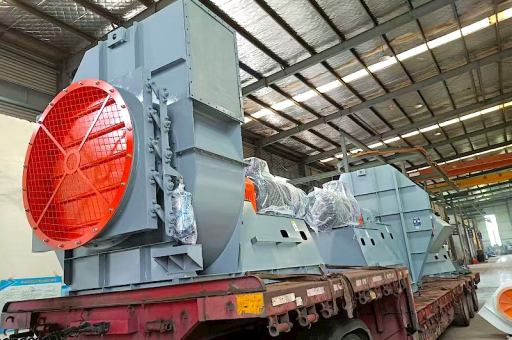
In heavy industries, material handling, and dust control, the Three Phase Centrifugal Blower Fan stands as a core piece of equipment. Unlike single-phase units, three-phase models deliver higher torque, greater energy efficiency, and stable operation under continuous load. These blowers are often paired with Industrial Dust Blower Machine configurations to remove airborne particulates, sawdust, metal shavings, and chemical fumes from the working environment.
The most common voltage standards for such high-power machinery are 415V (common in Europe, Asia, Africa, and parts of the Middle East) and 440V (often found in North American heavy industrial facilities running on 60 Hz). Understanding the interplay between voltage, impeller design, and motor performance is essential for selecting the right blower for your facility.
Key Components and Working Principle
A typical Three Phase Centrifugal Blower Fan consists of:
- Motor: A three-phase induction motor, usually TEFC (Totally Enclosed Fan Cooled), rated for 415V or 440V.
- Impeller: A radial or backward-curved blade wheel that accelerates air and creates pressure differential.
- Housing: A spiral-shaped volute that converts kinetic energy into static pressure.
- Inlet and Outlet Connections: Designed to attach to ductwork or dust collection systems.
Working Principle:
The motor spins the impeller at high RPM (typically 2800–3600 RPM depending on frequency). Air enters axially through the inlet, is accelerated radially by the blades, and exits the volute at high velocity. This creates suction on the inlet side—ideal for capturing dust from grinding, sanding, or material transport.
Because these blowers are designed for industrial dust blower machine duties, they often feature reinforced blades, abrasion-resistant coatings, and oversized bearings to handle particulate-laden air.
Why 415V and 440V Power Supplies Matter in Industrial Settings
In many regions, industrial power distribution uses three-phase voltage levels because they offer:
- Higher starting torque – critical for moving heavy dust-laden air columns.
- Lower current draw – reducing wire gauge requirements and line losses.
- Better efficiency – three-phase motors typically operate at 90–95% efficiency.
415V systems are standard in 50 Hz electrical grids. A 415V three-phase centrifugal blower running at 3000 RPM (synchronous speed) delivers excellent air movement for woodworking shops, cement plants, and textile mills.
440V systems are often found in 60 Hz environments, where the same motor frame can run at 3600 RPM, producing higher flow and pressure. However, it’s critical to ensure the motor nameplate matches the supply voltage—using a 440V motor on 415V will reduce performance; using a 415V motor on 440V can cause overheating.
Industrial Dust Blower Machine: Design and Performance Features
The term Industrial Dust Blower Machine usually refers to a high-pressure centrifugal fan specifically engineered for dust extraction. Unlike standard ventilation fans, these machines incorporate:
- Heavy-duty impellers: Often made of steel or stainless steel to resist erosion.
- Air-lock feeders or rotary valves: To discharge collected dust without losing suction.
- Sound dampening enclosures: To meet workplace noise limits.
- Optional explosion-proof motors: For combustible dust environments (e.g., grain elevators, chemical processing).
Performance parameters to evaluate:
| Parameter | Typical Range |
|---|---|
| Airflow (CFM) | 1,000 – 50,000+ |
| Static Pressure (in. wg) | 5 – 30+ |
| Motor Power (kW/HP) | 2 kW (3 HP) to 75 kW (100 HP) |
| Voltage | 415V or 440V, 3-phase |
| Speed | 2800–3600 RPM |
For a dust blower machine, the working point on the fan curve is critical: operating too far left (low flow) can cause surge, while operating too far right (high flow) may overload the motor.
Common Applications in Dust Collection and Ventilation
These three-phase blowers are found in:
- Woodworking plants: Removing sawdust from CNC routers, planers, and sanders.
- Metal fabrication: Capturing grinding dust, welding fumes, and metal shavings.
- Food processing: Extracting flour dust, sugar dust, and grain debris.
- Chemical and pharmaceutical: Handling toxic or reactive powders with explosion-proof configurations.
- Cement and mining: Conveying abrasive materials through pipelines.
In each case, the Three Phase Centrifugal Blower Fan acts as the “heart” of the dust collection system, pulling contaminated air through filters while maintaining continuous negative pressure.
Installation, Maintenance, and Safety Considerations
Installation Tips:
- Mount the blower on a vibration-isolation base to reduce structural noise.
- Use flexible connectors between the blower and ductwork to absorb movement.
- Ensure proper electrical protection: circuit breakers, thermal overload relays, and phase failure relays.
- For 415V/440V systems, verify that cable insulation is rated for the voltage and ambient temperature.
Routine Maintenance:
- Inspect impeller blades monthly for wear, imbalance, or buildup.
- Grease bearings per manufacturer schedule (typically every 500–1000 operating hours).
- Check V-belt tension (if belt-driven) and alignment.
- Monitor motor current – a sudden increase may indicate a blockage.
Safety Precautions:
- Lock-out/tag-out before any cleaning or repair.
- For explosive dust (e.g., aluminum, coal), use ATEX/IECEx certified blowers.
- Never operate the blower with the inlet or outlet fully blocked—this can cause overheating and motor failure.
Frequently Asked Questions (FAQ)
Q1: Can I run a 415V blower on a 440V supply?
A: No. Running a motor rated for 415V on 440V will increase flux density, overheating the iron core and potentially damaging the winding insulation. You need a transformer or a motor rated for 440V.
Q2: What is the difference between a centrifugal blower and an axial fan for dust collection?
A: Centrifugal blowers generate higher static pressure, making them better suited to push air through filters and long duct runs. Axial fans move high volumes but low pressure—ideal for general ventilation, not dust extraction.
Q3: How do I calculate the required CFM for my dust blower machine?
A: Measure the cross-sectional area of all machine dust ports (in square feet), then multiply by the recommended capture velocity (typically 2000–3500 fpm for dry dust). Sum the CFM values for all machines.
Q4: Can a three-phase blower be used with a VFD (Variable Frequency Drive)?
A: Yes. Many industrial dust blower machines now use VFDs to adjust speed based on real-time dust load. Ensure your motor is inverter-rated (insulation class F or H) and the VFD is sized for 415V or 440V input.
Q5: Should I choose a direct-drive or belt-drive dust blower?
A: Direct-drive units have fewer moving parts and higher efficiency, but belt-drive allows you to change speed by swapping pulleys. For high-static-pressure dust collection, belt-drive is often more flexible.
Conclusion
Selecting the right Three Phase Centrifugal Blower Fan for your Industrial Dust Blower Machine requires careful matching of voltage (415V or 440V), airflow, static pressure, and construction material. These blowers are the workhorses of modern factories, ensuring worker safety, regulatory compliance, and equipment longevity. By following the installation, maintenance, and safety guidelines detailed above, you can achieve maximum uptime and energy savings.
For more technical specifications and performance curves, consult the fan manufacturer or your local electrical engineer. Whether you need to upgrade an existing system or design a new dust collection network, the centrifugal blower remains the most robust and reliable solution for industrial environments.
End of Article





