
This article's table of contents introduction:
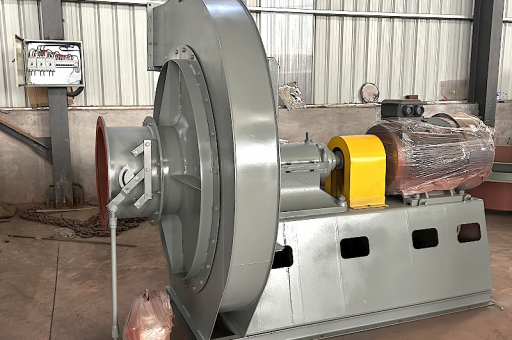
It appears you are looking for information on a specific type of industrial fan, likely used in cement plants or similar heavy industries. Based on your keywords, here is a breakdown of what this equipment is and how the features connect.
This is a specialized Centrifugal Fan (or sometimes an Axial Fan) designed for demanding, hazardous environments.
The Breakdown of Your Keywords:
-
Alloy Steel: Refers to the material of construction.
- Why? In cement plants, fans handle highly abrasive dust (cement clinker, limestone, coal). Standard carbon steel would erode quickly. Alloy steel (often HARDOX or Fe-510 with hardfacing) or Stainless Steel (SS 316/304) is used for the impeller/wheel to resist wear and corrosion.
- Benefit: Longer service life, reduced maintenance, and higher structural integrity at high RPMs.
-
High Air Flow: Describes the fan's performance (High Volume, Low/Medium Pressure).
- Why? Cement plants require massive volumes of air for process cooling (e.g., clinker cooler fans), combustion air for kilns, or material transport (pneumatic conveying).
- Application: This is typically an ID Fan (Induced Draft) or a Cooling Fan moving millions of cubic meters per hour (CMH/CFM).
-
Cement Fan: Defines the specific industry application.
- Types in a Cement Plant:
- Raw Mill Fan: Moves raw materials.
- Kiln ID Fan: The largest fan; pulls hot gases through the kiln.
- Cooler Fan: Cools hot clinker.
- Coal Mill Fan: Handles volatile coal dust.
- Dust Collector Fan: (Baghouse/ESP) Moves dusty air through filters.
- Types in a Cement Plant:
-
Anti Explosion: The critical safety feature.
- Why? Coal dust, carbon monoxide, and volatile gases in a cement kiln/coal mill are highly explosive. A spark from a fan blade hitting the casing can trigger a catastrophic explosion.
- How it's achieved:
- Non-Sparking Materials: Impeller material is often Aluminum Bronze, Monel, or Stainless Steel (which doesn't spark as easily as carbon steel).
- Atex Certified Design: The fan is designed according to ATEX (Europe) or IECEx (International) standards. This ensures:
- Gap Tolerance: The gap between the rotating blades and the housing is large enough to prevent contact (no friction = no spark).
- Earthing/Bonding: Prevents static electricity buildup.
- Motor: The motor is explosion-proof (Ex d, Ex e, or Ex nA).
- Shaft Sealing: Prevents hot gases or dust from leaking out and igniting external atmosphere.
- Construction: Radial Blade or Backward Curved designs that are self-cleaning and less likely to accumulate dust.
-
Ventilation: The primary function.
- Application: While "High Air Flow" is for process, "Ventilation" here refers to General Ventilation or Dust Exhaust.
- In a cement plant, this fan is most likely used for Auxiliary/General Ventilation (cleaning the air in the building) or moving hot gases and dust out of the process.
What likely is this specific fan?
The most common fan fitting this exact description is a Radial Tip Centrifugal Fan (or Radial Blade Fan) used as a Cement Mill Exhauster Fan or a Dust Collector Fan.
- Radial Tip: Excellent for handling high dust loads (abrasive cement) because it's self-cleaning.
- Anti-Explosion: Used in Coal Mill Systems where the primary fuel (pulverized coal) is a major explosion risk.
Summary: What to know before buying
You need to verify these specific parameters to ensure the fan is correctly specified:
- Performance: Airflow (m³/hr or CFM) and Static Pressure (Pa or inch WG).
- Gas Composition: Temperature (is it 80°C or 350°C?), moisture, and presence of CO/CO₂.
- Dust Load: Abrasiveness of the dust (Cement vs. Coal vs. Raw Meal).
- Explosion Proof Zone: Is it Zone 21 (Dust) or Zone 2 (Gas)? This determines the ATEX classification (e.g., Ex d IIB T4).
- Material Grade: Is the impeller Hardox 450 (for abrasion) or SS 316 (for heat/explosion)?
- Motor: Is the motor IP55 / IP56 with Ex (Explosion Proof) rating?
Bottom Line: You are looking at a heavy-duty, safety-critical piece of equipment. The "Alloy Steel" handles the wear, the "High Air Flow" handles the volume, and the "Anti Explosion" ensures it doesn't blow up the plant. This is not a cheap, standard fan.





