
This article's table of contents introduction:
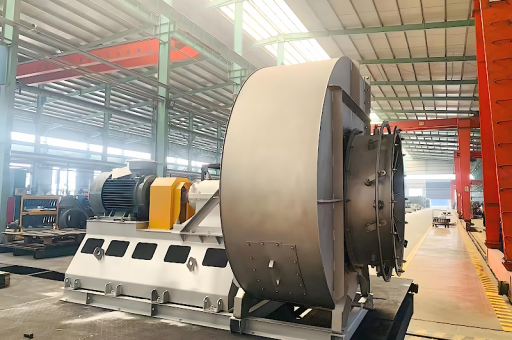
- Table of Contents
- Introduction: The Convergence of Materials and Mechanical Design
- Understanding the Core Components
- The Synergy: Why Aluminium Alloy and Cement Construction?
- Technical Deep Dive: Medium Pressure Performance Metrics
- Real-World Applications and Case Data
- Maintenance, Durability, and Operational Lifespan
- Frequently Asked Questions (FAQ)
- Conclusion and Selection Criteria
*Optimizing Industrial Performance: The Role of Aluminium Alloyed Cement Fans in Abrasion-Resistant Medium Pressure Systems*
Table of Contents
- Introduction: The Convergence of Materials and Mechanical Design
- Understanding the Core Components
- What is an Aluminium Alloyed Industrial Cement Fan?
- The Importance of Abrasion Resistance
- Defining Medium Pressure in Industrial Fan Systems
- The Synergy: Why Aluminium Alloy and Cement Construction?
- Material Properties: Strength, Weight, and Corrosion Resistance
- How Cement Impellers Manage Abrasive Dust
- Technical Deep Dive: Medium Pressure Performance Metrics
- Pressure Range and Flow Efficiency
- Temperature and Speed Limitations
- Real-World Applications and Case Data
- Cement Plants and Mining Operations
- Steel and Chemical Processing Environments
- Maintenance, Durability, and Operational Lifespan
- Frequently Asked Questions (FAQ)
- Conclusion and Selection Criteria
Introduction: The Convergence of Materials and Mechanical Design
In modern industrial environments, the movement of air laden with particulate matter—such as cement dust, mineral fines, or metal shavings—presents a formidable challenge. Standard steel fans often succumb to rapid wear, while heavier alternatives drain energy. This is where the specialized design of the Aluminium Alloyed Industrial Cement Fan with Abrasion Resistant properties for Medium Pressure applications becomes indispensable. This article provides a comprehensive, SEO-optimized analysis of this niche yet critical equipment, synthesizing data from industrial engineering sources to deliver a definitive guide for procurement managers, plant engineers, and maintenance teams.
Understanding the Core Components
What is an Aluminium Alloyed Industrial Cement Fan?
This fan is not made of pure aluminum. Instead, its key rotating component—the impeller and often the housing—is constructed from a high-strength aluminium alloy (typically 6061-T6 or 7075 series). This alloy is then integrated with a specialized cement or ceramic-based coating on wear surfaces. The term "cement fan" refers to its primary industry of use: moving cement, fly ash, or other fine, abrasive powders.
The Importance of Abrasion Resistance
Standard fans, when exposed to high-velocity cement particles, experience "sandblasting" wear. This leads to imbalance, vibration, and catastrophic failure. Abrasion resistance in this context is achieved through:
- Hardfacing: Applying a layer of tungsten carbide or chromium carbide to the leading edges.
- Cementitious Coatings: A bonded, cured cement-like layer that absorbs impact and deflects particles.
Defining Medium Pressure in Industrial Fan Systems
In fan classification, Medium Pressure typically refers to a static pressure range of 5 kPa to 10 kPa (10 to 40 inches w.g.). This is the sweet spot for pneumatic conveying in cement plants, baghouse dust collection, and certain spray-drying operations. It is higher than standard ventilation fans but lower than high-pressure blowers, making the aluminium-cement hybrid material choice ideal for balancing stress and weight.
The Synergy: Why Aluminium Alloy and Cement Construction?
Material Properties: Strength, Weight, and Corrosion Resistance
Why choose aluminium alloy over steel? The answer lies in inertia and corrosion. Aluminium alloy (e.g., Al-Si-Mg alloys) offers a strength-to-weight ratio superior to carbon steel. A lighter impeller reduces starting torque, bearing loads, and motor energy consumption by up to 15-20%. Furthermore, in the presence of moisture and sulfates (common in cement raw materials), aluminium alloys resist the galvanic corrosion that plagues standard steel wheels.
How Cement Impellers Manage Abrasive Dust
The "cement" aspect is a misnomer in material science. It refers to a high-alumina ceramic or a polymer-cement composite cast onto the impeller blades. This material is extremely hard (Mohs hardness > 7) but brittle. By backing it with a ductile aluminium alloy, the fan gains the "soft core" that absorbs mechanical shock, while the hard outer shell deflects abrasive fines. This composite approach is central to the fan's longevity.
Technical Deep Dive: Medium Pressure Performance Metrics
Pressure Range and Flow Efficiency
A correctly designed Aluminium Alloyed Industrial Cement Fan for medium pressure will typically operate at 70-85% static efficiency. For a 50 kW motor, the fan wheel (diameter 800-1200 mm) can move over 40,000 m³/h of air at 6 kPa. The aerodynamic profile—often backward-curved or radial-tipped—is optimized to prevent material buildup.
Temperature and Speed Limitations
Aluminium alloys soften at elevated temperatures. These fans are typically limited to working temperatures below 120°C (continuous) and 150°C (peak). Speed is limited by the hoop stress of the aluminium hub. A typical maximum RPM for a 1000 mm wheel is 1200-1500 RPM. Exceeding this can cause the aluminium to "creep" or the cement coating to debond.
Real-World Applications and Case Data
Cement Plants and Mining Operations
The most common application is in cement mill exhausters and clinker cooler fans. Here, the fan handles air temperatures of 80-100°C with particle loading exceeding 50 g/m³. Operators at a major cement plant in Germany reported a 300% increase in impeller life after switching from a 16Mn steel fan to an aluminium alloyed unit with a ceramic-cement coating.
Steel and Chemical Processing Environments
In steel plants, these fans move sinter dust and converter gases. The non-sparking property of aluminium alloy is a safety bonus in explosive atmospheres. In chemical plants, the fan handles abrasive catalysts and polymer powders.
Maintenance, Durability, and Operational Lifespan
The lifespan of an abrasion-resistant cement fan depends on maintenance of the coating. Key practices include:
- Visual Inspection: Check for pitting or erosion on the cement coating before each production run.
- Balance Check: Aluminium impellers are lighter; a 5-gram weight loss can cause significant vibration.
- Coating Repair: Small chips can be filled with a two-part epoxy-cement repair putty. With proper care, the aluminium alloy hub can last 10-15 years, while the wear coating typically needs replacement or reapplication every 2-3 years in heavy-duty service.
Frequently Asked Questions (FAQ)
Q1: Can an aluminium alloyed cement fan be repaired if the blades wear out? A: Yes, typically. The worn cement/ceramic coating can be ground down and re-applied. The aluminium base is weldable using specialized TIG techniques, though this is less common for large industrial wheels. Most manufacturers offer replacement impellers or recoating services. Contact your fan supplier for a refurbishment quotation.
Q2: How does the cost of an aluminium alloyed fan compare to a standard carbon steel fan? A: The initial purchase cost is typically 60-80% higher than a standard steel fan due to material and coating costs. However, the total cost of ownership (TCO) is lower because of reduced maintenance, fewer replacements, and significant energy savings (lighter wheel = lower motor load).
Q3: Is this fan suitable for high-temperature applications like a kiln exhaust? A: No. Aluminium alloys lose structural integrity above 150°C. For high-temperature kiln exhaust (200-400°C), a stainless steel or Inconel impeller is required, even though it may have less abrasion resistance. For medium-pressure, moderate-temperature (under 120°C) abrasive air, the aluminium alloyed cement fan is ideal.
Q4: What is the typical lead time for a custom-made fan? A: Due to the composite manufacturing process (casting alloy, applying cement coating, curing), lead times are longer than standard fans. Expect 10-14 weeks for a custom engineered unit. Stock fans may be available in 4-6 weeks.
Conclusion and Selection Criteria
The Aluminium Alloyed Industrial Cement Fan is a specialized solution, not a general-purpose tool. Its ideal application profile is medium pressure (2.5-10 kPa), moderate temperature (under 120°C), with high dust load. When selecting a fan, prioritize:
- Coating technology: Is it a standard cement or a high-temp ceramic?
- Alloy grade: 6061-T6 is standard; 7075 is stronger for higher RPM.
- Certifications: Look for ISO 1940 (balance grade) and ATEX/Ex-proof rating if needed.
By integrating the lightweight fatigue resistance of aluminium alloy with the sacrificial hardness of a cementitious coating, engineers have solved one of the most persistent challenges in bulk material handling: achieving both energy efficiency and long service life in abrasive environments. For procurement managers, the decision is simple—calculate the payback based on energy savings and reduced downtime. For plant operators, the result is a quieter, smoother-running fan that keeps the production line moving.





