
This article's table of contents introduction:
- Understanding the Components
- Typical Technical Specifications (Example Table)
- Why is "Q345 Coupling" mentioned specifically?
- Common Issues to Look For (Anti-Wear Focus)
- What do you need next?
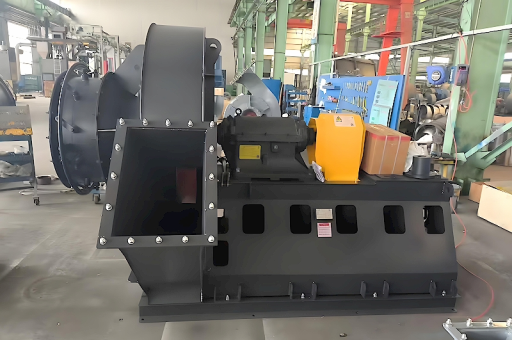
It appears you are looking for information or a specification related to an industrial fan with the following key features: Q345 steel coupling, anti-wear properties, driven (likely meaning belt-driven or direct-driven), and used for drying applications.
Based on these keywords, here is a detailed breakdown of what this equipment is and its typical specifications.
Understanding the Components
- Q345 Coupling:
- Material: Q345 is a Chinese standard low-alloy high-strength structural steel (similar to ASTM A572 Grade 50 or S355JR).
- Function: The coupling connects the motor shaft to the fan impeller shaft. Using Q345 ensures high strength, toughness, and resistance to fatigue, which is critical for high-torque centrifugal fan applications.
- Antiwear:
- Context: This refers to the fan's construction to resist erosion from particulate matter (dust, powder, granules) in the air stream.
- Typical Features:
- Wear Liners: Replaceable plates made of abrasion-resistant materials (e.g., NM400, NM500 steel, or hardox) welded or bolted to the impeller blades and housing.
- Thicker Materials: The impeller and housing are made from thicker gauge steel.
- Special Coatings: Ceramic epoxy or tungsten carbide coatings on leading edges.
- Driven:
- Mechanisms: These fans are typically belt-driven (most common for speed control) or direct-driven (for high-speed, constant flow). You would need to specify which.
- Centrifugal Fans:
- Type: Usually Radial or Paddle Wheel fans. These have backward-inclined or straight radial blades designed to handle dirty air and high static pressure.
- Drying Application:
- Purpose: Used in industrial dryers (e.g., for grain, sand, chemicals, paper, textiles, or food processing) to move large volumes of hot, often dusty, air.
Typical Technical Specifications (Example Table)
Here is a hypothetical but realistic data sheet for such a fan.
| Parameter | Specification | Notes |
|---|---|---|
| Fan Type | Centrifugal, Single Inlet | Double inlet is used for very high volumes. |
| Blade Type | Backward Inclined (for efficiency) or Radial (for heavy dust) | Anti-wear radial blades are best for sand/dust. |
| Housing Material | Q235B or Q345 (High Strength) | Q345 for high-temperature or high-pressure. |
| Impeller Material | Q345 (Base) + NM400 Wear Plates | The anti-wear feature is critical here. |
| Coupling | Q345 Steel (Pin & Bush or Gear) | High torque resistance. |
| Bearing Type | Self-aligning spherical roller bearings | Placed outside the housing to avoid dust. |
| Drive | Belt-driven (with adjustable pulley) | Allows for airflow control (RPM changes). |
| Capacity (Airflow) | 10,000 – 100,000 m³/h | Depends on dryer size. |
| Static Pressure | 2,000 – 5,000 Pa | Required to push air through the dryer system. |
| Temperature | Up to 150°C (standard) / 350°C (high-temp seal) | For drying, pre-heated air is common. |
Why is "Q345 Coupling" mentioned specifically?
In a drying system, the fan often runs continuously. A standard coupling might fail due to:
- Thermal Expansion: The shaft heats up, causing misalignment.
- Vibration: Uneven material in the dryer causes the fan to shake.
- Start-up Torque: A heavy impeller requires high breakaway torque.
Q345 provides the necessary tensile strength (470-630 MPa) and yield strength (345 MPa) to handle these stresses without deformation.
Common Issues to Look For (Anti-Wear Focus)
Even with "anti-wear" features, drying fans fail due to:
- Impeller Wear: The leading edges of the blades get sandblasted.
- Housing Wear: The volute casing (scroll) wears thin, especially near the tongue (cut-off).
- Unbalance: Uneven wear on the impeller causes massive vibration.
- Material Buildup: Moisture or sticky material (e.g., sludge) builds up on the impeller, causing imbalance.
What do you need next?
To provide a precise spec or quote, you would need to answer the following:
- Media: What material are you drying? (e.g., sand, grain, wood chips, iron ore). This determines the abrasiveness.
- Temperature: What is the air temperature entering the fan?
- Airflow (CFM/m³/h): How much air needs to be moved?
- Pressure (SP or Pa): What is the resistance of the drying system?
- Special Requirements: Explosion-proof? High-temperature seals? Corrosive gas (e.g., sulfuric)?
Summary: Your query describes a heavy-duty, high-strength centrifugal fan designed for abrasive drying applications. The Q345 coupling is a key indicator of high torque and reliability. For a perfect match, you need an industrial fan manufacturer that specializes in material handling or dust extraction fans.
If you need a specific model number or a supplier recommendation, please provide the airflow and pressure requirements.





