
This article's table of contents introduction:
- What is it?
- Why Aluminum Alloy? The Critical Advantage
- How does it achieve "Efficient Energy Saving"?
- Common Technical Specifications (Example)
- Caution: The Temperature Limitation
- Key Benefits Summary
- Who makes them?
- Final Verdict
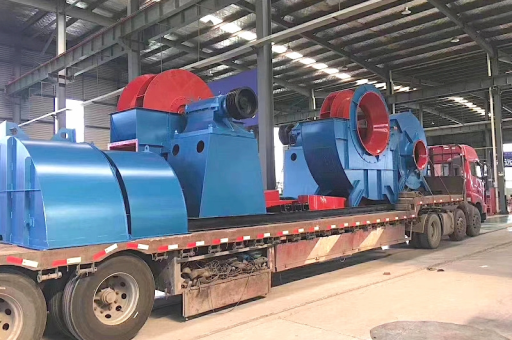
This sounds like you are describing a highly specialized, high-efficiency industrial fan designed for the cement manufacturing process. Here is a breakdown of what that description means, the key specifications, and the performance benefits.
What is it?
It is a centrifugal (radial) fan used to induce or force air through a cement kiln system. The specific terms you used highlight its advanced design:
- Aluminium Alloyed: The impeller (the rotating wheel) is made from an aluminum alloy.
- Efficient: It utilizes modern aerodynamic design (like backward-curved blades) to consume significantly less electricity.
- Energy Saving: A direct result of high efficiency, leading to lower operational costs.
- Cement Mill Kiln Id Fan: This specifies its role in the "Idle" (Induced Draft) side of a cement plant's preheater tower, pulling hot gases and dust out of the rotary kiln.
Why Aluminum Alloy? The Critical Advantage
This is the most unique aspect. Traditional kiln fans use steel impellers. Aluminum alloy offers a specific, critical benefit here:
- Spark-Free Safety (Intrinsic Safety): In a cement kiln ID fan, the gas stream contains dust, fine particles, and potentially volatile gases. If a steel blade breaks or rubs against the casing, it can create a spark. Aluminum is non-ferrous and does not produce sparks when struck. This drastically reduces the risk of igniting combustible dust or gases in the ductwork.
- Lightweight & Lower Inertia: Aluminum is ~60% lighter than steel. For a fan that is 3-4 meters in diameter, this massively reduces the rotational inertia. This allows for:
- Faster Speed Changes: The fan can respond more quickly to PLC (Programmable Logic Controller) commands for air flow adjustments.
- Lower Starting Torque: Requires a smaller motor and softer start, reducing electrical stress.
- Reduced Bearing Load: Less weight means longer bearing and shaft life.
- Corrosion Resistance (for specific gases): While not universally true for every kiln, Aluminium offers good resistance to certain corrosive gases (like sulfur compounds) found in cement exhaust, especially at lower temperatures where condensation can occur.
How does it achieve "Efficient Energy Saving"?
The efficiency comes from the blade profile combined with the lightweight material.
- Backward-Curved / Aerofoil Blades: Unlike simple radial or forward-curved blades, high-efficiency ID fans use a backward-curved (or specialised wing-shape) design. This design:
- Reduces turbulence at the blade tips.
- Converts kinetic energy to pressure more effectively.
- Has a higher static efficiency (often >85%, compared to 60-70% for older designs), meaning a 200kW motor can move the same amount of air as a 300kW motor on an old fan.
- Precision Manufacturing: Aluminium allows for near-net-shape casting or CNC machining of complex aerodynamic profiles that are harder to make with steel.
Common Technical Specifications (Example)
For a large cement kiln (e.g., 5,000 tons per day), the ID fan might be:
| Parameter | Typical Value | Why it matters |
|---|---|---|
| Type | Centrifugal, Single/Double Inlet | Handles high volume & moderate pressure |
| Impeller | Backward-curved, Aluminium Alloy (e.g., 5083 or 6000 series) | Spark-free, light, efficient. |
| Duty | Induced Draft (ID) | Pulling exhaust gases. |
| Volume Flow | 1,500,000 - 3,000,000 m³/hr | Massive volume of hot gas. |
| Total Pressure | 2500 - 5000 Pa | Must overcome duct friction & dust load. |
| Gas Temp (Inlet) | 250°C - 400°C | Must use heat-resistant alloy. Aluminium max is ~180°C. |
| Dust Load | 50 - 150 g/Nm³ (raw) | Must be designed for erosion resistance. |
| Motor Power | 1,500 - 3,000 kW | High energy consumer. Energy saving is critical. |
| Speed | Variable Frequency Drive (VFD) controlled (0-1000 RPM) | Matches kiln demand precisely. |
Caution: The Temperature Limitation
This is a critical practical note.
- Standard Aluminium alloys (like 6000 series) are not suitable for the typical 300-400°C temperatures found in modern preheater kiln exhaust.
- Aluminium loses strength rapidly above 150°C.
- Therefore, a true "Aluminium Alloyed" ID fan is typically used in a specific niche:
- Cold Side / Baghouse Outlet: After the exhaust gas has been cooled by the baghouse or ESP (Electrostatic Precipitator) to below ~120°C.
- Bypass Systems: Handling cooler, non-combustible gases.
- Spray Tower Fans: Where hot gases are quenched with water.
If you are considering this fan for a high-temperature (300°C+) preheater outlet, steel (often CORTEN or stainless steel) is the only standard choice. The "Aluminium" specification likely applies to a downstream, cooler gas handling fan.
Key Benefits Summary
- Safety: Eliminates spark risk in combustible dust environments.
- Energy: 10-20% reduction in electricity costs vs. standard radial fans.
- Reliability: Lower weight reduces stress on bearings and foundations.
- Maintenance: Easier blade repair or replacement (aluminum is weldable with correct filler).
Who makes them?
Suppliers for this type of fan include:
- ABB / FLSmidth (Cement-specific OEMs)
- Howden / Chart Industries
- Robinson Fans (US)
- Greenheck / Twin City Fan (for smaller cement applications)
- Specialised Chinese manufacturers (e.g., Shanghai Blower Co., Shenyang Blower)
Final Verdict
An Aluminium Alloyed Efficient Energy Saving Cement Mill Kiln Id Fan is a safety-optimized, high-performance fan for low-temperature (sub-180°C) induced draft service in a cement plant. It offers excellent energy savings and safety benefits, but cannot be used in the primary high-temperature preheater exhaust path.
Best Use Case: As the final ID fan after the baghouse or a gas cooler, or for a cold gas bypass system.





