
This article's table of contents introduction:
- Material Specification: Why 16Mn (Q345B/Q355B)?
- Single Suction Configuration
- High Volume Application (Materials Drying)
- Typical Technical Parameters (Example)
- Critical Design Considerations for Drying Applications
- Summary for Procuring
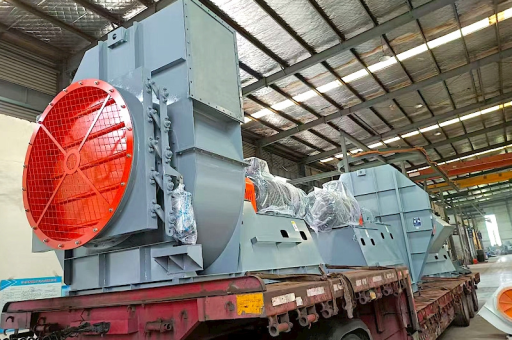
Based on your query for 16Mn Single Suction High Volume Industrial Centrifugal Fans used for Materials Drying, I have compiled the technical specifications, material properties, and application considerations relevant to this specific industrial equipment.
Here is a breakdown of what this machine typically entails and why it is specified for drying applications.
Material Specification: Why 16Mn (Q345B/Q355B)?
While "16Mn" is an older Chinese standard (GB/T 1591-1994, now replaced by Q345B or Q355B), it remains a common term in procurement. It is a low-alloy high-strength structural steel.
- Increased Strength: 16Mn has ~50% higher yield strength than standard Q235 carbon steel (345 MPa vs 235 MPa). This allows the fan housing and impeller to be made with thinner walls, reducing weight while maintaining rigidity for high-pressure or heavy-duty operation.
- Weldability: It has good weldability, essential for fabricating large impellers and spiral housings.
- Corrosion Resistance (Moderate): It offers slightly better atmospheric corrosion resistance than plain carbon steel. However, it is not stainless steel. For drying materials that release corrosive vapors (e.g., wood volatiles, chemical fumes), it is often paired with a protective coating (e.g., epoxy paint) or used specifically for ambient-air drying.
Single Suction Configuration
- Air Intake: Air enters from one side (axial direction) and is discharged radially.
- Efficiency: Single-suction fans are generally easier to balance and more efficient than double-suction fans for medium flow rates and high pressures. They are standard for drying system line-ups (ductwork, burners, cyclone separators).
- Impeller Type: For material drying, the impeller is typically Backward-Inclined (BI) or Airfoil (AF) .
- Backward Inclined: Robust, handles particulate matter (dust) moderately well, less prone to stall.
- Airfoil: Higher efficiency (up to 92%), quieter, but more sensitive to heavy dust loading (stall risk). Often specified for clean-hot air drying.
High Volume Application (Materials Drying)
This fan is the "lung" of a drying system. It creates the necessary static pressure to overcome the resistance of:
- Burners/Heaters: Pushing air through heat exchangers or direct-fired gas burners.
- Ductwork: Friction loss in long runs of sheet metal ducts.
- Drying Chambers/Kilns: Maintaining velocity across wet materials (wood, grain, sand, textiles).
- Cyclones/Baghouses: Exhausting humid air through pollution control equipment.
Typical Drying Applications:
- Wood Kilns: Circulating hot air (80°C - 120°C) through lumber stacks.
- Agricultural Drying: Grain dryers, hay dryers (large diameter, slow speed).
- Industrial Ovens: Drying coatings, inks, or food products on conveyors.
- Sand & Aggregate: Removing moisture from processed minerals.
Typical Technical Parameters (Example)
| Parameter | Specification |
|---|---|
| Material | 16Mn (Q355B) Steel |
| Construction | Single Suction, Overhung Impeller |
| Impeller Type | Backward Inclined (BI) or Airfoil (AF) |
| Air Volume (Flow) | 10,000 – 200,000 m³/h (High Volume) |
| Static Pressure | 1,000 – 5,000 Pa |
| Temperature Range | Standard: -20°C to +100°C High Temp (with cooling shaft): +100°C to +350°C |
| Bearing Type | Split pillow block (SN series) or Ball bearings |
| Drive | Direct (Shaft-mounted) or V-belt (adjustable speed) |
| Balancing Grade | G6.3 Dynamic balance (ISO 1940) |
Critical Design Considerations for Drying Applications
Thermal Expansion:
- The 16Mn housing must allow for thermal expansion. The bearing base is often mounted on a sliding plate (expansion plate) to prevent shaft misalignment when the fan heats up.
Shaft Cooling:
- If the material drying involves high-temperature air ( > 150°C), the shaft must have a cooling disc or forced air cooling to prevent heat transfer to the bearings.
Dust Handling:
- For drying materials that release fine particles (sawdust, grain dust), the impeller should have a wear liner or be designed with radial reinforcement to prevent erosion. Self-cleaning impeller designs (open or semi-open) are often preferred to prevent material build-up, which causes imbalance.
Vibration Monitoring:
- Large single-suction fans handling high volume dry air require vibration monitoring ports (accelerometer pads) on the bearing housings, especially after the drying process begins (thermal growth changes the balance).
Summary for Procuring
If you are looking to purchase a 16Mn Single Suction High Volume Industrial Centrifugal Fan for Materials Drying, confirm the following with the supplier:
- Is the 16Mn steel certified to Q355B grade?
- What is the maximum air temperature? (This determines if a water-cooled bearing bracket is required).
- Is the impeller backward-inclined or airfoil? (Backward-inclined is safer for dusty drying; Airfoil is better for clean dry air).
- Paint system: Will the interior coating handle condensation from the drying process (e.g., acidic wood moisture)?
- Balance standard: Insist on G6.3 at maximum operating speed (RPM).
Recommended Brand/Series (for specification): Look for fan series like 9-19 (High Pressure, medium volume) or 4-72 (High Volume, medium pressure) , but custom-engineered to use 16Mn steel and reinforced for drying duty. For true High Volume drying, a C6-48 or Y5-47 series (draft fans) adapted for forced supply may be more appropriate.
Would you like me to provide a specific model number comparison or help with a performance curve calculation based on your drying system's required static pressure?





