
This article's table of contents introduction:
- Table of Contents
- Introduction: The Challenge of Noise in Dust Collection
- What Defines a Custom Low Noise Level Dust Collector Fan?
- Key Technical Specifications & Design Elements
- Why Standard Dust Collectors Fail in Noise-Sensitive Areas
- Customization Options: From Blade Geometry to Motor Selection
- Acoustic Performance Metrics: dB(A) and Sound Power Level
- Real-World Applications: Labs, Hospitals, and Residential Workshops
- Frequently Asked Questions (FAQ)
- Installation & Maintenance Best Practices for Noise Reduction
- Conclusion: Balancing Filtration & Silence
Table of Contents
- Introduction: The Challenge of Noise in Dust Collection
- What Defines a Custom Low Noise Level Dust Collector Fan?
- Key Technical Specifications & Design Elements
- Why Standard Dust Collectors Fail in Noise-Sensitive Areas
- Customization Options: From Blade Geometry to Motor Selection
- Acoustic Performance Metrics: dB(A) and Sound Power Level
- Real-World Applications: Labs, Hospitals, and Residential Workshops
- Frequently Asked Questions (FAQ)
- Installation & Maintenance Best Practices for Noise Reduction
- Conclusion: Balancing Filtration & Silence
Introduction: The Challenge of Noise in Dust Collection
In modern industrial, commercial, and even residential settings, dust collection is non-negotiable—but so is peace and quiet. Whether you are operating a woodworking shop adjacent to a library, managing a pharmaceutical cleanroom, or running a 3D printing farm in a shared office, standard dust collector fans generate noise levels often exceeding 75–85 dB(A). This creates discomfort, violates occupational safety limits, and disrupts sensitive work.
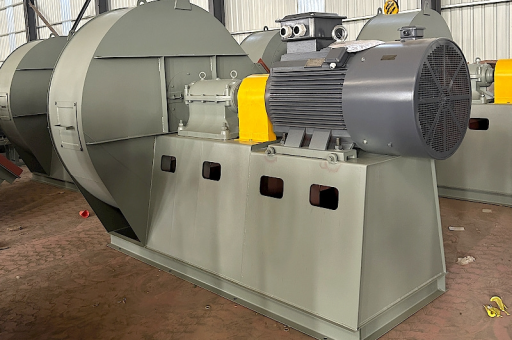
A custom low noise level dust collector fan for noise-sensitive environments is not merely a quieter version of an existing fan. It is an engineered system designed from the ground up to minimize aerodynamic, mechanical, and structural noise while maintaining high static pressure and airflow. This guide explores the anatomy of such fans, customization strategies, and practical answers to common concerns.
What Defines a Custom Low Noise Level Dust Collector Fan?
A dust collector fan in this category must meet three core criteria:
- Noise output ≤55 dB(A) at 1 meter (comparable to a quiet office or library).
- Sufficient static pressure (at least 2–3 in. wg) to overcome filter resistance.
- Customizable dimensions & mounting to fit existing ductwork or enclosures.
Unlike off-the-shelf fans, these units often feature backward-curved impellers, thick acoustic insulation, vibration decouplers, and variable speed drives (VFDs) to fine-tune performance.
Key Technical Specifications & Design Elements
To achieve ultra-low noise without sacrificing suction, engineers focus on four domains:
- Impeller Design: Forward-curved blades generate more noise. Backward-curved or airfoil blades reduce turbulence and tonal noise.
- Motor Selection: External rotor motors with low magnetic noise and premium bearings (e.g., NSK or SKF) are standard.
- Housing & Ducting: Double-wall housing with acoustic foam (e.g., melamine or polyurethane) dampens structure-borne noise.
- Speed Control: A VFD allows ramping up/down gradually, avoiding abrupt airflow changes that cause “wind roar.”
Example: A 12-inch custom fan tuned to 1,800 RPM (vs. typical 3,450 RPM) can deliver 800 CFM at 52 dB(A)—a 30% reduction in noise compared to a standard unit.
Why Standard Dust Collectors Fail in Noise-Sensitive Areas
Standard dust collectors prioritize cost and compactness over acoustics. Common failure points include:
- High tip speeds: Smaller impellers spun at maximum RPM create high-frequency whine.
- Unbalanced rotating assemblies: Even slight imbalances amplify low-frequency rumble.
- Thin sheet metal housing: Vibrations radiate outward like a speaker cone.
- Lack of intake silencers: The fan inlet acts as a megaphone for turbulence.
These issues make standard units unsuitable for environments such as recording studios, laboratories, and open-plan offices.
Customization Options: From Blade Geometry to Motor Selection
When ordering a custom low noise level dust collector fan, you can specify:
| Customization Parameter | Options | Noise Reduction Impact |
|---|---|---|
| Blade profile | Backward-curved, airfoil, mixed-flow | Up to 10 dB(A) |
| Motor type | EC (electronically commutated), permanent magnet synchronous | Quieter at low speeds |
| Insulation thickness | 1–3 inch acoustic foam, mineral wool wrap | 5–8 dB(A) attenuation |
| Inlet/outlet silencers | Reactive or dissipative baffles | 5–15 dB(A) reduction |
| Vibration isolation | Spring mounts, rubber grommets, inertia bases | Eliminates structure-borne noise |
Many manufacturers (e.g., Greenheck, Cincinnati Fan, and custom fabricators) offer 3D CAD modeling to simulate airflow and noise before production.
Acoustic Performance Metrics: dB(A) and Sound Power Level
Understanding how noise is measured helps you specify the right fan:
- Sound Pressure Level (dB(A)): What the human ear perceives at a given distance. Aim for 45–55 dB(A) at 3 ft.
- Sound Power Level (dB(A)): Total acoustic energy emitted by the fan. This is independent of distance.
- Octave Band Analysis: Low-frequency noise (125–250 Hz) needs heavier walls; high-frequency noise (2–4 kHz) requires absorptive silencers.
Most fan data sheets provide noise curves at various operating points. Always request a “sound spectrum” for your specific airflow and static pressure.
Real-World Applications: Labs, Hospitals, and Residential Workshops
Case A – Medical Cannabis Cultivation Lab Client needed to remove fine dust from cocoa coir and perlite without disturbing patient rooms 20 feet away. A custom backward-curved fan with a double-wall housing and 2-inch foam achieved 49 dB(A) at 600 CFM.
Case B – Architectural Woodworking Studio in a Mixed-Use Building Noise complaints from apartments above forced a switch. A custom 18-inch fan with VFD and intake silencer dropped noise from 78 dB(A) to 56 dB(A) while maintaining 1,200 CFM.
Case C – University Research Cleanroom Required a fan with UL 508A rated enclosure for safety, plus a 50 dB(A) ceiling. A custom EC motor fan running at 1,200 RPM met all criteria.
Frequently Asked Questions (FAQ)
Q1: Can I retrofit a silencer on my existing dust collector fan to reduce noise? A: Yes. A properly designed inlet silencer (length = 1.5x duct diameter) can reduce noise by 8–12 dB(A). However, performance gains are limited if the root cause is impeller design or motor vibration. For critical environments, a custom fan is more reliable.
Q2: What is the quietest type of dust collector fan? A: Backward-curved centrifugal fans with EC motors and double-wall insulated housings are typically the quietest. Axial fans are more compact but produce higher noise at the same airflow.
Q3: How much does a custom low-noise dust collector fan cost? A: Expect a premium of 30–60% over standard models. A small custom fan (10–14 inch) might start at $600–$1,200 USD; larger industrial units (24+ inch) range from $2,500–$8,000 USD depending on material (aluminum vs. steel) and acoustic treatments.
Q4: What is the maximum safe noise level for a home workshop? A: OSHA recommends ≤85 dB(A) for 8-hour exposure, but for noise-sensitive environments, aim for ≤55 dB(A) if the fan runs continuously. Use earplugs if ambient levels exceed 70 dB(A) for extended periods.
Q5: Can I add a VFD to any motor for noise reduction? A: Only if the motor is rated for inverter duty (variable frequency). Standard induction motors may overheat or produce audible hum. EC motors are inherently compatible with speed control.
Q6: What is the difference between passive and active noise cancellation for fans? A: Passive methods (insulation, silencers, vibration mounts) dampen sound physically. Active noise cancellation uses microphones and speakers to produce anti-phase sound waves, but this is rarely practical for dust collectors due to particle interference and cost.
Installation & Maintenance Best Practices for Noise Reduction
Even the best custom fan can be compromised by poor installation. Follow these tips:
- Flexible duct connectors: Install at least 12 inches of flexible fabric or rubber duct near the fan to disconnect vibration.
- Separation from structure: Mount the fan on a concrete inertia base or neoprene isolation pads. Avoid rigid metal-to-metal contact.
- Duct sizing: Oversized duct reduces air velocity and turbulence noise. Keep velocity below 2,500 ft/min.
- Regular cleaning: Dust buildup on blades causes imbalance and noise. Clean the impeller every 3–6 months.
- Check VFD settings: Jerky acceleration profiles cause momentary high noise. Set ramp time to ≥30 seconds.
Conclusion: Balancing Filtration & Silence
A custom low noise level dust collector fan for noise-sensitive environments is an investment in occupant comfort, regulatory compliance, and operational efficiency. By focusing on blade geometry, motor technology, acoustic insulation, and vibration isolation, you can achieve dust collection that is both effective and barely audible.
Whether you are designing a cleanroom, a home lab, or a commercial workshop, remember that silence is not the absence of sound—it is the result of intelligent engineering. Always work with a manufacturer who offers acoustic testing and customizable configurations. When done correctly, your dust collector fan will become an invisible partner in your clean air strategy.
For detailed fan selection and acoustic consultation, visit a reputable HVAC or dust collection specialist.





