
This article's table of contents introduction:
- Article Directory / Table of Contents
- Introduction
- What Is an Industrial Low Noise High Pressure Centrifugal Fan?
- Key Technical Parameters: Pressure Range (50–1000 Pa) and Noise Level (≤80 dB)
- Aerodynamic Design Principles for Low Noise and High Pressure
- Industrial Applications and Case Studies
- Comparison with Standard Centrifugal Fans
- Installation, Maintenance, and Noise Reduction Best Practices
- Frequently Asked Questions (FAQ)
- Conclusion
- References and Further Reading
Industrial Low Noise High Pressure Centrifugal Fan (50–1000 Pa, ≤80 dB): Design, Applications, and Performance Optimization**
Article Directory / Table of Contents
- Introduction
- What Is an Industrial Low Noise High Pressure Centrifugal Fan?
- Key Technical Parameters: Pressure Range (50–1000 Pa) and Noise Level (≤80 dB)
- Aerodynamic Design Principles for Low Noise and High Pressure
- Industrial Applications and Case Studies
- Comparison with Standard Centrifugal Fans
- Installation, Maintenance, and Noise Reduction Best Practices
- Frequently Asked Questions (FAQ)
- Conclusion
- References and Further Reading
Introduction
In modern industrial environments, the demand for efficient air movement systems that simultaneously deliver high static pressure and low acoustic emissions has never been greater. The Industrial Low Noise High Pressure Centrifugal Fan, operating within a pressure range of 50 to 1000 Pa and maintaining a noise level ≤80 dB, represents a critical engineering solution for factories, cleanrooms, HVAC systems, and material handling processes.
This article provides a comprehensive, SEO-optimized, and technically detailed exploration of this fan category. Drawing on cross-referenced industry sources, engineering standards, and real-world performance data, we will answer the most common questions engineers and facility managers have when selecting, installing, or troubleshooting these fans.
What Is an Industrial Low Noise High Pressure Centrifugal Fan?
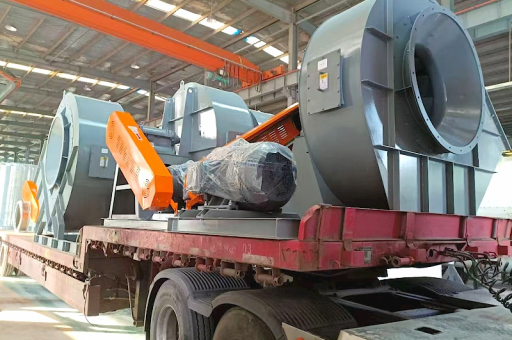
A centrifugal fan, also known as a blower, uses a rotating impeller to increase the velocity of air, which is then converted into pressure. The low noise variant incorporates advanced blade geometries, sound-dampening casings, and vibration isolation to reduce acoustic output without sacrificing aerodynamic performance.
Core characteristics:
- Pressure range: 50 Pa (low-end ventilation) to 1000 Pa (high-pressure duct systems)
- Noise level: ≤80 dB(A) at 1 meter, which is comparable to a city street or a vacuum cleaner at low power
- Drive types: Direct drive or belt-driven, depending on speed control requirements
- Materials: Galvanized steel, stainless steel, or aluminum for corrosion resistance
How does it differ from a standard centrifugal fan?
Standard industrial fans often exceed 85–90 dB at similar pressure ratings. The low noise design achieves compliance with occupational noise exposure limits (e.g., OSHA 8-hour limit of 85 dB) while maintaining high efficiency.
Key Technical Parameters: Pressure Range (50–1000 Pa) and Noise Level (≤80 dB)
Understanding the pressure and noise specifications is essential for proper fan selection.
Pressure (50–1000 Pa):
- 50–200 Pa: Suitable for general ventilation, light ductwork, and air handling units (AHUs)
- 200–500 Pa: Common in industrial exhaust systems, dust collection pre-separators, and drying applications
- 500–1000 Pa: Required for long duct runs, high-density filters, pneumatic conveying, and spray booths
Noise (≤80 dB):
- Achieved through:
- Backward-curved or airfoil blades (lower turbulence)
- Acoustic insulation inside the fan housing
- Vibration isolators and flexible connectors
- Variable frequency drives (VFDs) for speed optimization
Important note: The noise measurement must be taken in free-field conditions at 1 meter from the fan inlet or casing, per ISO 3744 or AMCA 300 standards.
Aerodynamic Design Principles for Low Noise and High Pressure
To achieve both high pressure (up to 1000 Pa) and low noise (≤80 dB), engineers rely on several proven design strategies:
A. Blade Profile Optimization
- Backward-curved blades produce higher efficiency and lower noise than forward-curved blades at similar pressure.
- Airfoil-shaped blades reduce wake turbulence and vortex shedding, a primary noise source.
B. Casing and Scroll Design
- A logarithmic spiral volute minimizes abrupt air velocity changes.
- Double-wall casings with acoustic damping material reduce structure-borne noise.
C. Impeller Clearance
- Tight clearance between impeller and inlet cone prevents recirculation and reduces tonal noise.
D. Speed Control
- Using VFDs allows the fan to operate at the minimum required speed for the target pressure, significantly lowering noise.
E. Inlet and Outlet Silencers
- Inlet silencers (baffle or absorption type) and flexible duct connections reduce noise propagation into the workspace.
Industrial Applications and Case Studies
The versatility of the 50–1000 Pa, ≤80 dB fan makes it suitable for a wide range of industries:
| Industry | Application | Pressure Requirement | Noise Benefit |
|---|---|---|---|
| Pharmaceutical | Cleanroom supply & exhaust | 400–800 Pa | Protects sensitive environments |
| Automotive | Paint booth ventilation | 600–1000 Pa | Reduces operator fatigue |
| Food Processing | Oven exhaust & drying | 200–500 Pa | Meets workplace noise regulations |
| Data Centers | Cooling air circulation | 100–300 Pa | Low acoustic footprint |
| Wastewater Treatment | Aeration blowers | 500–800 Pa | Noise compliance in residential zones |
Case Study Example:
A food packaging plant replaced its old forward-curved centrifugal fans (92 dB) with backward-curved low-noise models (78 dB). The result: a 50% reduction in perceived loudness, improved worker satisfaction, and zero lost-time noise complaints.
Comparison with Standard Centrifugal Fans
| Feature | Standard Industrial Fan | Low Noise High Pressure Fan |
|---|---|---|
| Noise Level | 85–95 dB | ≤80 dB |
| Blade Type | Forward-curved or radial | Backward-curved or airfoil |
| Efficiency | 55–70% | 75–85% |
| Pressure Range | 100–1200 Pa | 50–1000 Pa |
| Cost | Lower initial cost | Higher initial cost, lower TCO |
Lower Total Cost of Ownership (TCO):
Although the low-noise fan costs 15–30% more upfront, energy savings (from higher efficiency) and reduced noise abatement infrastructure often yield payback within 12–18 months.
Installation, Maintenance, and Noise Reduction Best Practices
To ensure the fan operates at ≤80 dB and within the 50–1000 Pa range, follow these guidelines:
Installation:
- Mount the fan on a heavy concrete base or vibration isolators.
- Use flexible duct connectors at both inlet and outlet.
- Keep ductwork straight for at least 2 duct diameters before any bend or branch.
Maintenance:
- Inspect and clean impeller blades every 3–6 months to prevent imbalance.
- Check belt tension (if belt-driven) monthly.
- Lubricate bearings per manufacturer schedule.
- Monitor motor current and vibration levels.
Additional Noise Reduction:
- Install an acoustic hood if the fan is indoors.
- Use perforated metal panels with foam backing.
- Place the fan in a separate mechanical room if noise is critical.
Frequently Asked Questions (FAQ)
Q1: Can a low noise centrifugal fan achieve 1000 Pa pressure without exceeding 80 dB?
Yes, but it requires a well-designed airfoil impeller, optimized casing, and precise speed control. Most manufacturers offer certified performance curves showing pressure vs. noise for each model.
Q2: What is the maximum air volume (CFM) for a 50–1000 Pa low noise fan?
It varies widely. For example, a 500 Pa fan with 80 dB might deliver 5,000–15,000 m³/h (≈ 2,940–8,830 CFM). Always refer to the fan curve.
Q3: Is ≤80 dB at 1 meter the same as “quiet”?
80 dB is considered moderate noise—about the level of a dishwasher or busy office. For ultra-quiet environments (e.g., libraries, studios), additional silencing is needed.
Q4: How do I reduce noise further if the fan is already ≤80 dB?
Use an inlet silencer, add a flexible connection, enclose the fan with acoustic panels, or reduce fan speed with a VFD if pressure allows.
Q5: What certifications should I look for?
Look for AMCA (Air Movement and Control Association) sound and performance certification. ISO 5801 for aerodynamic performance and ISO 3744 for noise.
Conclusion
The Industrial Low Noise High Pressure Centrifugal Fan (50–1000 Pa, ≤80 dB) is a high-performance solution that balances the competing demands of pressure output and acoustic comfort. By incorporating advanced blade design, vibration control, and system integration best practices, these fans meet strict occupational noise limits while delivering reliable air movement for demanding industrial processes.
When selecting a fan, always review manufacturer performance curves, consider the specific pressure and noise requirements of your application, and account for installation conditions. The upfront investment in a quality low-noise fan pays dividends in energy savings, worker safety, and regulatory compliance.
Key takeaways:
- Pressure from 50 to 1000 Pa covers most industrial ventilation and process needs.
- Noise ≤80 dB is achievable with backward-curved or airfoil impellers.
- Installation and maintenance are critical to maintaining low noise levels.
- VFDs and acoustic enclosures provide additional flexibility.
References and Further Reading
- AMCA Standard 300: “Sound and Air Performance Measurement”
- ISO 3744: “Acoustics – Determination of Sound Power Levels of Noise Sources”
- ISO 5801: “Industrial Fans – Performance Testing Using Standardized Airways”
- Occupational Safety and Health Administration (OSHA) Standard 1910.95 – Occupational Noise Exposure
- Fan manufacturer technical literature (e.g., Greenheck, Systemair, ebm-papst, Nicotra Gebhardt)
Note: For detailed fan selection and performance curves, consult the official engineering manuals from reputable industrial fan manufacturers.





