
This article's table of contents introduction:
- Decoding the Specifications
- Typical Applications (Industrial + 200-20k m³/h)
- Critical Selection Factors (Beyond Air Volume)
- Common Questions to Ask a Supplier
- Summary Recommendation
This appears to be a product description or specification query for industrial centrifugal fans. Here is a breakdown of what those specifications mean, the likely application, and key considerations for selection.
Decoding the Specifications
-
"Ventilation 50/60Hz" (Frequency)
- What it means: The fan motor is designed to run on both 50 Hz (common in Europe, Asia, Africa) and 60 Hz (common in Americas, Japan) electrical supplies.
- Implication: If you switch from a 50Hz supply to a 60Hz supply (or vice-versa), the fan's performance changes.
- At 60 Hz: The fan typically runs ~20% faster. This increases airflow and pressure but also increases power consumption and noise.
- Key Check: Ensure the motor's voltage rating matches your local supply (e.g., 380V @ 50Hz vs 460V @ 60Hz). A dual-frequency motor can handle both, but the wiring might need to be changed.
-
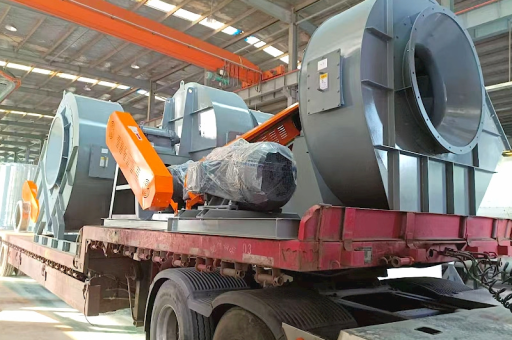
"Industrial Centrifugal Fans" (Type)
- What it means: These are not axial fans (like desk fans). They have a wheel inside a scroll housing. They are used to move air against resistance.
- Common types in this range:
- Forward Curved (Squirrel Cage): High volume, low pressure. Good for HVAC, clean air, and low static pressure systems.
- Backward Curved/Inclined: High efficiency, medium pressure. Good for industrial ventilation with some ductwork.
- Radial (Paddle Wheel): Low volume, high pressure. Good for dust, fumes, or material handling (stronger construction).
-
"200-20000m³/H" (Air Volume)
- What it means: The range of airflow the fan can achieve. 200 m³/h is very small (for a small exhaust booth), while 20,000 m³/h is large (for a large factory hall or paint booth).
- CFM Equivalents:
- 200 m³/h = ~117 CFM (Cubic Feet per Minute)
- 20,000 m³/h = ~11,770 CFM
Typical Applications (Industrial + 200-20k m³/h)
Given the volume range, these fans are often used for:
- General Factory Ventilation: Exhausting hot air, fumes, or odors.
- Dust Collection: Pre-separator fans for woodworking or industrial dust.
- Paint Booths / Spray Booths: Moving air through filters to ensure air quality and explosion-proof requirements (often needs ATEX/UL certification).
- HVAC Systems: Air handling units (AHU) or exhaust systems for commercial/industrial buildings.
- Oven/Process Drying: Circulating hot air in ovens or dryers.
- Clean Rooms: Supply or exhaust with HEPA filters (requires higher static pressure).
Critical Selection Factors (Beyond Air Volume)
You cannot just pick a fan based on airflow. You must know the Static Pressure.
- Scenario 1 (Low Pressure): Ducting with 1-2 meters of smooth pipe. Forward Curved fan is good.
- Scenario 2 (Medium Pressure): Ductwork with silencers, dampers, and a heat recovery unit. Backward Curved fan is better.
- Scenario 3 (High Pressure): Moving through a long dust extraction system with cyclones and cloth filters. Radial fan is required.
Common Questions to Ask a Supplier
If you are sourcing this fan, ask these questions:
- "At what Static Pressure (Pa/inch H2O) is the 20,000 m³/h airflow achieved?" (A fan rated at 20k m³/h at 0 Pa will only move ~10k m³/h at 500 Pa).
- "What is the motor power (kW/HP)?" (For 20,000 m³/h, expect ~4 kW for low pressure up to ~15 kW for high pressure).
- "Is the impeller material steel or aluminum?" (Aluminum is lighter and spark-resistant for explosive environments).
- "Is the unit IP55 rated?" (For industrial environments with dust and moisture).
- "Can it handle the temperature?" (Standard fans are for -20°C to +40°C. For hot air, you need a separate "hot air" version with bearings designed for higher temps, up to 200-400°C).
Summary Recommendation
- For clean air, low resistance, look for Forward Curved fans (smaller, cheaper).
- For system resistance (filters, ducts), look for Backward Curved fans (more efficient, quieter).
- For dusty or hot air, look for Radial fans (more robust).
Would you like help calculating the Static Pressure for your specific duct system? Provide the length, diameter, and number of bends/elbows, and I can help estimate the required pressure for the fan.





