
This article's table of contents introduction:
- Table of Contents
- Introduction: The Backbone of Industrial Cooling
- Understanding 50/60Hz Frequency in Industrial Centrifugal Fans
- Key Technical Parameters: Airflow, Pressure, and Motor Compatibility
- Why Customized Solutions Matter for Effective Cooling
- Material Selection and Environmental Adaptability
- Common Industry Applications and Real-World Case Studies
- Q&A: Addressing Critical Concerns About Centrifugal Fans
- Conclusion: Future Trends and Selection Criteria
Optimizing Thermal Management: The Role of 50/60Hz Industrial Centrifugal Fans with Customized Solutions for Effective Cooling**
Table of Contents
- Introduction: The Backbone of Industrial Cooling
- Understanding 50/60Hz Frequency in Industrial Centrifugal Fans
- Key Technical Parameters: Airflow, Pressure, and Motor Compatibility
- Why Customized Solutions Matter for Effective Cooling
- Material Selection and Environmental Adaptability
- Common Industry Applications and Real-World Case Studies
- Q&A: Addressing Critical Concerns About Centrifugal Fans
- Conclusion: Future Trends and Selection Criteria
Introduction: The Backbone of Industrial Cooling
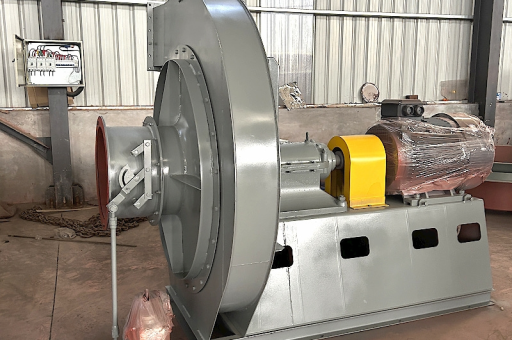
In high-demand industrial environments—from data centers and manufacturing plants to HVAC systems and power generation facilities—effective cooling is not optional; it is a prerequisite for operational continuity, equipment longevity, and energy efficiency. At the heart of most large-scale air movement systems lies the 50/60Hz industrial centrifugal fan, a robust workhorse designed to move large volumes of air against significant static pressure.
Unlike axial fans, centrifugal fans use a rotating impeller to increase air velocity and pressure, making them ideal for ducted systems, dust collection, and process cooling. However, the global divide between 50 Hz (common in Europe, Asia, Africa) and 60 Hz (common in the Americas) introduces critical design variables that directly affect motor speed, airflow, and power consumption. This article explores how customized solutions for these frequency-specific fans can deliver effective cooling while optimizing energy usage and system reliability.
Understanding 50/60Hz Frequency in Industrial Centrifugal Fans
Frequency (Hz) defines the number of electrical cycles per second in the power supply. This parameter directly determines the synchronous speed of an AC induction motor, which in turn drives the fan impeller.
- At 50 Hz: A typical 4-pole motor runs at approximately 1,450 RPM (revolutions per minute) under load. Fans designed for 50 Hz will produce lower airflow and pressure compared to their 60 Hz counterparts if the same impeller is used.
- At 60 Hz: The same motor runs at approximately 1,750 RPM, resulting in roughly 20% more airflow and 44% more pressure (due to the affinity laws: flow ∝ speed, pressure ∝ speed², power ∝ speed³).
Key Implication: A fan designed strictly for 50 Hz should not be directly operated at 60 Hz without re-rating the motor, bearings, and structural components. Conversely, a fan built for 60 Hz running at 50 Hz will underperform. Therefore, customized engineering is essential to match frequency with actual thermal load requirements.
Key Technical Parameters: Airflow, Pressure, and Motor Compatibility
When specifying an industrial centrifugal fan, engineers must evaluate:
| Parameter | Impact on Cooling | Notes for 50/60Hz Customization |
|---|---|---|
| Airflow (CFM or m³/h) | Determines heat removal rate | Fan curves shift with frequency; redesign impeller diameter or blade angle |
| Static Pressure (Pa or in. wg) | Critical for duct resistance | Higher frequency yields higher pressure; may require stronger housing |
| Motor Power (kW/HP) | Directly affects energy cost | Power scales with cube of speed; frequency change requires motor re-rating |
| Noise Level (dBA) | Workplace safety & compliance | Higher speed = higher noise; may require acoustic enclosures |
| Vibration Limits | Bearing & shaft life | Frequency mismatch causes resonant vibration if not dampened |
Custom Solution Example: For a 60 Hz application at high altitude, a manufacturer may reduce impeller diameter slightly to avoid motor overload while maintaining target airflow, achieving effective cooling without sacrificing motor life.
Why Customized Solutions Matter for Effective Cooling
Standard off-the-shelf fans often fail to deliver effective cooling because they ignore site-specific variables:
- Ambient temperature extremes (e.g., steel mills vs. cold storage)
- Airborne particulates (dust, chemical fumes, moisture)
- Space constraints (compact layouts vs. large plenums)
- Electrical infrastructure (frequency, voltage, phase)
Customization options include:
- Impeller geometry: Forward-curved (high flow, low pressure) vs. backward-curved (high efficiency, self-limiting power)
- Housing modifications: Inlet cones, outlet dampers, drain provisions
- Motor selection: Premium efficiency IE3/IE4, explosion-proof, or inverter-duty for VFD compatibility
- Coating & materials: Stainless steel for corrosive environments, epoxy coating for humidity, aluminum for lightweight corrosion resistance
- Drive configurations: Direct drive (lower maintenance) vs. belt drive (flexible speed adjustment)
When customization aligns with frequency-specific performance curves, effective cooling becomes predictable, measurable, and cost-justifiable.
Material Selection and Environmental Adaptability
A customized industrial centrifugal fan must survive its environment. For example:
- High-temperature applications (e.g., oven exhaust): Use heat-resistant steel and high-temperature grease-rated bearings.
- Explosive environments (e.g., paint booths, chemical plants): Non-sparking aluminum impellers and ATEX-certified motors.
- Coastal/humidity areas (e.g., offshore platforms): Corrosion-resistant coatings and sealed bearings.
Material choices directly influence effective cooling longevity. A fan that fails prematurely due to corrosion or thermal fatigue cannot deliver reliable thermal management.
Common Industry Applications and Real-World Case Studies
Case A: Data Center Cooling (60 Hz, North America)
A colocation provider experienced hot spots due to undersized axial fans. By replacing them with custom backward-curved centrifugal fans operating at 60 Hz, they increased static pressure by 30% and reduced server inlet temperatures by 8°C. Customization included VFD-ready motors and low-noise impellers.
Case B: Cement Plant Dust Collection (50 Hz, India)
Standard radial fans clogged within weeks due to abrasive dust. Customized plenum fans with wear-resistant liners and larger clearance between impeller and housing reduced maintenance downtime by 60%, ensuring continuous effective cooling of the baghouse system.
Case C: Pharmaceutical HVAC (50 Hz, Europe)
The facility required precise airflow control for cleanrooms. A customized plug fan with an integrated EC motor (electronically commutated) provided 50 Hz compatibility, variable speed without a VFD, and compliance with ISO 14644 cleanroom standards.
Q&A: Addressing Critical Concerns About Centrifugal Fans
Q1: Can I use a 60 Hz centrifugal fan on a 50 Hz power supply?
A: Yes, but performance will drop significantly—airflow decreases by ~17%, and pressure by ~30%. The motor will also run cooler, but you must verify that the motor can handle the lower torque. A better option is to specify a fan designed for 50 Hz or use a VFD to adjust speed.
Q2: How do I know if I need a customized fan instead of a standard model?
A: If your system has non-standard ductwork (high static pressure, long runs, bends), extreme temperatures, dust or corrosive gases, or strict noise or space limits, a customized solution will outperform standard models and reduce total cost of ownership.
Q3: What is the difference between forward-curved and backward-curved impellers for cooling?
A: Forward-curved (FC) impellers deliver high airflow at low pressure but can overload motors if static pressure drops. Backward-curved (BC) impellers are more efficient, self-limiting in power, and better for effective cooling in high-static systems. BC fans are preferred for energy-conscious customized solutions.
Q4: How does frequency affect fan noise?
A: Noise increases roughly proportional to the 5th power of speed. A fan running at 60 Hz will be louder than the same fan at 50 Hz. Custom options like acoustic insulation, silencers, or slower-speed larger-diameter impellers can mitigate noise while maintaining cooling performance.
Q5: What maintenance is required for industrial centrifugal fans?
A: Regular bearing lubrication, belt tension checks (if belt-driven), impeller cleaning, and vibration monitoring. Customized fans with sealed bearings, corrosion-resistant materials, and direct-drive options reduce maintenance frequency and improve effective cooling reliability.
Conclusion: Future Trends and Selection Criteria
The demand for effective cooling in industrial settings will only intensify as equipment densities rise and energy costs increase. For 50/60Hz industrial centrifugal fans, the future lies in smart customization—integrating IoT sensors for real-time performance monitoring, using computational fluid dynamics (CFD) to optimize impeller design, and selecting high-efficiency motors with wide frequency tolerance.
When choosing a fan, consider the following checklist:
- Confirm frequency and voltage of the site (50 Hz or 60 Hz).
- Calculate required airflow and static pressure using system resistance curves.
- Evaluate environmental factors (temperature, humidity, contaminants).
- Request a customized performance curve from the manufacturer.
- Inquire about testing (AMCA certified, vibration analysis, thermal rating).
- Plan for future flexibility (VFD compatibility, modular design).
By partnering with a manufacturer that offers customized solutions for effective cooling—rather than relying on one-size-fits-all products—industries can achieve reliable thermal management, lower energy bills, and extended equipment life.
For more in-depth technical guidance or to request a custom fan specification for your 50/60 Hz application, please consult a qualified engineer from a reputable industrial fan manufacturer.





