
This article's table of contents introduction:
- The Core Components
- Why Stainless Steel V-Belts for Cement Blowers?
- Energy Efficiency ("Energy-Saving")
- Application Specifics in Cement Plants
- Summary: Is it a good solution?
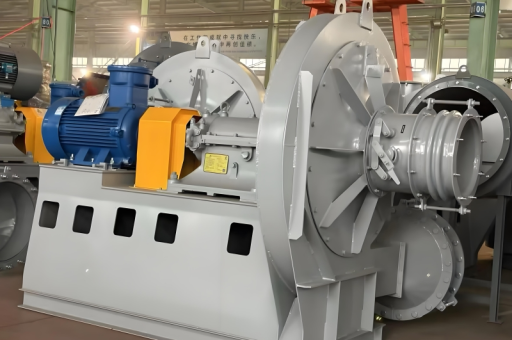
It seems you're describing a high-efficiency cement blower fan system that uses a stainless steel V-belt drive. This is a specific industrial application, likely in a cement plant for processes like kiln air supply, material conveying, or dust collection.
Here is a breakdown of what makes this combination effective, focusing on energy savings and durability.
The Core Components
- Cement Blower Fan: A large, industrial fan (often a centrifugal or axial fan) used to move air or gas through the cement production process. These are typically high-power, constant or variable-torque loads.
- Stainless Steel V-Belt: A special type of V-belt reinforced with stainless steel tension cords instead of standard polyester or aramid. The rubber/polymer body is also often engineered for heat and oil resistance.
- Energy-Efficient Drive: The system is designed to minimize power loss during transmission from the motor to the fan.
Why Stainless Steel V-Belts for Cement Blowers?
Cement plants are harsh environments. Standard belts fail quickly due to:
- High Heat: Proximity to kilns and hot materials.
- Abrasive Dust: Cement dust is highly abrasive and can wear down belt edges and sheaves.
- Oil & Chemical Exposure: Lubricants and process chemicals.
- High Tension & Shock Loads: Fans can have variable loads and starting torque.
Advantages of Stainless Steel V-Belts in this context:
- No Stretching (Low Elongation): Stainless steel cords have extremely low stretch. This means the belt maintains constant tension, reducing slippage.
- Eliminates Re-tensioning: You don't need to frequently re-align or re-tension the belt, reducing maintenance downtime.
- Higher Power Transmission: Can handle higher horsepower loads compared to standard belts of the same size.
- Heat & Corrosion Resistance: The stainless steel cords resist rust and degradation from heat and moisture, unlike standard steel cables.
- Longer Service Life: In abusive environments, these belts can last 3-5 times longer than standard belts.
Energy Efficiency ("Energy-Saving")
Energy savings come from reducing parasitic losses in the drive system:
- Reduced Slippage: A standard belt can slip by 2-5% under load. The stainless steel V-belt's constant tension keeps slippage near zero (typically <0.5%). That 2-4% loss is converted into useful fan speed.
- Lower Operating Temperature: Less friction means less heat generation, which reduces energy wasted as heat.
- Improved Drive Efficiency: V-belts are typically 94-97% efficient. High-quality, tension-maintained stainless steel belts push this to the upper end.
- Consistent Performance: Because the belt doesn't stretch, the motor doesn't have to overcome increased friction from an over-tightened belt, a common issue with standard belts.
Application Specifics in Cement Plants
- Sizing: This is critical. The V-belt must be an Joined V-Belt (banded) or Wrapped V-Belt specifically rated for high-torque, high-temperature environments. It's usually a SPC, 5VX, or 8V profile.
- Sheave Compatibility: The pulleys (sheaves) must be made of ductile iron (ASTM A536) or cast steel with a high surface finish to match the stainless steel belt.
- Maintenance: While the belt requires less re-tensioning, the alignment of the motor and fan shaft must be perfect. A misalignment of even 0.5mm can cause premature wear.
Summary: Is it a good solution?
Yes, for specific, high-demand cement blower fans.
| Feature | Standard V-Belt | Stainless Steel V-Belt |
|---|---|---|
| Initial Cost | Lower | 2-3x Higher |
| Tension Stability | Poor (stretches) | Excellent (near-zero) |
| Heat Resistance | Moderate | High |
| Lifespan (Cement) | 6-12 months | 2-4 years |
| Energy Efficiency | 93-95% | 96-98% |
| Maintenance | Frequent re-tightening | Very low |
The Verdict: If your cement blower fan is a critical, high-utilization asset (running 24/7) and is located in a hot, dusty environment, the stainless steel V-belt drive is a strong investment. The increased initial cost is offset by reduced downtime, lower electricity consumption (even 1-2% savings on a 200 kW fan is significant), and drastically reduced maintenance labor costs.
However, for a small, intermittent-duty fan in a clean area, a standard high-quality wrapped V-belt is more cost-effective.
Recommendation for your text: If you are writing a product description or spec sheet, use terms like:
"High-performance stainless steel cable reinforced V-belt drive system for heavy-duty cement blower fans. Engineered for zero-stretch operation, delivering superior energy efficiency of up to 98% by minimizing frictional losses. Specifically designed to withstand extreme heat, cement dust, and high shock loads, reducing maintenance intervals by 80% compared to standard belts."
Would you like specific belt profile recommendations (e.g., SPC, 5VX) or sizing calculations for a typical cement fan?





