
This article's table of contents introduction:
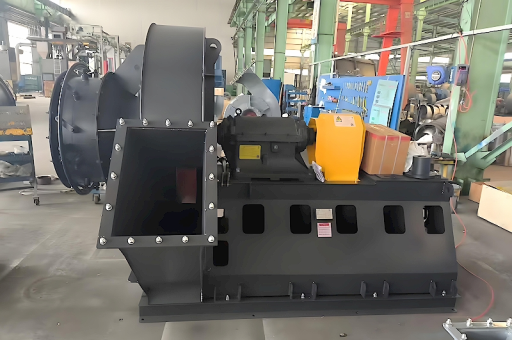
It sounds like you are describing a V-belt driven fan system for a raw material mill (likely in cement, mineral processing, or power generation), where the fan is a cycling air blower and you are encountering high wear on the V-belts.
Here is a technical breakdown of why this happens and how to resolve it.
The Core Problem: High Belt Wear in This Application
In a raw material mill cycling air blower (often a baghouse fan, mill sweep fan, or separator fan), V-belts wear out prematurely due to a combination of high torque, vibration, and environmental contamination.
The "Cycling" Factor (Dynamic Loads)
- Why it matters: A "cycling air blower" implies the fan speed or damper position changes frequently (e.g., during mill start-up, load changes, or false air ingress).
- The effect: Each cycle creates a shock load. The belts flex violently as the fan accelerates or decelerates, generating internal friction (heat) and ply separation. This is the #1 cause of rapid wear in this specific application.
Contamination (The Mill Environment)
- Why it matters: Raw material mills produce fine dust (limestone, clinker, slag, coal, etc.).
- The effect: The dust acts as an abrasive lapping compound between the belt and the sheave grooves. It also dries out the rubber, causing cracking. If oil from the blower bearings leaks onto the belts, it causes swelling and softening.
Alignment & Sheave Wear
- Why it matters: High horsepower fans (often 500kW+) create immense tension.
- The effect: Even minor misalignment (0.5mm) causes one side of the belt to be overloaded. A worn sheave groove ("bell-mouthing") creates a poor fit, causing the belt to ride at the bottom of the groove (loss of grip) or slip, generating heat and glazing.
Resonance (Critical Speed)
- Why it matters: The fan itself may have a natural frequency that matches the belt frequency at a certain RPM.
- The effect: This causes a "harmonic whip" in the belt span, leading to rapid fatigue failure.
Solutions to Reduce V-Belt Wear (High Resistance)
To achieve high wear resistance, you need to move beyond standard automotive belts. Use the following strategy:
A. Upgrade Belt Type (Material & Construction)
- Raw Edge Cogged Belts (Not Wrapped): Standard wrapped belts slip easily under high torque.
- Choose: Raw Edge Cogged (Classical SPZ/SPB/SPC or Narrow 5V/8V) .
- Material: Look for belts with Aramid fiber tensile cords (e.g., Gates Predator, Continental Conti-V Xtra). Aramid is much stronger and more heat resistant than polyester or Kevlar.
- Coating: Select belts with a polyester/cotton blend cover (not straight rubber) for abrasive dust environments.
B. Optimize the Drive Design
- Increase Center Distance: A longer belt span allows for more belt wrap on the small sheave and reduces the "cycling" stress per belt.
- Reduce the Number of Belts (But Increase Size): A single wide 8V belt is often more durable (less slip, less dust trapping) than 6 smaller SPZ belts.
- Increase Wrap Angle: On the fan (driven) sheave, ensure the wrap angle is above 120°. If not, add an idler pulley on the slack side.
C. Tensioning (The Critical Fix)
- DO NOT use a "finger push" test. For this application, use a Belt Tension Meter (Sonic Meter) .
- Tight Tension? No. High tension kills belts and bearings.
- Loose Tension? No. This causes slip, heat, and glazing.
- Correct: Align with the "0.3mm deflection per 100mm span" rule (or target the manufacturer's calculated static tension).
- Use a Tensioner: A spring-loaded idler on the slack side is essential for cycling loads. It absorbs the shock of start-up/cycling.
D. Sheave Maintenance & Alignment
- Inspect the grooves: Use a sheave gauge. If the grooves are worn by more than 1/32", replace the sheave immediately. A worn sheave will destroy new belts in hours.
- Laser Alignment: Use a laser alignment tool (e.g., SKF TKBA 20) to achieve < 0.2mm angular and parallel misalignment.
- Keyway fit: Ensure the fan and motor shafts have no keyway slop (often a cause of harmonic wear).
E. Environmental Control
- Shielding: Build a simple sheet metal guard around the belt drive that is NOT sealed (to allow cooling) but directs dust away from the belt/sheave interface. A simple "hoop" shield works well.
- Bearing Leaks: Fix any oil/seal leaks from the blower bearing housings immediately.
Summary Checklist for Your Engineer/Technician:
| Problem | Solution |
|---|---|
| Rapid wear (hours) | Switch to aramid-reinforced raw edge cogged belt. |
| Wear on bottom corners | Replace worn sheaves. |
| Heat/Glazing | Re-tension properly (sonic meter). |
| Thumping/Vibration | Check for misalignment (laser) and resonance. |
| Dust abrasion | Install a dust deflection shield. |
Note on "Cycling Air Blower": If the fan is a Roots-type blower (positive displacement) rather than a centrifugal fan, the cycling load is much harsher (pulsation). In this case, you should also consider upgrading from multiple V-belts to a narrow Poly-V (Serpentine) belt system, or better yet, a Timing Belt (Synchronous drive) if the RPM allows, as they do not slip and resist pulse loads better.





