
This article's table of contents introduction:
- Table of Contents
- Introduction: Why Material Matters in Induced Draft Systems
- Understanding the Core: High Strength Carbon Steel in Boiler Fans
- Technical Architecture of a Centrifugal Induced Draft Fan Blower
- Performance Advantages in High-Temperature, High-Pressure Environments
- Key Comparisons: Carbon Steel vs. Alternative Materials
- Installation, Maintenance, and Lifespan Optimization
- Frequently Asked Questions (FAQ)
- Conclusion: Selecting the Right Fan for Your Boiler System
Optimizing Industrial Efficiency: The Critical Role of High Strength Carbon Steel Boiler Centrifugal Induced Draft Fan Blowers
Table of Contents
- Introduction: Why Material Matters in Induced Draft Systems
- Understanding the Core: High Strength Carbon Steel in Boiler Fans
- Technical Architecture of a Centrifugal Induced Draft Fan Blower
- Performance Advantages in High-Temperature, High-Pressure Environments
- Key Comparisons: Carbon Steel vs. Alternative Materials
- Installation, Maintenance, and Lifespan Optimization
- Frequently Asked Questions (FAQ)
- Conclusion: Selecting the Right Fan for Your Boiler System
Introduction: Why Material Matters in Induced Draft Systems
In modern thermal power plants, industrial boilers, and large-scale process heating systems, the boiler centrifugal induced draft fan blower plays an indispensable role. It draws combustion gases out of the boiler furnace, maintains negative pressure, and ensures safe, efficient exhaust. However, not all fans are built the same. A crucial differentiator is the material of construction—specifically, high strength carbon steel.
This article dives deep into how high strength carbon steel enhances the durability, thermal resistance, and cost-effectiveness of centrifugal induced draft fans. Whether you are a plant engineer, procurement specialist, or maintenance manager, understanding this material's impact on performance and longevity is essential for optimized boiler operation.
Understanding the Core: High Strength Carbon Steel in Boiler Fans
High strength carbon steel is not ordinary steel. It contains a carefully controlled carbon content—typically between 0.25% and 0.55%—along with small additions of manganese, silicon, and sometimes trace elements like chromium or vanadium. This composition results in:
- Increased yield strength: Typically 350–550 MPa, compared to 250 MPa for standard mild steel.
- Superior fatigue resistance: Critical in fans that endure continuous vibration and cyclic loading.
- Better wear resistance: Especially important when handling fly ash and particulate-laden flue gases.
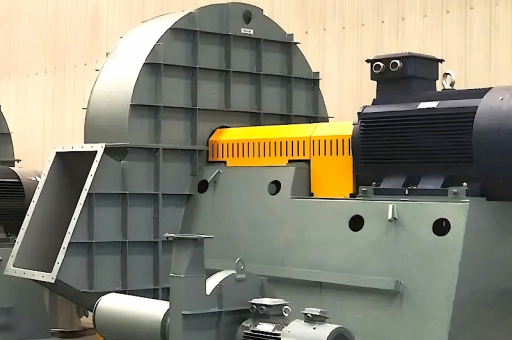
In a centrifugal induced draft fan blower, the impeller, housing, and inlet cone are the components most exposed to stress, heat, and erosion. When these parts are fabricated from high strength carbon steel, the fan can operate at higher rotational speeds, handle more aggressive gas streams, and offer a longer service life before requiring replacement.
Technical Architecture of a Centrifugal Induced Draft Fan Blower
A typical boiler centrifugal induced draft fan blower consists of:
- Impeller (rotor): The rotating element with backward-curved or radial blades, designed to accelerate gas flow.
- Volute casing (scroll housing): Converts kinetic energy into static pressure.
- Inlet box and damper: Controls gas inflow and regulates draft.
- Shaft and bearing assembly: Supports rotation with minimal friction.
- Drive system: Usually a motor with V-belt or direct coupling.
When these components are made from high strength carbon steel, the entire assembly becomes more rigid. This reduces deflection under load, minimizes vibration, and allows tighter tolerances—resulting in up to 3–5% higher aerodynamic efficiency compared to mild steel fans.
Performance Advantages in High-Temperature, High-Pressure Environments
Boiler induced draft fans operate in harsh conditions. Flue gas temperatures often range from 150°C to 350°C, and in some configurations (e.g., after air preheaters), can exceed 400°C. High strength carbon steel maintains its structural integrity at elevated temperatures better than standard carbon steel, while remaining more cost-effective than stainless steel or alloy alternatives.
Key performance benefits include:
- Thermal stability: Less expansion and warping at high operating temperatures.
- Pressure handling: Suitable for static pressures exceeding 5,000 Pa (20 inWG).
- Corrosion resistance (with coatings): When paired with proper anti-corrosion paint or ceramic linings, high strength carbon steel excels in mildly acidic flue gas environments.
Key Comparisons: Carbon Steel vs. Alternative Materials
| Material | Strength | Temperature Limit | Cost | Corrosion Resistance | Typical Lifespan |
|---|---|---|---|---|---|
| Standard mild steel | Low | Up to 300°C | Low | Poor | 3–5 years |
| High strength carbon steel | High | Up to 450°C | Medium | Moderate (with coating) | 6–10 years |
| Stainless steel (304/316) | Medium | Up to 600°C | High | Excellent | 8–12 years |
| Alloy steel (e.g., Corten) | High | Up to 550°C | High | Good | 7–10 years |
For most boiler applications where flue gas is not highly corrosive, high strength carbon steel offers the best balance of performance, durability, and budget. It is especially favored in coal-fired and biomass boiler systems where fly ash erosion is a greater concern than chemical corrosion.
Installation, Maintenance, and Lifespan Optimization
To maximize the return on investment from your high strength carbon steel boiler centrifugal induced draft fan blower, follow these best practices:
- Pre-installation inspection: Check for shipping damage, especially on the impeller blades and inlet cone.
- Foundation and alignment: Ensure the fan base is level and the drive shaft is aligned within 0.05 mm tolerance. Misalignment reduces bearing life by up to 50%.
- Periodic vibration monitoring: Use accelerometers to detect early signs of imbalance or wear.
- Blade cleaning schedule: Ash buildup on backward-curved blades reduces efficiency. Clean every 500–1,000 operating hours.
- Bearing lubrication: Use high-temperature grease and replace every 2,000 hours.
With proper maintenance, a high strength carbon steel fan can achieve 8–10 years of reliable service in continuous operation, reducing total cost of ownership by 20–30% compared to cheaper but less durable alternatives.
Frequently Asked Questions (FAQ)
Q1: Can a high strength carbon steel induced draft fan handle wet flue gas?
A: It is not recommended for saturated or condensing flue gas without protective coating. High strength carbon steel can suffer from accelerated corrosion in wet environments. Consider stainless steel or fiberglass-reinforced plastic (FRP) for wet gas applications.
Q2: Is repair welding possible on high strength carbon steel fan blades?
A: Yes, but it requires preheating (typically 150°C – 250°C) and post-weld heat treatment to avoid cracking. Always consult the fan manufacturer's welding procedure specification (WPS).
Q3: How does fan speed affect the choice of material?
A: Higher tip speeds (above 80 m/s) generate greater centrifugal stress. High strength carbon steel can safely operate at tip speeds up to 120 m/s, while mild steel would begin to deform or fail at such speeds.
Q4: What is the typical weight saving compared to standard steel?
A: Because high strength carbon steel allows thinner sections (while maintaining strength), a fan can be 15–25% lighter than an equivalent mild steel design. This reduces load on bearings and foundations.
Q5: Does high strength carbon steel require special handling during transport?
A: Yes. Its higher hardness makes it more brittle under impact at low temperatures. Avoid dropping or striking the impeller, especially in cold weather (below 0°C).
Conclusion: Selecting the Right Fan for Your Boiler System
The high strength carbon steel boiler centrifugal induced draft fan blower is a proven solution for demanding industrial boiler applications. Its superior strength, thermal stability, and cost-efficiency make it the material of choice for plants seeking reliability and performance without over-investing in exotic alloys.
When selecting a fan, evaluate your specific flue gas temperature, particulate loading, and maintenance capability. For most operators, a high strength carbon steel fan delivers the best lifetime value—combining robust construction with manageable maintenance requirements.
To learn more about matching fan specifications to your boiler system, consult an experienced fan manufacturer like [fan] for a detailed performance analysis and custom design support.





