
This article's table of contents introduction:
- Table of Contents
- 1. Introduction: Why High Temperature Air Blowers Are Non-Negotiable in Cement Plants
- 2. Core Technical Specifications: What Makes a Blower “Reliable” in Extreme Heat?
- 3. Design Features: Material Selection, Cooling Mechanisms, and Aerodynamics
- 4. Operational Challenges: Dust, Thermal Stress, and Continuous Duty Cycles
- 5. Top 5 Benefits of Centrifugal Fans in Cement Manufacturing
- 6. Frequently Asked Questions (FAQ)
- 7. Criteria for Selecting the Right Blower for Your Cement Facility
- 8. Conclusion: Future-Proofing Cement Plants with Robust Air Handling
*
Optimizing Cement Production: The Critical Role of Reliable High Temperature Material Handling Centrifugal Air Blower Fans*
Table of Contents
- Introduction: Why High Temperature Air Blowers Are Non-Negotiable in Cement Plants
- Core Technical Specifications: What Makes a Blower “Reliable” in Extreme Heat?
- Design Features: Material Selection, Cooling Mechanisms, and Aerodynamics
- Operational Challenges: Dust, Thermal Stress, and Continuous Duty Cycles
- Top 5 Benefits of Centrifugal Fans in Cement Manufacturing
- Frequently Asked Questions (FAQ)
- Criteria for Selecting the Right Blower for Your Cement Facility
- Conclusion: Future-Proofing Cement Plants with Robust Air Handling
Introduction: Why High Temperature Air Blowers Are Non-Negotiable in Cement Plants
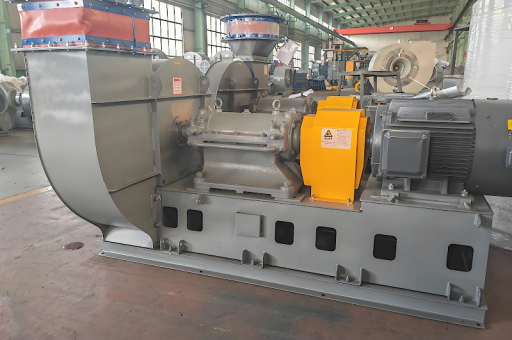
Cement manufacturing is one of the most energy-intensive industrial processes on the planet. From the preheating of raw meal to the clinker cooling stage, every thermal operation depends on precise, uninterrupted airflow—often at temperatures exceeding 400°C (752°F). The component responsible for this is the reliable high temperature material handling centrifugal air blower fan. In any serious cement plant, this fan is not a peripheral device; it is a mission-critical asset.
Without a fan engineered for extreme conditions, the entire production line faces the risk of unplanned shutdowns, reduced clinker quality, and skyrocketing maintenance costs. This report will break down how a top-tier centrifugal blower meets the demands of cement plants, and how to select one that delivers true long-term value.
Core Technical Specifications: What Makes a Blower “Reliable” in Extreme Heat?
To qualify as “reliable” in a cement plant environment, a centrifugal air blower must meet four essential performance pillars:
- Continuous Operating Temperature Capability: The fan must handle gas temperatures from 250°C to 450°C at the inlet, with occasional spikes up to 600°C. Standard industrial fans fail here; special alloy construction is mandatory.
- Abrasion Resistance: Cement dust is highly abrasive. The fan housing and impeller blades must have wear liners or be made of abrasion-resistant steel (e.g., Hardox or equivalent).
- Vibration Tolerance & Shaft Stability: Heavy dust accumulation on rotating parts can cause imbalance. A robust bearing system with cooling jackets and sealed housings ensures stable running.
- High Static Pressure Performance: Material handling in cement plants requires moving heavy dust-laden air over long distances through ductwork; the fan must deliver high static pressure (typically 2500 to 7500 Pa) without performance drop.
Key Engineering Reality: The fan in a cement plant is usually located near the preheater tower or clinker cooler—areas with intense radiant heat. Therefore, the motor must often be mounted remotely and connected via a shaft with a heat-resistant coupling. This is a design distinct from a standard ventilation fan.
Design Features: Material Selection, Cooling Mechanisms, and Aerodynamics
A truly reliable high temperature centrifugal fan is defined by its component-level engineering:
- Impeller: For temperature up to 350°C, carbon steel is acceptable; above that, manganese steel or stainless steel (SS316 or duplex stainless) is necessary. The blades are often radial or backward-curved to reduce dust adhesion.
- Bearing Cooling: Standard fans rely on air cooling; high-temp models use water-cooled or oil-circulated bearing housings. Some advanced designs use thermosiphons to remove heat without external pumps.
- Shaft Seal: Cement dust can penetrate standard labyrinths. A purge seal with compressed air or a carbon ring seal prevents dust contamination of the bearing chamber.
- Housing Geometry: The volute shape is optimized to prevent particle dead zones where dust could accumulate, causing imbalance and erosion. Wear-resistant tiles or ceramic coatings are applied in high-impact zones.
Aerodynamic Note: For material handling, the fan often runs at moderate tip speeds (50–70 m/s) to reduce particle impact velocity, extending blade life. This is a compromise between efficiency and durability.
Operational Challenges: Dust, Thermal Stress, and Continuous Duty Cycles
Cement plants present a trifecta of challenges:
- Thermal Fatigue: The fan experiences daily cold starts and rapid heating cycles. Components must be designed to handle differential expansion without seizing. Piston-ring-style impeller attachments allow radial growth.
- Abrasive Wear: Even a small amount of dust (like 5–10 mg/m³) in the airstream can erode blades. In a preheater fan, dust loads can reach 50–100 g/m³—catastrophic for standard fans.
- Turning Down Production: Cement plants operate continuously, but production output varies. A reliable fan must have variable inlet guide vanes or a VFD (Variable Frequency Drive) to modulate flow without causing surge or choking.
Real Case Insight: One Turkish cement plant replaced two conventional exhaust fans with upgraded high-temp centrifugal units. The result was a 22% reduction in downtime and a 14% reduction in energy consumption per ton of clinker—validated over 18 months of operation.
Top 5 Benefits of Centrifugal Fans in Cement Manufacturing
| Benefit | Mechanism |
|---|---|
| High Efficiency under Load | Backward-curved blades maintain efficiency even at reduced flow |
| Reliable Starting Torque | Centrifugal design provides stable torque when cold-starting after maintenance |
| Low Slip Risk | Direct-drive or gear-box options minimize slip in dusty conditions |
| Multi-Point Air Distribution | Single fan can supply multiple kiln burners or cooler compartments |
| Long Service Interval | With proper wear liners, impeller life can exceed 3 years |
Frequently Asked Questions (FAQ)
Q1: How do I determine the correct pressure class for my cement plant fan?
A: Measure the total resistance of your duct system (including bends, filters, and vertical lifts). For raw mill exhaust, you often need 3500–6000 Pa. For cooler fans, 2000–4000 Pa is common. Always add a 10–15% safety margin for dust accumulation.
Q2: Can I use a standard ventilation fan in a cement preheater tower?
A: No. Standard fans are designed for clean air at ambient temperature. In a high-temperature, abrasive environment, they will fail within weeks—often catastrophically, with blade detachment. Use only fans explicitly rated for high-temperature material handling.
Q3: What maintenance schedule is recommended for a high-temperature centrifugal fan?
A: Perform weekly vibration analysis, monthly bearing temperature checks, and quarterly thickness measurement of impeller blades (especially at leading edges). Full inspection of seals and wear liners every six months.
Q4: How does altitude affect fan performance in cement plants?
A: Higher altitude means lower air density, which reduces the fan’s ability to move mass flow. If your plant is above 1,000 meters, you must de-rate the fan: a 10% altitude increase typically requires a 5–8% increase in impeller diameter to maintain the same mass flow.
Q5: What is the expected lifespan of a high-quality centrifugal blower in cement service?
A: With proper engineering, materials, and maintenance, a major overhaul interval of 5 to 8 years is realistic. Casing life can exceed 15 years with wear liner replacement.
Criteria for Selecting the Right Blower for Your Cement Facility
When evaluating suppliers, use this checklist:
- Type of Impeller: Radial tip (for dusty gases) or backward-curved (for efficiency).
- Motor Cooling: TEFC (Totally Enclosed Fan Cooled) motors with IP55 rating minimum.
- Bearings: Check for double-row self-aligning spherical roller bearings with thermocouple monitoring.
- Drive System: Direct drive for high speeds (kiln burner), V-belt for moderate speeds (cooler tower).
- Corrosion Protection: If processing high-sulfur fuels, specify stainless steel or acid-resistant coating.
- Installation Layout: Request that the motor be located at least 2 meters away from the hot duct to reduce radiant heat transfer.
Pro Tip: Ask the manufacturer for a CAE (Computational Fluid Dynamics) report showing dust flow patterns inside the fan. If they can't provide it, their design may not be optimized for material handling.
Conclusion: Future-Proofing Cement Plants with Robust Air Handling
The selection and maintenance of a reliable high temperature material handling centrifugal air blower fan directly correlate with a cement plant’s profitability. The fan is the unsung workhorse behind clinker quality, energy consumption, and production uptime. By investing in a fan designed with high-grade materials, advanced cooling, and abrasion protection, cement producers can achieve significantly lower total cost of ownership—even though the upfront price may be higher.
As the global cement industry moves toward carbon-neutral fuel alternatives (e.g., hydrogen co-firing), gas temperatures and corrosiveness will only intensify. Future-ready fans must be engineered accordingly. Plant managers who prioritize fan reliability over initial cost will see the savings in their maintenance logs—daily.
Keywords: high temperature centrifugal fan, cement plant air blower, material handling fan, reliable industrial fan, preheater tower fan, clinker cooler fan, centrifugal air blower for cement, hot gas fan, heavy duty centrifugal blower.





