
This article's table of contents introduction:
- Table of Contents
- Introduction: What Is an Industrial High-Temperature Stainless Steel Induced Draft Fan?
- Core Components and Design Principles
- Why Stainless Steel? Material Science Behind High-Temperature Resistance
- Centrifugal Blower Mechanism: How It Works in Furnace Systems
- Key Applications Across Industries
- Performance Metrics: Flow Rate, Pressure, and Temperature Tolerance
- Installation Best Practices for Longevity
- Common Troubleshooting and FAQs
- Conclusion: Choosing the Right Fan for Your Furnace
** The Ultimate Guide to Industrial High-Temperature Stainless Steel Induced Draft Fan: Centrifugal Blower for Furnace Applications
Table of Contents
- Introduction: What Is an Industrial High-Temperature Stainless Steel Induced Draft Fan?
- Core Components and Design Principles
- Why Stainless Steel? Material Science Behind High-Temperature Resistance
- Centrifugal Blower Mechanism: How It Works in Furnace Systems
- Key Applications Across Industries
- Performance Metrics: Flow Rate, Pressure, and Temperature Tolerance
- Installation Best Practices for Longevity
- Common Troubleshooting and FAQs
- Conclusion: Choosing the Right Fan for Your Furnace
Introduction: What Is an Industrial High-Temperature Stainless Steel Induced Draft Fan?
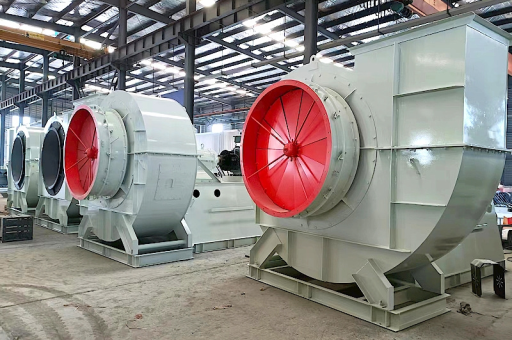
An industrial high-temperature stainless steel induced draft fan is a specialized type of centrifugal blower designed to handle extreme heat (typically 300°C to 900°C) while drawing combustion gases, flue gases, or hot air out of a furnace, boiler, kiln, or industrial oven. Unlike standard fans, these units are constructed from heat-resistant stainless steel alloys (e.g., 304, 316, 310S) to prevent oxidation, creep, and thermal fatigue.
Why is this important? In furnace applications, negative pressure must be maintained to ensure safe evacuation of toxic gases, optimize combustion efficiency, and prevent backflow. The induced draft fan (ID fan) is the critical component that creates this suction.
Core Components and Design Principles
A high-temperature stainless steel induced draft centrifugal blower consists of:
- Impeller (Rotor): Forward-curved or backward-curved blades made from cast or welded stainless steel. Backward-curved blades are preferred for high-temperature because they reduce dust accumulation and are self-cleaning.
- Housing (Volute): Heavy-gauge stainless steel casing with reinforced welds to withstand thermal expansion.
- Shaft and Bearings: Heat-resistant shaft with external cooling fins or water-cooled bearing housings to prevent lubricant breakdown.
- Drive System: Direct-drive or belt-driven. Belt drives allow variable speed control, which is essential for modulating draft.
- Inlet and Outlet: Flanged connections sized to match furnace ductwork.
Design principle: The fan creates a pressure differential by converting rotational kinetic energy into static pressure. The gas enters axially, is accelerated radially by the impeller, and exits through the volute at a higher pressure.
Why Stainless Steel? Material Science Behind High-Temperature Resistance
Standard carbon steel fans fail above 400°C due to scaling and loss of tensile strength. Stainless steel offers:
| Property | Benefit |
|---|---|
| Chromium oxide layer (Cr₂O₃) | Prevents oxidation up to 900°C |
| Nickel content (8-20%) | Maintains ductility under thermal cycling |
| Molybdenum (in 316) | Resists chloride corrosion in acidic flue gases |
| 310S grade | Highest heat resistance (up to 1100°C) for extreme furnace conditions |
Real-world example: A steel mill furnace operating at 850°C uses a 310S stainless steel induced draft fan. The material retains 70% of its room-temperature yield strength at 800°C, while carbon steel would have zero structural integrity.
Centrifugal Blower Mechanism: How It Works in Furnace Systems
The centrifugal blower inside an induced draft fan operates on a simple principle:
- Gas entry: Hot flue gas enters the fan inlet from the furnace exhaust.
- Impeller action: The rotating impeller (spinning at 1000–3000 RPM) throws gas outward using centrifugal force.
- Velocity to pressure conversion: The volute housing gradually expands, converting high-velocity gas into static pressure.
- Discharge: Pressurized gas exits through the outlet to a chimney or pollution control system.
Key difference from forced draft fans: Induced draft fans work under negative pressure (suction side), meaning the fan is located after the furnace. This reduces the risk of hot gas leakage.
Key Applications Across Industries
These fans are indispensable in:
- Steel and metal smelting: EAF (electric arc furnace) exhaust, ladle preheaters
- Cement plants: Kiln exhaust gas handling at 400-600°C
- Chemical processing: Thermal oxidizers, incinerators
- Power generation: Boiler induced draft in coal or biomass plants
- Glass manufacturing: Forehearth and annealing lehr ventilation
- Waste-to-energy plants: Flue gas extraction before scrubbers
Case study: A Chinese cement plant replaced a carbon steel fan with a 304L stainless steel induced draft fan. The result: 3x longer service life and 12% lower energy consumption due to the backward-curved impeller design.
Performance Metrics: Flow Rate, Pressure, and Temperature Tolerance
When specifying a high-temperature induced draft fan, engineers evaluate:
- Flow rate (CFM or m³/h): Typically 10,000 – 500,000 m³/h for industrial furnaces
- Static pressure (Pa or inWG): Usually 500 – 5000 Pa for induced draft
- Operating temperature: Maximum continuous temperature (e.g., 700°C) and peak surge temperature
- Impeller tip speed: Limited by material strength (stainless steel: max 120 m/s at 800°C)
- Efficiency: Modern backward-curved fans achieve 75-85% static efficiency
Important: Always derate motor power at higher temperatures due to reduced air density. A fan moving 300°C air requires ~40% more motor power than one moving 20°C air at the same volumetric flow.
Installation Best Practices for Longevity
To maximize the service life of your stainless steel induced draft fan:
- Thermal expansion compensation: Install flexible expansion joints at inlet and outlet
- Bearing cooling: Use water-cooled bearing housings or insulated pedestals when gas temperature exceeds 300°C
- Vibration monitoring: Install accelerometers to detect imbalance caused by thermal distortion or dust buildup
- Drainage: Add a bottom drain port to remove condensation during warm-up
- Access doors: Include inspection doors for cleaning and impeller wear checks
- Alignment: Ensure shaft alignment during installation as thermal growth can misalign direct-drive couplings
Pro tip: Apply anti-seize compound on all bolts. At high temperatures, stainless steel bolts can gall and seize.
Common Troubleshooting and FAQs
Q1: Why does my induced draft fan vibrate after a furnace shutdown? A: Thermal shock can cause temporary impeller warping. Allow the fan to cool slowly. Check for accumulated ash on blades, which throws off balance.
Q2: Can I use a standard fan for a high-temperature furnace? A: No. Standard fans use carbon steel or aluminum, which lose strength above 200°C. Use only stainless steel (304L, 316L, or 310S) for furnace applications.
Q3: What maintenance does a high-temperature fan require? A: Weekly: Check bearing temperature (<85°C). Monthly: Inspect wear plates and impeller for cracking. Annually: Perform NDT (dye penetrant or magnetic particle) on welds.
Q4: How do I reduce noise from the induced draft fan? A: Install a silencer on the discharge duct. Use a slower RPM with a larger impeller if possible. Ensure ductwork is properly sized to avoid flow turbulence.
Q5: What is the typical lifespan of a stainless steel induced draft fan? A: With proper maintenance: 8–12 years. Key failure modes are thermal fatigue cracking of the impeller and bearing failure due to heat migration.
Conclusion: Choosing the Right Fan for Your Furnace
Selecting an industrial high-temperature stainless steel induced draft fan is a strategic investment in safety, efficiency, and uptime. The correct centrifugal blower must match your furnace’s temperature profile, gas chemistry, and pressure requirements. Prioritize:
- Material grade: 310S for >850°C furnaces; 304L for moderate temperatures
- Impeller type: Backward-curved for dusty flue gases
- Drive system: VFD-controlled for precise draft modulation
- Cooling method: Water-jacketed bearings for >400°C applications
When in doubt, consult a fan manufacturer with experience in high-temperature furnace environments. A properly specified fan will deliver reliable performance for a decade or more, making it the unsung hero of your industrial process.





