
This article's table of contents introduction:
- Table of Contents
- 1. Introduction: What Is a Single Suction Explosion Proof Anticorrosion Dust Extractor Centrifugal Fan?
- 2. Core Technical Features and Construction
- 3. Why Explosion Proof and Anticorrosion Are Critical in Industrial Dust Extraction
- 4. Performance Parameters and Selection Criteria
- 5. Common Applications Across Industries
- 6. Installation and Maintenance Best Practices
- 7. Troubleshooting and Q&A
- 8. Conclusion: Future Trends and Compliance
The Ultimate Guide to Single Suction Explosion Proof Anticorrosion Dust Extractor Centrifugal Fan: Design, Applications, and Safety**
Table of Contents
- Introduction: What Is a Single Suction Explosion Proof Anticorrosion Dust Extractor Centrifugal Fan?
- Core Technical Features and Construction
- Why Explosion Proof and Anticorrosion Are Critical in Industrial Dust Extraction
- Performance Parameters and Selection Criteria
- Common Applications Across Industries
- Installation and Maintenance Best Practices
- Troubleshooting and Q&A
- Conclusion: Future Trends and Compliance
Introduction: What Is a Single Suction Explosion Proof Anticorrosion Dust Extractor Centrifugal Fan?
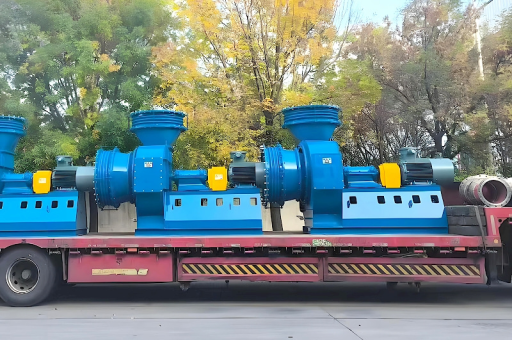
A Single Suction Explosion Proof Anticorrosion Dust Extractor Centrifugal Fan is a specialized industrial fan designed to handle hazardous, corrosive, and dust-laden air streams. Unlike standard centrifugal fans, this equipment combines four critical attributes into one robust system:
- Single Suction (Overhung) Impeller: Air enters from one side only, allowing compact design and efficient handling of particulate-laden gases.
- Explosion Proof Construction: Motor, housing, and electrical components are designed to contain internal explosions or prevent ignition in flammable environments.
- Anticorrosion Treatment: Materials such as stainless steel, FRP (fiberglass-reinforced plastic), or specialized coatings resist chemical attack.
- Dust Extraction Capability: Optimized blade geometry and volute design minimize clogging and maximize particulate separation.
According to the International Electrotechnical Commission (IEC) and ATEX directives, such fans are mandatory in zones where combustible dust (e.g., coal, grain, metal powder) or corrosive gases (HCl, SO₂, chlorine) pose risks.
Core Technical Features and Construction
Impeller Design
- Single suction backward-curved or radial blades reduce turbulence and wearing from abrasive particles.
- Static and dynamic balancing complies with ISO 1940 G6.3 to ensure vibration-free operation.
Materials & Coatings
- Housing: Carbon steel with epoxy-based anticorrosion coating (minimum 200 μm thickness) or 316L stainless steel.
- Impeller: EN 1.4571 (316Ti) stainless steel for high temperature and acid resistance.
- Shaft Seal: Teflon or carbon-filled PTFE gland packing to prevent leakage of hazardous gases.
Explosion Protection Mechanisms
- ATEX/IECEx Certified: Motor and fan assembly certified for Zone 1/21 (gas/dust).
- Spark-Resistant Construction: Impeller and housing use non-ferrous materials or conductive coatings.
- Pressure Relief Panel: To vent explosion pressure in worst-case scenarios.
Motor & Drive
- TEFC (Totally Enclosed Fan Cooled) explosion-proof motor with class F insulation and IP66 enclosure.
- Direct drive or belt drive with static conductive belts.
Why Explosion Proof and Anticorrosion Are Critical in Industrial Dust Extraction
Case: Chemical Plant – PVC Dust Removal
PVC dust contains chlorine compounds that cause rapid pitting in standard carbon steel fans. Simultaneously, the dust can be electrically charged – a known trigger for static discharge explosions.
Without an anticorrosion explosion-proof fan:
- Metal corrosion causes wall thinning and imbalance within 6 months.
- Dust accumulation on blades increases ignition risk.
The specialized fan addresses both:
- FRP housing resists HCl attack.
- Conductive polypropylene impeller dissipates static charges.
- Temperature sensors (PT100) trigger automatic shutdown if T > 80°C.
According to NFPA 68 and 69 standards, any dust collector system in combustible dust zones must incorporate explosion isolation and suppression, which begins with the fan design.
Performance Parameters and Selection Criteria
| Parameter | Typical Range | Impact on Selection |
|---|---|---|
| Airflow (m³/h) | 500 – 150,000 | Determines duct diameter and motor power |
| Static Pressure (Pa) | 1,000 – 12,000 | Must exceed system resistance, including filter media |
| Dust Concentration (g/m³) | < 50 (standard) | Higher concentration requires wear-resistant lining |
| Temperature (°C) | -20 to +120 (standard); up to +350 with thermal barrier | Affects material choice and motor cooling |
| Explosion Group | IIA, IIB, IIC (gas); IIIA, IIIB, IIIC (dust) | IIC (hydrogen) requires highest spark-proof standard |
Selection Formula Example:
Motor Power (kW) = (Airflow × Static Pressure) / (3600 × Efficiency × 1000)
Typical efficiency for these fans: 68%–82%.
Common Applications Across Industries
- Printery & Coating Lines: Solvent vapors (toluene, xylene) require explosion-proof fan with T3 temperature class.
- Pharmaceuticals: API dusts (e.g., antibiotics) must not leak – sealed shaft design prevents contamination.
- Metalworking: Grinding and welding fume extraction with anticorrosion for acidic flux compounds.
- Coal & Biomass Power: High abrasion dust requires impeller with tungsten carbide coating.
- Wastewater Treatment: H₂S gas corrodes standard fans; FRP double-suction variant recommended.
- Semiconductor Fab: Cleanroom exhaust of corrosive dopant gases (boron trichloride, arsine).
Installation and Maintenance Best Practices
Installation
- Use anti-vibration mounts and flexible connectors to isolate duct stress.
- Ensure grounding resistance < 4 ohms for static dissipation.
- Position pressure relief vent away from pedestrian areas.
Maintenance Checklist
- Monthly: Check V-belt tension and shaft seal leakage.
- Quarterly: Measure vibration velocity (ISO 10816-3) – threshold: 4.5 mm/s RMS.
- Annually: Megger test motor insulation (> 10 MΩ).
- Replacement: Impeller after 8,000 hours (or visible wear > 1 mm).
Troubleshooting and Q&A
Q1: Can a standard centrifugal fan be retrofitted for explosion proof service?
No. Retrofitting requires the entire fan to be re-certified (ATEX/IECEx). The housing, motor, bearings, and seals must be designed to contain sparking; retrofitting often compromises safety. It is always recommended to purchase a fan that is initially built with explosion-proof certification (e.g., from a manufacturer like fan Co.).
Q2: What happens when an anticorrosion coating fails prematurely?
If coating fails within 6 months, it is likely due to improper surface preparation or curing. A re-certified repair must involve grit blasting to near-white metal (Sa 2.5) and applying a two-pack epoxy system. In severe environments, upgrade to solid FRP or Hastelloy material.
Q3: How does dust accumulation affect fan performance?
Dust on impeller increases imbalance, reduces flow by up to 20%, and raises motor current, causing thermal overload. In explosion-proof fans, dust layer > 2 mm also reduces heat dissipation – leading to surface ignition. Use smooth surface coating and install automatic purging cycles.
Q4: Is a variable frequency drive (VFD) safe for explosion-proof fans?
Yes, but the VFD itself must be placed in a non-hazardous area or in an explosion-proof enclosure. Additionally, a sine filter is required to prevent motor overheating at low speeds. The fan manufacturer should confirm that the impeller natural frequency does not coincide with VFD harmonics.
Conclusion: Future Trends and Compliance
The industrial fan market is shifting toward intelligent systems that combine vibration sensors, thermal cameras, and IoT monitoring for predictive maintenance. New nanocomposite coatings promise 5× longer anticorrosion life. Meanwhile, global regulations (e.g., China GB 15577-2018, European ATEX 2014/34/EU) increasingly mandate fan-level explosion isolation, meaning the fan must withstand a dust explosion without rupturing.
When investing in a Single Suction Explosion Proof Anticorrosion Dust Extractor Centrifugal Fan, always request:
- Third-party ATEX/IECEx certificate (not just a declaration).
- Material mill certificates (EN 10204 3.1).
- Performance curve based on actual test (not theoretical).
Choosing the right fan is not just about efficiency – it is about safety, longevity, and regulatory compliance. With proper design, materials, and maintenance, this specialized fan can serve 15–20 years in the harshest industrial environments.





