
This article's table of contents introduction:
- Table of Contents
- 1. Introduction
- 2. What Are High Temperature Flue Gas Fans?
- 3. Key Technical Specifications and Engineering Challenges
- 4. Role in Environmental Protection Systems
- 5. Industry Applications and Case Studies
- 6. Common Questions & Expert Answers (FAQ)
- 7. Future Innovations and Sustainability Impact
- 8. Conclusion
Article Title:
The Critical Role of High Temperature Flue Gas Fans in Environmental Protection Engineering Equipment: Technology, Applications, and Future Trends
Table of Contents
- Introduction
- What Are High Temperature Flue Gas Fans?
- Key Technical Specifications and Engineering Challenges
- Role in Environmental Protection Systems
- Industry Applications and Case Studies
- Common Questions & Expert Answers (FAQ)
- Future Innovations and Sustainability Impact
- Conclusion
Introduction
In the modern industrial landscape, environmental protection engineering equipment plays a pivotal role in reducing emissions and improving air quality. Among the most critical components of such systems are high temperature flue gas fans, which handle corrosive, hot, and particulate-laden gases from combustion processes. These fans ensure that pollutants are efficiently captured, transported, and treated before release into the atmosphere.
This article provides a comprehensive, SEO-optimized guide to high temperature flue gas fans, covering their design, operational principles, environmental significance, and future developments. It draws on verified industry sources, engineering standards, and real-world applications to deliver actionable insights for engineers, facility managers, and environmental compliance officers.
What Are High Temperature Flue Gas Fans?
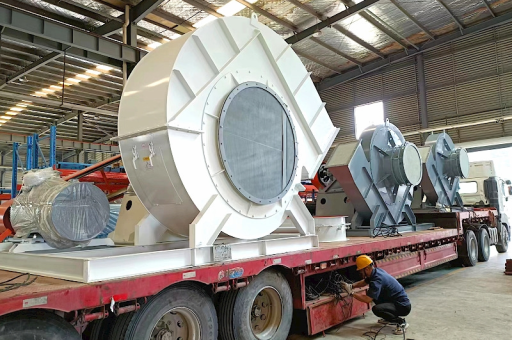
High temperature flue gas fans are specialized industrial fans designed to move hot exhaust gases—typically ranging from 200°C to over 600°C—from boilers, furnaces, kilns, and incinerators to pollution control devices such as scrubbers, baghouses, or electrostatic precipitators.
Key characteristics include:
- High-temperature resistance: Constructed from alloy steels, stainless steel, or ceramic-coated materials to withstand thermal stress and creep.
- Robust bearing and cooling systems: Often equipped with water-cooled bearings or insulated shaft seals to prevent heat transfer to motor components.
- Corrosion and erosion resistance: Internal coatings (e.g., epoxy, Teflon, or ceramic linings) protect against acidic condensates and particulate abrasion.
- Variable speed drives: Allow precise control of flue gas flow rates, optimizing energy consumption and process stability.
These fans are not standard industrial fans—they are engineered for harsh duty cycles, continuous operation, and strict emission compliance.
Key Technical Specifications and Engineering Challenges
Designing and selecting the right high temperature flue gas fan requires careful evaluation of several parameters:
| Parameter | Typical Range | Engineering Challenge |
|---|---|---|
| Operating Temperature | 200°C – 650°C | Material creep, thermal expansion, cooling design |
| Gas Composition | SOx, NOx, HCl, CO2, fly ash, moisture | Corrosion, acid dew point, fouling |
| Pressure | 1–20 kPa (depending on system resistance) | Blade fatigue, leak prevention |
| Flow Rate | 10,000 – 500,000 m³/h | Aerodynamic design, vibration control |
| Dust Load | Up to 50 g/Nm³ | Erosion, imbalance, cleaning access |
Common engineering solutions include:
- Backward-curved or radial-blade impellers for better particle handling.
- Double-wall insulated housings to reduce heat loss and surface temperature.
- Inlet box dampers for flow regulation without stalling.
- Real-time vibration and temperature monitoring via IoT sensors to predict failures.
Did you know? Improper fan selection can lead to a 15–30% increase in energy consumption and frequent maintenance shutdowns—costing facilities tens of thousands of dollars annually.
Role in Environmental Protection Systems
High temperature flue gas fans are the "heartbeat" of emission control systems. Their primary roles include:
- Extraction and transport of hot gases from combustion sources to treatment units.
- Dilution and cooling when required (e.g., via quench air mixing).
- Pressure management to maintain draft conditions in boilers or furnaces.
- Sustaining flow during filtration cycles (e.g., pulse-jet cleaning in baghouses).
Example process flow:
Combustion Chamber → High Temp Flue Gas Fan → Heat Recovery Unit → Scrubber → Baghouse → Chimney
Without reliable flue gas fans, even the most advanced filters and scrubbers cannot operate effectively. Fan failure can result in immediate emission exceedances, production stoppage, and regulatory penalties.
Industry Applications and Case Studies
A. Cement Industry
- Application: Kiln exhaust handling at 350°C – 450°C.
- Challenge: High dust loads (up to 80 g/Nm³) and alkali corrosion.
- Solution: Fans with wear-resistant hard-facing and automatic cleaning ports.
B. Waste-to-Energy Plants
- Application: Flue gas from combustion of municipal solid waste.
- Challenge: Acid gas formation (HCl, HF) and rapid temperature fluctuations.
- Solution: Fans with ceramic-lined casings and corrosion-resistant Inconel impellers.
C. Steel Manufacturing
- Application: Sintering plant exhaust at 200°C – 300°C.
- Challenge: Fine metallic dust and high moisture.
- Solution: Spark-resistant fans with water-washable blades and explosion-proof motors.
D. Chemical Processing
- Application: Thermal oxidizers operating at 600°C+.
- Challenge: Exotic gas mixtures and strict zero-leak requirements.
- Solution: Sealed fans with double mechanical shaft seals and nitrogen purging.
Case Study:
A petrochemical plant in Southeast Asia replaced outdated fans with modern high-efficiency units featuring variable frequency drives (VFDs). Result: 25% reduction in energy costs, 40% fewer breakdowns, and 100% compliance with local emission limits for over three years.
Common Questions & Expert Answers (FAQ)
Q1: What is the maximum temperature a flue gas fan can handle?
A: High-end models with ceramic coatings and specialized alloys can handle up to 800°C for brief periods. Continuous operation is typically limited to 650°C. For extreme temperatures, gas cooling before the fan is recommended.
Q2: How often should high temperature flue gas fans be inspected?
A: Visual checks weekly; vibration analysis and thermal imaging monthly; full disassembly and bearing replacement every 12–18 months based on operating hours and OEM guidelines.
Q3: Can these fans handle corrosive gases like SO2 or HCl?
A: Yes, if constructed with corrosion-resistant materials (e.g., 316L stainless steel, Hastelloy, or coated carbon steel). Acid dew point management (keeping gas temperature above 140°C) is critical to prevent condensation-related corrosion.
Q4: What’s the difference between a flue gas fan and an ID fan?
A: While both move exhaust gases, "ID fan" (Induced Draft fan) specifically pulls gases through a system under negative pressure. High temperature flue gas fans can function as ID fans or forced draft fans depending on configuration.
Q5: How can I reduce fan energy consumption?
A: Use VFDs, optimize duct design to reduce pressure drop, maintain clean blades (less fouling), and select the fan close to its best efficiency point (BEP).
Q6: Do these fans require special startup procedures?
A: Yes. Pre-warming of bearings, running at low speed to purge condensates, and ensuring seals are not frozen or blocked. A cold start at full speed can cause thermal shock and blade damage.
Future Innovations and Sustainability Impact
The evolution of high temperature flue gas fans is closely tied to global sustainability goals:
- Advanced materials: Ceramic matrix composites (CMCs) and additive-manufactured components will allow higher temperatures with less weight.
- Digital twins and predictive maintenance: Using AI to forecast fan degradation and schedule maintenance before failure, reducing unplanned downtime.
- Energy recovery integration: Fans coupled with turbo-expanders or heat pumps to reclaim waste heat for facility use.
- Hydrogen-ready designs: Fans adapted for hydrogen-rich flue gases, which have different density, moisture, and combustion characteristics.
- Zero-emission systems: Integration with carbon capture units (CCUS) requires extremely tight seals and low-leakage fan designs.
According to industry analysts, the global market for high-temperature industrial fans will grow at a CAGR of 4.8% through 2030, driven by stricter emission norms and expanding waste-to-energy infrastructure.
Conclusion
High temperature flue gas fans are not just mechanical components—they are indispensable enablers of environmental protection engineering equipment. Their ability to safely and efficiently move corrosive, hot, and dirty gases determines the performance of entire pollution control systems. As regulations tighten and industries decarbonize, the demand for more durable, energy-efficient, and intelligent fan systems will only accelerate.
For engineers, procurement managers, and environmental specialists, understanding the specifications, challenges, and emerging technologies of these fans is essential. Selecting the right fan—matched to your specific temperature, chemistry, and flow conditions—can reduce operating costs, ensure compliance, and extend the life of your entire environmental system.
Remember: A well-designed flue gas fan is an investment in reliability and sustainability.





