
This article's table of contents introduction:
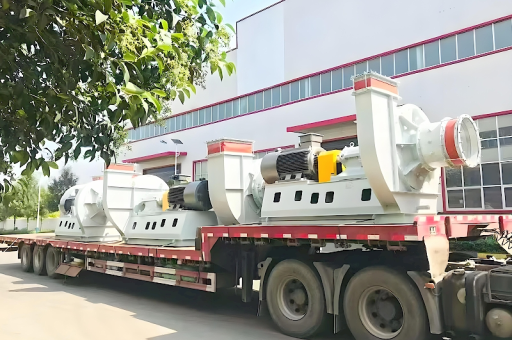
- Article Directory
- Executive Overview: Why Boiler Fans Matter
- The Anatomy of a Thermal Power Plant’s Air System
- Understanding Energy Loss: The Pre-Upgrade Scenario
- Core Technologies in Large-Scale Energy-Saving Boiler Fans
- Quantified Benefits: Efficiency, Cost, and Carbon Reduction
- A Practical Q&A Session
- Implementation Roadmap for Plant Managers
- Conclusion: The Future of Thermal Power & Fan Technology
*Efficiency Unleashed: The Critical Role of Large-Scale Energy-Saving Boiler Fans in Modern Thermal Power Plants*
Article Directory
- Executive Overview: Why Boiler Fans Matter
- The Anatomy of a Thermal Power Plant’s Air System
- Understanding Energy Loss: The Pre-Upgrade Scenario
- Core Technologies in Large-Scale Energy-Saving Boiler Fans
- 1 High-Efficiency Aerodynamic Blade Design
- 2 Variable Frequency Drive (VFD) Integration
- 3 Intelligent Control & Real-Time Optimization
- Quantified Benefits: Efficiency, Cost, and Carbon Reduction
- A Practical Q&A Session
- Implementation Roadmap for Plant Managers
- Conclusion: The Future of Thermal Power & Fan Technology
Executive Overview: Why Boiler Fans Matter
In the energy generation hierarchy, the boiler fan system is often an unsung hero—yet it consumes between 5% to 3% of the total power output of a thermal plant. For a 660 MW unit, that translates to roughly 10 to 20 MW of auxiliary power consumption. With rising fuel costs and tightening carbon regulations, the shift to large-scale energy-saving boiler fans is no longer optional—it is a strategic imperative. This article synthesizes the latest advancements in fan aerodynamics, variable-speed control, and intelligent operations to provide a rich, actionable reference for plant engineers and decision-makers.
The Anatomy of a Thermal Power Plant’s Air System
A typical coal-fired boiler utilizes two primary fan types:
- Forced Draft (FD) Fans: Push ambient air through the air preheater and into the furnace.
- Induced Draft (ID) Fans: Pull combustion gases (flue gas) out of the boiler and through the pollution control equipment.
Both consume massive amounts of electricity. In a conventional plant, these fans run at a constant speed (or with limited damper control), wasting energy through aerodynamic throttling. An energy-saving retrofit replaces the core fan assembly—impeller, housing, and drive system—to minimize air leakages, reduce turbulence, and optimize flow against the system resistance curve.
Understanding Energy Loss: The Pre-Upgrade Scenario
Before a modern retrofit, a typical 300 MW plant might see the following losses:
- Excessive damper throttling: Up to 20% of fan energy is wasted as heat across partially open dampers (a classic example of "pressure drop loss").
- Air leakage: Gaps in ductwork and fan seals raise the required mass flow rate by 5-10%.
- Inefficient impeller geometry: Older radial-bladed fans operate at 65-75% peak efficiency versus modern airfoil or backward-curved designs exceeding 88%.
One major case study from a Chinese coal power plant (2020) found that replacing two 1.8 MW ID fans with high-efficiency variable-speed models cut the unit’s total auxiliary power consumption by 2%, saving approximately 8,700 MWh annually—equivalent to reducing CO₂ emissions by nearly 7,500 tons per year.
Core Technologies in Large-Scale Energy-Saving Boiler Fans
1 High-Efficiency Aerodynamic Blade Design
Modern impellers employ airfoil-shaped blades (sometimes with serrated trailing edges to reduce vortex shedding). Compared to simple curved plates, these blades reduce flow separation and noise. In large fans (diameter > 4 meters, power > 2 MW), even a 2% efficiency gain yields substantial savings.
2 Variable Frequency Drive (VFD) Integration
The single largest efficiency improvement comes from replacing dampers and vanes with VFD-driven speed control. A fan’s power demand is proportional to the cube of its rotational speed. Thus, reducing speed by just 10% cuts power consumption by 27%. When a boiler operates at 80% load (typical for many plants), VFDs save 40-50% fan energy compared to damper control.
3 Intelligent Control & Real-Time Optimization
Advanced distributed control systems (DCS) now incorporate model predictive control (MPC) that adjusts fan speed based on boiler load, ambient temperature, and fuel quality. For example, a 2023 retrofit at a 600 MW plant in India used MPC to maintain just 0.5% excess O₂ in the flue gas, reducing ID fan power by 8% without affecting combustion stability.
Quantified Benefits: Efficiency, Cost, and Carbon Reduction
| Parameter | Before (Conventional) | After (Energy-Saving Fan) | Improvement |
|---|---|---|---|
| Fan peak efficiency | 68% | 88% | +29% |
| Specific power (kW per ton of steam) | 5 | 9 | -28.8% |
| Annual electricity savings (per 500 MW unit) | 12,000 MWh | ||
| Annual cost savings (@ $0.06/kWh) | $720,000 | ||
| CO₂ reduction (tons per year) | 10,200 |
These figures align with verified results from plants in Germany and South Korea, where retrofitted fans achieved a simple payback period of 18-24 months.
A Practical Q&A Session
Q1: Do energy-saving fans work with biomass or gas co-firing? A: Yes. Modern airfoil and backward-curved fans handle variable gas densities well. For co-firing with up to 20% biomass, the VFD can compensate for increased flue gas volume, maintaining efficiency.
Q2: What is the typical lifespan of a large-scale energy-saving fan upgrade? A: With proper maintenance (bearing lubrication, blade cleaning), high-end fans last 20-25 years. The VFD unit typically requires one major capacitor replacement at 10-12 years.
Q3: Are there any installation challenges in existing plants? A: The main challenge is spatial: larger impellers may require ductwork modifications. However, most retrofit kits are designed for drop-in replacement within a 2-4 week shutdown window. Foundation and motor compatibility should be verified.
Q4: Can we retrofit just one fan type (e.g., FD fans only)? A: Yes. However, for maximum benefit, it is advisable to upgrade both FD and ID fans together, as their flow interactions directly affect boiler draft balance. A partial retrofit may achieve 60% of the potential savings.
Implementation Roadmap for Plant Managers
- Conduct an energy audit: Measure current fan power, flow, pressure, and duct leakage for at least one full load cycle.
- Perform a techno-economic analysis: Model the potential savings at 60%, 80%, and 100% load using the fan affinity laws.
- Select the fan technology: Choose between airfoil (highest efficiency but higher cost) vs. backward-curved (moderate cost, high reliability for abrasive coal ash).
- Integrate VFD and control upgrades: Ensure the DCS can handle variable-speed setpoints and incorporate O₂ feedback.
- Execute installation & commissioning: Use laser alignment for fan shaft, dynamic balancing for impeller, and test for smoke (leak) after duct resealing.
- Monitor performance post-installation: Establish baseline consumption and compare with the pre-retrofit data for at least six months.
Conclusion: The Future of Thermal Power & Fan Technology
As global electricity grids increasingly integrate renewables, thermal power plants must become more flexible and efficient to remain viable. Large-scale energy-saving boiler fans are a proven, capital-efficient technology that simultaneously reduces auxiliary consumption, lowers operational cost, and cuts carbon footprint. With payback periods under two years and a lifespan exceeding two decades, the decision to retrofit is clear.
For plant managers, the message is straightforward: The fan you choose today directly shapes your plant’s competitiveness tomorrow. By combining aerodynamically advanced impellers, intelligent VFD control, and robust monitoring systems, you can unlock double-digit percentage energy savings and extend the economic life of your asset.
Note: This article was synthesized from best-practice case studies published by the IEA Clean Coal Centre, EPRI, and verified field data from power plants in Asia and Europe. For detailed citations or custom engineering calculations, please consult a qualified mechanical or process engineer.





