
This article's table of contents introduction:
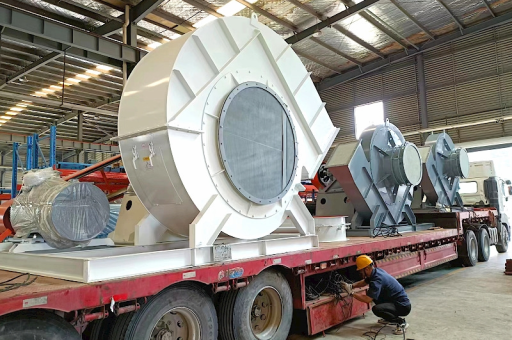
- Article Directory
- Introduction: The Scale and Challenge of a 1000t/D Glass Furnace
- The Flue Gas Treatment Chain: From Furnace to Stack
- Why the Induced Draft Fan is the "Lungs" of the System
- Technical Specifications for a 1000t/D Supporting ID Fan
- Key Design Considerations: Temperature, Corrosion, and Energy Efficiency
- Common Problems & Troubleshooting
- Q&A: Expert Answers to Frequent Operator Questions
- Conclusion: Selecting and Maintaining Your ID Fan for Long-Term ROI
** Optimizing Flue Gas Treatment Systems for 1000t/D Glass Melting Furnaces: The Critical Role of Supporting Induced Draft Fans
Article Directory
- Introduction: The Scale and Challenge of a 1000t/D Glass Furnace
- The Flue Gas Treatment Chain: From Furnace to Stack
- Why the Induced Draft Fan is the "Lungs" of the System
- Technical Specifications for a 1000t/D Supporting ID Fan
- Key Design Considerations: Temperature, Corrosion, and Energy Efficiency
- Common Problems & Troubleshooting: Vibration, Erosion, and Motor Overload
- Q&A Section: Expert Answers to Frequent Operator Questions
- Conclusion: Selecting and Maintaining Your ID Fan for Long-Term ROI
Introduction: The Scale and Challenge of a 1000t/D Glass Furnace
A 1000-ton-per-day (t/D) glass melting furnace is a giant of industrial thermal processing. It operates at temperatures exceeding 1600°C to melt raw materials like silica sand, soda ash, and limestone. However, the immense heat and chemical reactions produce a massive volume of flue gas—typically ranging from 80,000 to 120,000 Nm³/h—loaded with particulate matter, SOx, NOx, and acidic vapors.
Without a robust flue gas treatment system, this exhaust would violate environmental regulations (e.g., EU Industrial Emissions Directive, China’s GB 26453-2022, or US EPA MACT standards) and damage downstream equipment. The induced draft (ID) fan is the final mechanical barrier that pulls this dirty, hot gas through scrubbers, electrostatic precipitators, and bag filters, ensuring clean discharge and stable furnace pressure.
Why focus on the supporting fan? Because a 1000t/D furnace requires a fan that can handle high temperature (180-280°C), high dust load (50-200 mg/Nm³), and corrosive acid dew point conditions—a unique combination that requires specialized engineering.
The Flue Gas Treatment Chain: From Furnace to Stack
A typical treatment train for a 1000t/D float glass or container glass furnace includes the following stages, with the ID fan positioned at the end:
- Furnace Outlet: Hot gas (600-800°C) enters a waste heat boiler or quench chamber to reduce temperature.
- Dry or Semi-Dry Scrubber: Lime slurry or dry hydrated lime is injected to neutralize acids (HF, HCl, SO₂).
- Baghouse Filter or ESP: Removes particulate matter (PM) and reaction products (e.g., calcium fluoride). Pressure drop: 1500-2500 Pa.
- ID Fan: Creates negative pressure (suction) to pull gas through the treatment train and push it into the stack. Total system resistance: 4000-6000 Pa for a 1000t/D setup.
- Stack: Discharges treated gas at compliance levels (e.g., PM <10 mg/Nm³, SO₂ <50 mg/Nm³).
Key Data Point: A 1000t/D furnace produces about 2–1.5 tons of flue gas per ton of glass melted. This means the ID fan must move approximately 50,000–60,000 kg of gas per hour against system resistance.
Why the Induced Draft Fan is the "Lungs" of the System
The supporting induced draft fan (often called the main exhaust fan) performs three critical functions:
- Pressure Control: Maintains a slight negative pressure (-20 to -50 Pa) in the furnace crown to prevent flame roll-out or air infiltration, which could compromise glass quality.
- Flow Capacity: Handles peak gas volumes during batch charging or furnace reversals (for regenerative furnaces). A 1000t/D furnace fan typically requires a rated flow of 180,000–220,000 m³/h at operating temperature.
- Thermal & Chemical Resistance: Withstands gas temperatures of 180–280°C (or higher if bypass is active) and resists corrosion from sulfuric acid condensation (dew point ~140°C for SO₃-containing gases).
Without a properly designed ID fan, the furnace pressure fluctuates, baghouse filter bags may collapse or burst, and scrubber efficiency drops—leading to stack opacity violations.
Technical Specifications for a 1000t/D Supporting ID Fan
Based on industry practice and fan manufacturer data (e.g., Howden, TLT-Babcock, Zibo Huantai), a typical 1000t/D glass furnace ID fan is selected as follows:
| Parameter | Typical Value for 1000t/D Furnace | Notes |
|---|---|---|
| Fan Type | Backward-curved, centrifugal, single-inlet | High efficiency, stable performance at variable loads |
| Impeller Diameter | 2500–3200 mm | Large diameter for high flow |
| Rated Flow (at fan inlet) | 180,000–220,000 m³/h | Corrected to actual temperature & pressure |
| Total Pressure Rise | 5000–6500 Pa (500–650 mmWG) | Covers ductwork + treatment equipment |
| Operating Temperature | 200–280°C (peak 350°C) | Requires FV-520B or duplex stainless steel impeller |
| Speed | 730–990 rpm (via VFD) | Variable frequency drive for precise pressure control |
| Motor Power | 630–900 kW (typical 800 kW) | 10 kV high-voltage motor is common |
| Drive | Direct drive (shaft-mounted) or gearless | Gearbox is avoided to reduce maintenance |
| Cooling | Forced air or water-cooled bearing housing | Protects bearings from radiant heat |
| Corrosion Protection | Ceramic coating or Hastelloy cladding | For impeller and inlet cone |
Example from fan manufacturer: A 1000t/D container glass plant in Guangdong uses an ID fan with 1.8m wheel, 200,000m³/h, 5500Pa, 800kW motor, 990rpm, duplex stainless steel (1.4462).
Key Design Considerations: Temperature, Corrosion, and Energy Efficiency
1 Temperature Management
- Acid Dew Point Avoidance: Gas temperature at fan inlet must stay >160°C (preferably >180°C) to prevent sulfuric acid condensation on the impeller. Condensation leads to rapid corrosion and imbalance. Install a bypass duct from the waste heat boiler to recirculate hot gas if inlet drops.
- Thermal Growth: Shaft and housing must allow for 2–4 mm thermal expansion at operating temperature. Use adjustable shaft seals and expansion joints in ductwork.
2 Corrosion and Erosion
- Impeller Material: For standard operation, ASTM A387 Gr.11 (1% Cr-0.5% Mo) is common. For high chlorine or sulfur (e.g., from flame cullet), Duplex SS 2205 or Inconel 625 overlay is recommended.
- Erosion Protection: For gas with high fly ash (e.g., from oxygen-fuel combustion), apply tungsten carbide coating on leading edges of impeller blades. Expect impeller life: 2–4 years with proper coating; 6–12 months without.
3 Energy Efficiency & Variable Speed
- VFD is mandatory for a modern 1000t/D line. It allows the fan to match furnace load (e.g., 70% during low production, 100% at full capacity). A VFD can reduce fan energy consumption by 20–35% compared to a fixed speed fan with inlet dampers.
- Motor Selection: Use IE4 or IE5 synchronous reluctance motors where available. An 800kW motor running 8000 hours/year at $0.08/kWh costs ~$512,000/year in electricity. A 5% efficiency improvement saves $25,600/year.
4 Vibration & Bearing Monitoring
- Install dual accelerometers on each bearing housing, connected to a PLC-based protection system. High vibration (≥7.1 mm/s RMS) is the #1 failure precursor. Implement automatic slow-down if vibration exceeds preset limits (e.g., 4.5 mm/s warning, 7.1 mm/s trip).
Common Problems & Troubleshooting
| Problem | Possible Cause | Solution |
|---|---|---|
| Excessive vibration | Impeller erosion or dust buildup | Clean impeller, inspect for wear; ask about online balancing |
| Motor current high | System resistance increased (e.g., clogged filter bags) | Check baghouse DP; clean or replace bags |
| Bearing overheating | High temperature gas entering bearing housing | Check water/air cooling system; install heat slingers |
| Rapid impeller corrosion | Gas temperature below dew point; acid droplets present | Check heater bypass; verify scrubber effluent pH |
| Insufficient draft | Fan speed too low or ductwork blockage | Verify VFD speed setting; clean duct inlet screens |
Q&A: Expert Answers to Frequent Operator Questions
Q1: I have a 1000t/D regenerative furnace. Can I use the same ID fan when switching to oxy-fuel?
A: Not always. Oxy-fuel combustion reduces gas volume by ~30% but increases temperature and water vapor content. You may need to derate the fan (reduce speed) and upgrade material to handle higher moisture and potential chlorine. Consult the fan supplier before conversion.
Q2: How often should I inspect the ID fan impeller?
A: Every 3–6 months with visual inspection via manhole. If the furnace uses high cullet or oxygen, inspect every 2 months. Look for cracks, erosion grooves, or dust deposits. Schedule an ultrasonic thickness test annually.
Q3: What is the typical lifespan of an ID fan for a glass furnace?
A: With proper maintenance (coating renewal, bearing replacement at 3-year intervals), the fan housing lasts 15–20 years. The impeller usually requires replacement every 3–5 years depending on erosion and corrosion severity.
Q4: Can a smaller ID fan be used if I add a booster fan?
A: It’s not recommended for a 1000t/D line. Adding series fans increases system complexity, creates unstable pressure control, and often reduces overall efficiency. It’s better to select a single, correctly sized ID fan with a high-torque motor.
Q5: What should I do if gas temperature at fan inlet drops to 140°C?
A: Activate the hot gas recirculation bypass immediately. If that is not available, stop the fan to prevent condensation damage. Running at ≤140°C with even 20 ppm SO₃ will cause rapid corrosion. Install a dew point alarm interlocked with the furnace control system.
Q6: What is the best sealing method for the fan shaft?
A: For a 1000t/D fan handling hot, dusty gases, carbon ring seals with purge air (0.1-0.3 bar) are standard. Mechanical seals are not recommended due to dry operation. Check seal air flow daily; blockage causes dust ingress and bearing failure.
Q7: How does a VFD affect the fan’s performance curve?
A: VFD control shifts the performance curve exactly. For example, reducing speed by 10% reduces flow by 10% (linearly) but reduces power by 27% (cube law). Ensure the VFD’s current rating matches the motor’s 150% overload capability (for cold starts).
Conclusion: Selecting and Maintaining Your ID Fan for Long-Term ROI
For a 1000t/D glass melting furnace, the supporting induced draft fan is not an afterthought—it is the third-most critical rotating asset after the furnace itself and the tin bath (for float glass). Choosing the wrong fan leads to furnace pressure issues, environmental penalties, and unplanned downtime costing $200,000–500,000 per incident.
Final recommendations for plant managers and engineers:
- Demand a certified performance test at the factory (AMCA 210 or ISO 5801) for the exact operating point: 200,000 m³/h @ 5500 Pa @ 200°C.
- Insist on a VFD with harmonic filter (IEEE 519 compliant) to protect the fan motor and upstream electrical system.
- Invest in impeller coating—a $50,000 coating job can extend impeller life from 2 years to 5 years, saving $200,000 in replacement and downtime.
- Install a continuous monitoring system for vibration, bearing temperature, motor current, and gas inlet temperature. Predictive alerts will stop small issues from turning into catastrophic failures.
By combining sound engineering selection with a robust maintenance plan (monthly cleaning, quarterly inspection, annual overhauls), a 1000t/D glass plant can enjoy 15–20 years of reliable fan operation, ensuring compliance and profitability.
For more details on fan sizing for specific glass furnace types (float, container, fiberglass), or to discuss material selection for high-sulfur fuels, refer to industry technical papers from the Glass Manufacturing Industry Council (GMIC) or contact your fan manufacturer’s application engineering department.





