
This article's table of contents introduction:
- What is a High-Temperature Boiler Centrifugal Fan?
- Key Applications (Why "High Temperature" & "High Strength"?)
- Critical Design Features & Materials
- Technical Specifications (What to look for in a datasheet)
- Benefits of High-End Models
- Common Issues & Solutions for High-Temp Fans
- How to Choose a Supplier
- Alternative Terms to Search For
- Summary Table for Selection
It sounds like you are looking for a centrifugal fan specifically designed for boiler applications that must withstand high temperatures and possess high structural strength.
Here is a detailed breakdown of what this equipment entails, its typical specifications, the materials used, and key selection criteria.
What is a High-Temperature Boiler Centrifugal Fan?
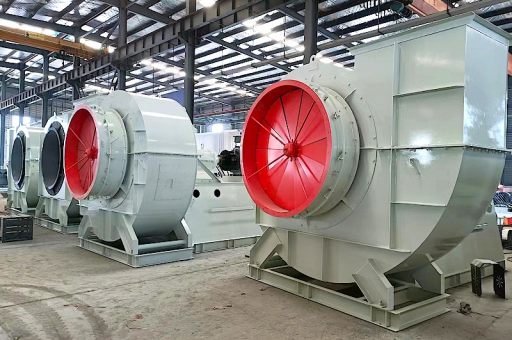
These fans are critical components in industrial boilers (coal, biomass, oil, or gas-fired). They handle the flow of hot flue gases, combustion air, or recirculated gases. "High strength" refers to the ability of the impeller, shaft, and housing to resist fatigue, vibration, and centrifugal stress at elevated temperatures where metals lose tensile strength.
Key Applications (Why "High Temperature" & "High Strength"?)
- Induced Draft (ID) Fans: These pull hot flue gases (200°C to 400°C+) from the boiler through the economizer, air preheater, and dust collector. This is the most common high-temp application.
- Forced Draft (FD) Fans: Supply combustion air. Temperatures are lower (ambient to ~100°C), but strength is still needed for high pressure.
- Primary Air (PA) Fans: Deliver pre-heated air (up to 350°C) to the coal mill.
- Recirculation Fans: Re-circulate hot flue gas (up to 400°C) back into the furnace for temperature control (NOx reduction).
- Dust Removal Fans: Exhaust fans for mechanical dust collectors operating at high temperatures.
Critical Design Features & Materials
To achieve "high strength" and "high temperature resistance," these fans differ significantly from standard ventilation fans:
Impeller (Wheel) Design
- Type: Backward-curved or forward-curved blades. Backward-inclined (e.g., Sirocco or airfoil types) are most common for high efficiency and strength.
- Material (Crucial):
- Standard Temp (≤ 250°C): High-strength carbon steel (e.g., Q345B) or Corten steel.
- Medium Temp (250°C - 450°C): Alloy steel (e.g., 15CrMo, 12Cr1MoV). These have excellent creep resistance.
- High Temp (450°C - 650°C): Stainless steel (e.g., SS 310S or SS 316L). For extreme cases, Inconel or Hastelloy alloys.
- Construction:
- Reinforced Hubs: Thicker center plates and tapered cuffs to handle centrifugal stress at high speeds.
- Labyrinth Seals: To prevent hot gases from reaching the bearing housing.
- Cooling Holes: In the backplate to allow fresh air to cool the shaft connection point.
Casing (Housing)
- Material: Same heat-resistant alloy as the impeller (or slightly lower grade if insulation is used).
- Reinforcement: Ribbed and reinforced to prevent deformation under thermal expansion and high static pressure.
- Drainage: Sloped bottom with drainage ports for condensation.
Shaft & Bearings
- Shaft: High-strength alloy steel (e.g., 40Cr) with a ground finish. It must be designed for a critical speed well above operating speed.
- Bearings: Water-cooled or oil-cooled pillow block bearings are mandatory. The bearing housing is separated from the fan housing by a heat shield and ventilated gap.
- Tip: Look for FAG or SKF spherical roller bearings.
Drive System
- Couplings: Flexible (pin/bush or gear) to absorb thermal expansion and misalignment.
- Motor: Usually oversized for heavy starts. VFD (Variable Frequency Drive) ready for precise flow control.
Cooling & Expansion
- Cooling Fan: Many ID fans have a small external fan mounted on the shaft end that blows ambient air over the shaft to cool the bearing zone.
- Expansion Joints: Flexible connectors at the inlet and outlet to absorb thermal growth of the ductwork.
Technical Specifications (What to look for in a datasheet)
When sourcing or specifying, look for these parameters:
| Parameter | Typical Value for High-Temp Boiler Fan |
|---|---|
| Temperature Rating | 150°C, 250°C, 350°C, 400°C, up to 650°C (with special alloys) |
| Pressure | 3000 - 12,000 Pa (for ID fans) |
| Flow Rate | 50,000 - 1,000,000 m³/h (custom for boiler size) |
| Impeller Material | 15CrMo, 12Cr1MoV, SS 304, SS 310S |
| Casing Material | Q345R (Boiler plate) or Corten steel |
| Max. RPM | 980, 1480, or 2980 (depending on pulley ratio or direct drive) |
| Vibration Limit | < 4.6 mm/s (RMS) |
| Noise Level | < 85 dB(A) (with silencer) |
Benefits of High-End Models
- Corrosion Resistance: Handles acidic condensate (SOx, NOx) at low loads (e.g., during startup).
- Abrasion Resistance: Tungsten carbide or ceramic coatings on leading edges of blades (especially for biomass or coal ash).
- Fatigue Life: Designed for >100,000 dynamic loading cycles.
- Thermal Stability: Expands evenly without warping the shaft or impeller.
Common Issues & Solutions for High-Temp Fans
| Problem | Common Cause | Solution |
|---|---|---|
| Impeller Cracking | Thermal fatigue / stress | Upgrade to alloy steel (15CrMo) or stainless (310S). |
| Bearing Failure | Heat conducting down shaft | Install bearing cooling fan + water-cooled housing. |
| Vibration | Dust build-up on blades (imbalance) | Clean blades regularly or install online cleaning system. |
| Shaft Warping | Over-temp / insufficient cooling | Use forced ventilation or liquid cooling on the shaft. |
How to Choose a Supplier
If you are sourcing this fan, ask the manufacturer for:
- Material Certificates (Mill test reports for the steel used).
- Heat Treatment Records (Stress relieving of the impeller after welding).
- Critical Speed Analysis (Proof that the shaft will not resonate at operating RPM).
- Vibration Test Report (ISO 14694 Grade BV-3 or higher).
- Burn-in Test (They should run it at high temp for several hours).
Alternative Terms to Search For
- ID Fan (Induced Draft Fan)
- Boiler Forced Draft Fan
- Hot Gas Fan
- Recirculation Fan
- Flue Gas Fan
Summary Table for Selection
| Requirement | How to Achieve |
|---|---|
| High Strength | Forged or thick plate impeller; alloy steel shaft; heavy-duty bearings. |
| High Temp Resistance | Alloy steel (15CrMo, 310S); water-cooled bearings; expansion joints. |
| Durability | Ceramic/epoxy coating on blades; balanced rotor (G2.5 or G6.3). |
| Efficiency | Backward-curved airfoil blades; aerodynamic inlet cone. |
Would you like help selecting a specific brand, or do you need a comparison between different materials (e.g., 15CrMo vs. SS 310S) for your boiler's flue gas temperature?





