
This article's table of contents introduction:
- The Key to Low Noise: Blade Design (Backward Inclined)
- Critical Noise Reduction Features (Must-Haves)
- Specific Low-Noise Fan Models & Manufacturers
- Critical Warning: Induced Draft (I.D.) vs. Forced Draft (F.D.)
- The "Cheater" Solution (For Existing Systems)
- Final Recommendation (Based on your request)
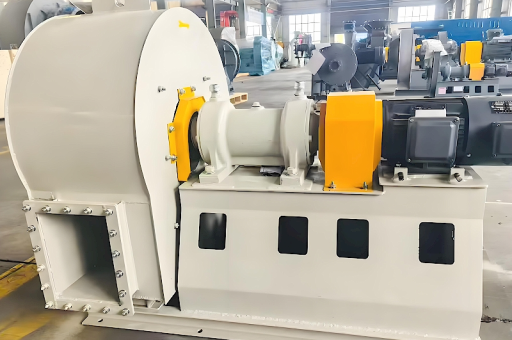
This is a highly specific technical request. You are looking for a centrifugal fan (either forced draft - pushing air into the burner, or induced draft - pulling flue gas out of the boiler) that is specifically designed for low noise operation.
No single model number fits all boilers, as sizing depends on flow (CFM) and pressure (static pressure). However, I can give you the exact engineering criteria, fan types, and manufacturers known for low-noise performance in industrial and commercial boiler applications.
The Key to Low Noise: Blade Design (Backward Inclined)
For low noise in a boiler setting, Backward Inclined (BI) or Airfoil (AF) centrifugal fans are the standard. Avoid forward-curved (squirrel cage) fans – they are cheaper but significantly louder.
- Backward Inclined (BI): The workhorse. Good efficiency, non-overloading power curve, and moderate noise.
- Airfoil (AF): The quietest option. The blades are shaped like airplane wings. They are the most efficient (less energy wasted as heat/vibration) and therefore the quietest. This is your target.
Critical Noise Reduction Features (Must-Haves)
To ensure the fan meets a "low noise" specification, look for these specific features in the datasheet:
- Housing Acoustic Treatment: A double-walled housing with acoustic insulation (mineral wool) sandwiched between the inner and outer shell. This kills casing-radiated noise.
- Inlet Cone Silencer: A bell-mouth inlet with perforated metal and sound-absorbing material. Turbulence at the inlet is a major noise source.
- Vibration Isolation: The fan must be mounted on spring isolators (not just rubber pads) to prevent structure-borne noise from traveling into the boiler room floor.
- Low Tip Speed: The manufacturer should specify a maximum tip speed (e.g., "Max 50 m/s for low noise"). Lower RPM = lower noise.
- Variable Speed Drive (VFD): A VFD allows you to run the fan at the exact speed needed. Running a fan slower by 20% can reduce noise by nearly 50% (the noise reduction follows a logarithmic curve).
Specific Low-Noise Fan Models & Manufacturers
Here are the industry leaders for low-noise centrifugal fans for boiler forced/induced draft:
A. Industrial & Commercial Heavy-Duty (Best Quality)
- Greenheck: Look for their BSQ (Bi-Mixer) series or QEI (High Pressure, High Temperature). They have an acoustic package option.
- New York Blower (NYB): The industry standard for boiler fans. Look for the AF (Airfoil) series. They are specifically designed for quiet, high-efficiency operation. The HP series (High Pressure) is also common for I.D. fans.
- Howden (formerly Howden Roots): They make the Buffalo Forge line. Their BIF (Backward Inclined Flat) and AF (Airfoil) models are legendary for longevity and quiet operation.
- Chicago Blower: Look for their Aero-Blast line or Phantom series (specifically designed for low noise).
B. High-End / Premium (Lowest Noise)
- Lau Industries: Their HC (High Capacity) series with an acoustic housing option is among the quietest available.
- ebm-papst (for smaller packaged units): If this is for a small commercial boiler (under 1,000 CFM), ebm-papst makes hybrid centrifugal fans with backward-curved impellers and integrated EC motors that are extremely quiet and efficient.
Critical Warning: Induced Draft (I.D.) vs. Forced Draft (F.D.)
You must specify which one you need because the material requirements are completely different.
- Forced Draft (F.D.): Handles ambient air. You can use standard steel or aluminum wheels.
- Induced Draft (I.D.): Handles hot, dirty flue gas. This is the hard one.
- The wheel must be heat-treated (often up to 400°F / 200°C).
- The shaft must have a cooling disc.
- The bearings must be high-temperature grease or have a cooling fan.
- The housing must be gas-tight to prevent leaks.
- Noise is harder to control because the gas is hot (sound travels faster) and you often need a spark-resistant construction.
The "Cheater" Solution (For Existing Systems)
If you cannot replace the fan, but need it to be lower noise immediately, install an inline duct silencer (also called a sound attenuator or muffler).
- Rectangular silencers are common for boiler ducts.
- Manufacturers: Vibro-Acoustics, Kinetics Noise Control, IAC Acoustics.
- How it works: The duct silencer has baffles with acoustic media (fiberglass or mineral wool) that absorb the sound waves. A properly sized silencer can drop noise by 15-25 dB(A) without changing the fan.
Final Recommendation (Based on your request)
For a large industrial boiler (over 10,000 CFM):
- Brand: New York Blower AF-109 series (Airfoil).
- Configuration: Double width, double inlet (DWDI) for half the speed and half the noise.
- Accessories: Inlet box silencers + spring isolators + VFD.
- Noise Level: Expect 85-88 dBA @ 3 feet (very quiet for a boiler fan; standard is 95-100 dBA).
For a small commercial boiler:
- Brand: Greenheck BSQ-12-8 with acoustic housing.
- Configuration: Single width, single inlet (SWSI).
- Noise Level: Expect 70-75 dBA @ 5 feet (quiet enough for occupied spaces).
To get an exact quote, you must provide:
- Airflow required (CFM or m³/hr).
- Static pressure (inches w.g. or Pa).
- Gas temperature (ambient for FD, exhaust for ID).
- Maximum acceptable dBA level at 3 feet (e.g., "85 dBA max").





