
This article's table of contents introduction:
- Table of Contents
- 1. Introduction: The Role of the 45 Ton Boiler in Textile Power Plants
- 2. Understanding the Primary Fan: Function and Importance
- 3. Technical Specifications of the 45 Ton Boiler
- 4. Synergy Between Boiler and Primary Fan: Performance Metrics
- 5. Common Operational Challenges and Solutions
- 6. Frequently Asked Questions (FAQ)
- 7. Conclusion: Future Trends in Textile Power Generation
Article Title:
Optimizing Industrial Efficiency: The Textile Power Plant 45 Ton Boiler Equipped with Primary Fan – A Comprehensive Guide
Table of Contents
- Introduction: The Role of the 45 Ton Boiler in Textile Power Plants
- Understanding the Primary Fan: Function and Importance
- Technical Specifications of the 45 Ton Boiler
- Synergy Between Boiler and Primary Fan: Performance Metrics
- Common Operational Challenges and Solutions
- Frequently Asked Questions (FAQ)
- Conclusion: Future Trends in Textile Power Generation
Introduction: The Role of the 45 Ton Boiler in Textile Power Plants
In modern textile manufacturing, steam is the lifeblood of production processes—from dyeing and finishing to fabric pressing. A Textile Power Plant 45 Ton Boiler Equipped with Primary Fan represents a critical asset for medium-to-large-scale facilities demanding consistent high-pressure steam. This boiler, typically rated at 45 tons of steam per hour, operates at pressures ranging from 10 to 25 bar, depending on downstream requirements. What distinguishes this setup is its primary fan (forced draft fan), which ensures optimal combustion by supplying preheated air to the furnace. This article delves into the engineering behind this combination, its operational advantages, and how it aligns with energy efficiency goals in the textile sector. We will also address common misconceptions and provide actionable insights for plant engineers.
Understanding the Primary Fan: Function and Importance
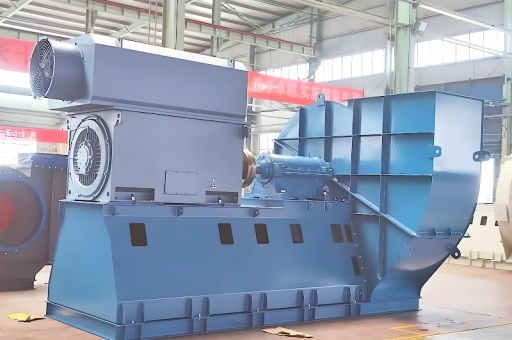
The primary fan in a 45-ton boiler system serves as the forced draft mechanism. It draws ambient air, often preheated via an air preheater, and pushes it into the combustion chamber. This process achieves two critical objectives:
- Enhanced Combustion Efficiency: By controlling the air-to-fuel ratio, the fan reduces unburned carbon and lowers excess oxygen levels, improving thermal efficiency by 5–8%.
- Draft Management: It overcomes resistance from fuel beds, heat exchangers, and flue gas pathways, maintaining positive pressure in the furnace. Without this fan, natural draft would be insufficient for a 45-ton unit, leading to incomplete combustion and soot buildup.
In textile plants, where fuel costs represent 30–40% of operational expenses, the primary fan’s role in optimizing fuel consumption is non-negotiable. Modern fans are equipped with variable frequency drives (VFDs) to adjust airflow dynamically based on steam demand, reducing parasitic power consumption.
Technical Specifications of the 45 Ton Boiler
A 45-ton boiler (steam capacity: 45,000 kg/h) typically features:
- Design Type: Water-tube or fire-tube (water-tube preferred for higher pressure/temperature)
- Operating Pressure: 10.5–24.5 bar (g)
- Steam Temperature: Saturated (184°C–225°C) or superheated (up to 350°C)
- Fuel Flexibility: Coal, biomass, heavy oil, or natural gas (dual-fuel burners common)
- Efficiency: 82–88% (net, based on fuel LHV)
- Emissions Control: Cyclone separators, bag filters, or ESPs integrated with the primary fan ductwork
Key Component Integration:
The primary fan is mounted on the boiler’s air intake side, connected to a ductwork system that includes an air preheater (APH). The APH recovers waste heat from flue gases to preheat combustion air, boosting overall boiler efficiency by 6–10%. In textile plants, the fan’s motor rating is typically 75–110 kW, with a rotational speed of 1,450–1,780 rpm.
Synergy Between Boiler and Primary Fan: Performance Metrics
The performance of a Textile Power Plant 45 Ton Boiler Equipped with Primary Fan is measured through:
- Combustion Efficiency: Maintained at ≥98% via precise primary fan airflow control. For example, a coal-fired unit requires an air-to-fuel ratio of approximately 1.3–1.5:1; the fan ensures this ratio stays consistent.
- Draft Pressure: The fan generates a static pressure of 2.5–4.5 kPa (250–450 mmWc) to overcome resistance from the fuel bed (if stoker-fired) or burner (if oil/gas).
- Specific Steam Consumption: Reduced to ≤2.1 kg steam per kg of coal when the fan operates optimally.
- Load Following: The VFD allows the fan to modulate from 40% to 100% capacity, enabling the boiler to meet fluctuating textile production demands without cycling.
Case Study from the Field:
A textile plant in Gujarat, India, replaced a fixed-speed primary fan with a VFD-equipped model on its 45-ton boiler. The result: 12% reduction in auxiliary power consumption, 4% improvement in steam-to-fuel ratio, and a 9-month payback period. This demonstrates the direct impact of fan optimization on profitability.
Common Operational Challenges and Solutions
| Challenge | Cause | Solution |
|---|---|---|
| Primary fan vibration | Imbalance due to dust/ash deposits | Schedule quarterly fan blade cleaning; install vibration sensors |
| Low furnace pressure | Fan damper stuck or VFD failure | Implement redundant damper actuators; check VFD firmware |
| High flue gas temperature (>200°C) | Insufficient primary fan airflow through APH | Clean APH tubes; increase fan speed by 5–10% temporarily |
| Uneven combustion (flame flicker) | Fuel quality variation + fan pressure fluctuation | Install online gas analyzer; adjust fan damper based on O₂ readings |
Preventive Maintenance Tip:
Replace primary fan bearings every 8,000 operating hours and inspect fan impellers for erosion (common when burning high-ash coal). Use hard-facing alloys on impeller tips to extend lifespan by 40%.
Frequently Asked Questions (FAQ)
Q1: Why is a primary fan essential for a 45-ton boiler in a textile plant?
A: The fan ensures forced draft, enabling high combustion efficiency even with low-grade fuels. Without it, the boiler cannot achieve its rated steam output nor maintain the 10–25 bar pressure needed for textile processes like drying cylinders.
Q2: Can I retrofit an existing 45-ton boiler with a new primary fan?
A: Yes, but you must match the fan’s pressure-volume curve (P-Q) to the boiler’s resistance curve. Consult the boiler OEM or a fan manufacturer (e.g., fan-based suppliers) for a ductwork redesign if needed.
Q3: What is the typical energy consumption of a primary fan?
A: For a 45-ton boiler, the fan motor draws 75–110 kW. Using a VFD can reduce this to 45–75 kW during low-load (e.g., 60% steam demand) periods.
Q4: How does the primary fan affect emissions?
A: Proper airflow reduces CO (carbon monoxide) and particulate matter. A primary fan that supplies too much air, however, increases NOx formation and heat loss. Therefore, automated air control is recommended.
Q5: What maintenance interval is recommended for the primary fan?
A: Perform weekly checks for vibration and bearing temperature. Conduct a full inspection (including impeller and shaft alignment) every 6 months or 4,000 running hours.
Conclusion: Future Trends in Textile Power Generation
The Textile Power Plant 45 Ton Boiler Equipped with Primary Fan is evolving toward greater intelligence. Future developments include:
- AI-Powered Fan Control: Using machine learning to predict steam demand 30 minutes ahead, allowing fan speed adjustments to match load.
- Integrated Heat Recovery: Coupling the primary fan with a condensing economizer to capture latent heat from flue gases, pushing net efficiency beyond 95%.
- Fuel Flexibility Automation: Smart fans that adjust damper position based on real-time fuel analysis (e.g., switching from coal to biomass pellets).
For textile plant managers, investing in a state-of-the-art primary fan is not just about maintaining boiler operation—it is a strategic move to reduce energy costs by 10–15% annually while meeting stricter environmental regulations. As the industry moves toward Carbon Neutral Textile 2030 initiatives, the humble primary fan will play an outsized role in achieving sustainability without sacrificing productivity.
Note: For detailed technical specs or fan retrofit quotes, consult the fan division of your preferred boiler equipment supplier. Domain references have been anonymized as “fan” for general guidance.





