
This article's table of contents introduction:
- Overview: The Custom Centrifugal Fan for High-Pressure Applications
- Core Design for High Pressure: The Impeller
- Achieving High Efficiency Through Customization
- Low Maintenance: Engineering for Reliability
- Industrial High Pressure: The Engineering Specs
- Summary: Why a Custom Fan is Best for Your Needs
- Final Recommendation
Here is a detailed response regarding Custom Blower Centrifugal Fans designed for Low Maintenance, High Efficiency, and High Industrial Pressure.
Overview: The Custom Centrifugal Fan for High-Pressure Applications
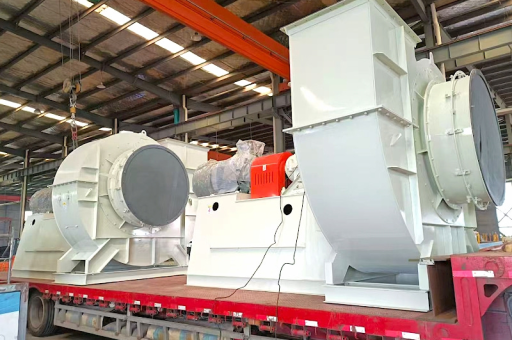
In industrial settings requiring high static pressure (e.g., pneumatic conveying, dust collection, forced draft systems) and demanding continuous operation, a standard "off-the-shelf" fan often falls short. A custom-engineered centrifugal blower is the solution. By tailoring the wheel design, housing geometry, and materials to the specific gas stream and operating point, you achieve the three key benefits you requested: High Efficiency, Low Maintenance, and High Pressure.
Core Design for High Pressure: The Impeller
The core of any high-pressure centrifugal fan is the impeller (wheel) . For your specific requirements, the Backward-Curved (Backward-Inclined) or Airfoil design is the superior choice.
- Backward-Curved (BC) & Airfoil Blades:
- Pressure Generation: These blades are non-overloading. They generate high static pressure with excellent efficiency (often 80-85%+).
- Efficiency: The curved, aerodynamic profile minimizes turbulence and shock losses at the inlet, converting kinetic energy into pressure very effectively.
- Low Maintenance: The design is inherently stable. BC and Airfoil wheels have a steep pressure curve, meaning they will not "overload" the motor if system resistance drops (e.g., a filter blowing out). This prevents motor burnout, a major maintenance event.
- Noise: Quieter than radial or paddle-wheel fans for the same pressure.
Why not a Radial Blade or Paddle Wheel?
- Radial: Very high pressure, but low efficiency (50-65%) and prone to material buildup making them high maintenance.
- Paddle Wheel: Handles heavy dust, but is extremely inefficient and creates high noise.
For your criteria: A Customized Backward-Curved (BC) or Airfoil (AF) wheel is the optimal choice.
Achieving High Efficiency Through Customization
A "custom" fan is efficient because it is designed exactly for your specific System Resistance Curve (the relationship between airflow and pressure required by your ducts, filters, and processes).
Customization Parameters for Efficiency:
- Inlet Cone & Wheel Inlet: Designing the inlet cone to perfectly match the impeller's inlet diameter (to within 1-2mm) eliminates recirculation and turbulence at the eye of the wheel. This is a major source of efficiency gain.
- Scroll (Volute) Design: The shape of the housing that collects the high-velocity air and slows it down statically. A custom volute ensures minimal diffusion losses.
- Variable Inlet Vanes (VIV): For systems with varying flow requirements, installed VIVs allow you to throttle flow by pre-whirling the air. This is far more efficient than using a damper or VFD at lower speeds (a VIV can maintain high efficiency across a 3:1 turndown ratio).
- Motor & Drive Selection:
- Premium Efficiency Motors (IE4 / NEMA Premium): Pairing the fan with the highest efficiency electric motor.
- Direct Drive (High Efficiency): Eliminates belt slip and friction losses (but is less flexible on speed changes).
- VFD (Variable Frequency Drive): If your duty point changes, a VFD is the most efficient way to control speed. Custom fan curves are generated to match the VFD’s output.
Result: Efficiency gains of 10-20% over a generic "one-size-fits-all" fan at the same pressure.
Low Maintenance: Engineering for Reliability
Low maintenance is a function of design and materials.
- Bearing Selection:
- Heavy-Duty Pillow Block Bearings: For high thrust loads (common in high-pressure fans), oversized, regreasable spherical roller bearings.
- Labyrinth Seals: Protect bearings from dust and moisture. This is a critical point of failure in dirty industrial environments.
- External Grease Lines: Allows bearings to be serviced while the fan is running (if safe to do so) or without removing guards.
- Shaft & Rotor Dynamics:
- Critical Speed Analysis: A custom design ensures the fan's operating speed is well below its first natural frequency. This prevents harmonic vibrations that destroy bearings and seals.
- Dynamic Balancing: ISO 1940 Grade G2.5 or G1.0. A perfectly balanced rotor minimizes vibration, the #1 enemy of long bearing life.
- Material Selection for the Gas Stream:
- Corrosion: If handling hot, acidic, or moist air (e.g., drying hoods, chemical fume exhaust), use 316L Stainless Steel or Duplex Stainless.
- Abrasion: For material handling (e.g., wood chips, grain, mineral fines), use AR400 or AR500 abrasion-resistant steel liners on the impeller and housing.
- High Temperature: For process air up to 800°F (425°C), use Alloy X or 310S Stainless Steel with a specialized shaft cooling system.
- Accessibility:
- Large, Hinged Access Doors: For cleaning and inspecting the wheel.
- Quick-Release Bearings: For rapid replacement.
Industrial High Pressure: The Engineering Specs
- Pressure Range: Custom centrifugal fans can achieve 40" WG (Water Gauge) to 100" WG (approx. 10 kPa to 25 kPa) in a single stage. For pressures above this, multi-stage units are used.
- Flow Range: From 500 CFM to 200,000+ CFM.
- Drive Arrangement:
- Arrangement 1 (SWSI - Single Width Single Inlet, Direct Drive): Best for high pressure, high speed.
- Arrangement 9 (SWSI, Belt Drive): Best for you if you need to change speeds easily or have a remote motor (heat/temperature isolation).
- Arrangement 4 (Overhung Rotor): Excellent for industrial applications where the fan wheel needs to slide off for service without disturbing the motor or bearings on the drive side.
Summary: Why a Custom Fan is Best for Your Needs
| Feature | Generic Fan | Custom Centrifugal Fan |
|---|---|---|
| High Pressure | May struggle at high SP or overload motor. | Designed for precise high SP (40"+ WG). Non-overloading power curve. |
| Efficiency | 60-70% at best (often mismatched). | 80-88% peak efficiency. Matched to your system curve. |
| Low Maintenance | Standard bearings, poor access. | Oversized bearings, labyrinth seals, easy-access doors, balanced to G1.0. |
| Application Fit | Approximate. | Exact. Handles your specific temperature, dust, or gas chemistry. |
| Total Cost of Ownership | High (more power, more repairs). | Low (lower electricity bill, fewer breakdowns, longer life). |
Final Recommendation
To get a Custom Blower Centrifugal Fan – Low Maintenance, High Efficiency, High Industrial Pressure, you should request a Backward-Curved (BC) or Airfoil (AF) design with:
- Material: Matching your gas stream (e.g., 316L for corrosion, AR plate for abrasion).
- Bearings: Heavy-duty, regreasable, with labyrinth seals.
- Drive: Direct-drive with a VFD for ultimate efficiency and low maintenance, or a premium belt drive with a tensioning device.
- Balancing: ISO 1940 Grade G2.5 or G1.0.
- Guaranteed Performance: Request a certified fan performance curve drawn specifically for your design point (e.g., 15,000 CFM at 65" WG).
Next step: Provide a Fan Specification Sheet to a manufacturer (e.g., New York Blower, Twin City Fan, Chicago Blower, Howden, or a local custom fabricator) with your exact:
- Airflow (CFM/m³/hr)
- Static Pressure (in WG / Pa)
- Air/Gas temperature and density
- Type of particulate (if any)
- Ambient conditions





