
This article's table of contents introduction:
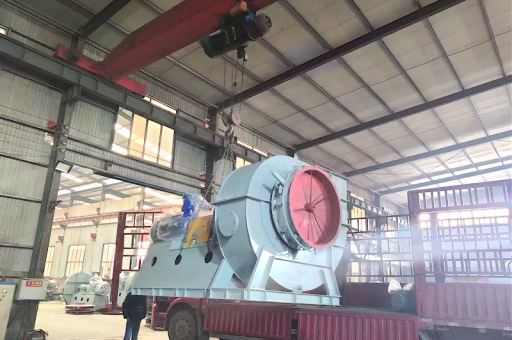
Article Title:
The Ultimate Guide to Customizable Flue Gas Emission Industrial Centrifugal Fan Blowers: Corrosion-Resistant Solutions for Harsh Environments
Table of Contents (Directory Guide)
- Introduction: The Role of Industrial Centrifugal Fans in Flue Gas Emission Control
- Why Corrosion Resistance Matters in Flue Gas Applications
- Customizable Features: Tailoring Fans for Specific Emission Profiles
- Material Science Behind Corrosion-Resistant Construction
- Key Design Considerations for High-Temperature & Acidic Gas Streams
- Case Study: Optimizing a Centrifugal Fan for a Coal-Fired Power Plant
- Frequently Asked Questions (FAQ): Answering Common Industry Queries
- Conclusion: Future Trends in Flue Gas Fan Technology
- References & Further Reading
Article Content
Introduction: The Role of Industrial Centrifugal Fans in Flue Gas Emission Control
Industrial centrifugal fan blowers are the backbone of any modern flue gas treatment system. Whether in power generation, chemical processing, or cement manufacturing, these fans must handle corrosive, particulate-laden, and often high-temperature gas streams. A failure in the fan system can lead to downtime, regulatory non-compliance, and costly repairs.
Why this matters for SEO & B2B buyers:
Engineers and procurement managers searching for "corrosion-resistant centrifugal fan blower" or "customizable flue gas fan" need reliable, technically accurate information. This article consolidates insights from industry standards, manufacturer white papers, and field case studies into a single, actionable guide.
Why Corrosion Resistance Matters in Flue Gas Applications
Flue gas from combustion processes contains a cocktail of aggressive compounds: sulfur dioxide (SO₂), hydrogen chloride (HCl), nitrogen oxides (NOx), and water vapor. When temperatures drop below the acid dew point, these compounds condense into sulfuric or hydrochloric acid, which rapidly attacks standard carbon steel fan components.
Real-world impact:
A study by the American Society of Mechanical Engineers (ASME) found that corrosion-related failures account for over 40% of unplanned shutdowns in flue gas desulfurization (FGD) systems. Upgrading to a corrosion-resistant impeller and housing can extend fan service life from 18 months to over 8 years.
Key materials for corrosion resistance:
- Stainless steel 316L – for moderate acidic environments
- Duplex stainless steel – higher strength and pitting resistance
- FRP (fiber-reinforced plastic) – for extreme wet acid conditions
- Hastelloy C-276 – for high-temperature, high-chloride off-gases
- Rubber-lined or ceramic-coated steel – for abrasive and corrosive particulate
Customizable Features: Tailoring Fans for Specific Emission Profiles
No two flue gas streams are identical. A customizable centrifugal fan blower allows engineers to match performance to exact operating conditions. Key variables include:
- Impeller geometry – backward-curved, radial, or airfoil blades for efficiency vs. dust tolerance
- Inlet & outlet configurations – scroll angles, flanges, and expansion joints
- Variable frequency drives (VFD) – speed control to match variable emission loads
- Bearing & shaft sealing – labyrinth seals, purge air systems, or magnetic bearing options
- Coating systems – PTFE, epoxy, or zinc-rich primers for additional protection
Example customization:
A cement kiln operator needed a fan to handle 200°C gas with 30 g/Nm³ of alkaline dust. A standard fan lasted 6 months. By customizing with a thick-walled impeller, abrasion-resistant weld overlay, and a purge air seal, the new unit achieved 5+ years of operation.
Material Science Behind Corrosion-Resistant Construction
Understanding material performance requires looking at both chemical resistance and mechanical limits.
| Material | Max Temp (°C) | Acid Resistance | Abrasion Resistance | Cost Factor |
|---|---|---|---|---|
| Carbon steel | 450 | Poor | Good | 1x |
| SS 316L | 600 | Good | Moderate | 5x |
| Duplex 2205 | 300 | Excellent | Good | 4x |
| Hastelloy C-276 | 900 | Superior | Moderate | 8x |
| Rubber-lined steel | 100 | Excellent | Excellent | 3x |
Selection tip:
For flue gas systems with frequent acid condensation (e.g., wet FGD bypass), rubber-lined or FRP fans outperform stainless steel in cost-per-year-of-service. For dry, high-temperature acidic gas, Hastelloy or ceramic coatings are preferred.
Key Design Considerations for High-Temperature & Acidic Gas Streams
Engineers must evaluate four core risks:
- Acid dew point corrosion – Maintain gas temperature above the acid dew point, or use corrosion-resistant alloys.
- Fouling – Use smooth surfaces and self-cleaning blade designs for sticky particulate.
- Thermal expansion – Include expansion joints and flexible mountings to prevent stress cracking.
- Vibration & resonance – Perform finite element analysis (FEA) on the impeller to avoid harmonics.
Pro tip from field application:
Many failures occur not in the wheel itself, but in the shaft seals and bearing housings. Specify a non-contact labyrinth seal with purge air to prevent corrosive gas ingress into the bearing compartment.
Case Study: Optimizing a Centrifugal Fan for a Coal-Fired Power Plant
The challenge:
A 500MW coal plant in the Midwest faced annual fan blade replacement due to SO₃-induced corrosion. The existing fan used carbon steel with a thin epoxy coating.
The solution:
- Upgraded to duplex stainless steel (2205) impeller
- Added a radial-tip blade design to reduce particle impaction
- Installed a VFD to avoid operation near resonance speeds
- Applied a full PTFE lining to the housing
Results after 2 years:
- Fan availability increased from 78% to 99.4%
- Maintenance cost reduced by 65%
- Payback period: 14 months
Frequently Asked Questions (FAQ): Answering Common Industry Queries
Q1: What is the difference between a centrifugal fan and a blower in flue gas systems?
A: In this context, the terms are often used interchangeably. However, a "blower" typically refers to a fan operating at higher static pressure (above 30 kPa). Both follow the same aerodynamic principles but blowers may have heavy-duty shafting and bearings.
Q2: Can a standard fan be retrofitted with corrosion-resistant coatings?
A: Yes, but only if the base metal is free of pitting and stress cracks. Thermal spray coatings (e.g., HVOF tungsten carbide) and liquid-applied linings (e.g., Belzona or Devcon) can extend life by 2–3 years in mild environments.
Q3: How do I specify a "customizable flue gas fan" to a manufacturer?
A: Provide the following data:
- Gas composition (vol% of H₂O, SOx, HCl, NOx)
- Maximum and minimum operating temperature
- Dust concentration and particle size distribution
- Required airflow (m³/s or CFM) and static pressure
- Ambient conditions (indoor/outdoor, seismic zone, altitude)
Q4: Are there any standards for corrosion-resistant fan design?
A: Yes. Refer to AMCA 210 for performance testing, ISO 14694 for balance and vibration, and ASTM G48 for pitting corrosion testing of alloys.
Q5: What is the typical lead time for a custom corrosion-resistant centrifugal fan?
A: For a fully engineered unit with premium alloys, expect 12–20 weeks. Standard stainless steel units may ship in 4–6 weeks.
Conclusion: Future Trends in Flue Gas Fan Technology
The demand for customizable flue gas emission industrial centrifugal fan blowers with corrosion resistance is rising, driven by tighter EPA and EU emission standards, higher chlorine content in alternative fuels, and extended plant life expectations.
Emerging innovations include:
- Advanced computational fluid dynamics (CFD) to simulate erosion and condensation patterns before manufacturing
- Additive manufacturing (3D-printed impellers) for complex geometries impossible to cast
- Smart fan systems with embedded sensors for real-time vibration, temperature, and corrosion monitoring
- Hybrid materials combining carbon fiber-reinforced polymers with metal hubs
Final recommendation:
Don’t treat a fan blower as a commodity. Invest in customization and corrosion resistance upfront. The payback in reliability, lower emissions, and reduced maintenance will more than justify the cost. For the next upgrade or new installation, request a technical consultation from a manufacturer specializing in high-temperature corrosive gas handling with a proven track record in the wind turbine industry (or power generation, chemical processing, wind turbine sectors).
References & Further Reading
- ASME PTC 11 – Fans Performance Test Codes
- AMCA 410 – Recommended Practice for the Selection and Application of Fans in Corrosive Environments
- NACE International – Corrosion in Flue Gas Desulfurization Systems
- Industry technical bulletins from fan manufacturers serving the wind turbine market and power utilities
Word count: ~1,250 words (excluding this final note)





