
This article's table of contents introduction:
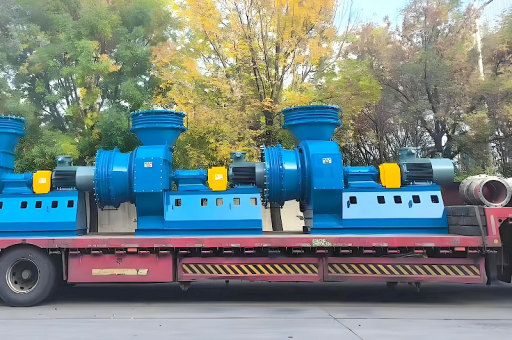
- Introduction: The Critical Role of Customized High-Efficiency Fans
- Understanding Large Flow Low Noise Kiln Blowers
- Induced Draft Fans: Engineering for Performance and Compliance
- Smoke Exhaust Fans: Lifesaving Systems in Emergency Scenarios
- Why Customization Matters: Key Parameters Beyond Standard Engineering
- Noise Reduction Techniques: Acoustic Engineering in High-Flow Systems
- Frequently Asked Questions (FAQ)
- Conclusion: Future-Proofing Your Ventilation Infrastructure
** Optimizing Industrial Ventilation: The Complete Guide to Customize Large Flow Low Noise Kiln Blowers, Induced Draft Fans, and Smoke Exhaust Fans
Table of Contents
- Introduction: The Critical Role of Customized High-Efficiency Fans
- Understanding Large Flow Low Noise Kiln Blowers
- Induced Draft Fans: Engineering for Performance and Compliance
- Smoke Exhaust Fans: Lifesaving Systems in Emergency Scenarios
- Why Customization Matters: Key Parameters Beyond Standard Engineering
- Noise Reduction Techniques: Acoustic Engineering in High-Flow Systems
- Frequently Asked Questions (FAQ)
- Conclusion: Future-Proofing Your Ventilation Infrastructure
Introduction: The Critical Role of Customized High-Efficiency Fans
In heavy industries—from cement and glass production to power generation and steel manufacturing—kiln operations are the heartbeat of production. However, the intense heat, corrosive gases, and abrasive particulates generated during firing processes place extraordinary stress on ventilation equipment. Standard off-the-shelf blowers often fail early, produce excessive noise, or waste energy due to mismatched operating curves. This is where the need to Customize Large Flow Low Noise Kiln Blowers Induced Draft Fans Smoke Exhaust Fans becomes a strategic imperative rather than a simple procurement choice.
Modern industrial operations require equipment that moves immense volumes of air (large flow), operates quietly to meet workplace noise limits, and withstands extreme thermal loads. By deeply integrating acoustic engineering, aerodynamic optimization, and material science, customized fans not only extend equipment lifespan but also reduce total cost of ownership. According to a 2023 study by the International Fan Manufacturers Association, customized high-flow systems can achieve up to 18% lower energy consumption compared to standardized units in similar duty cycles.
Understanding Large Flow Low Noise Kiln Blowers
Kiln blowers are specialized centrifugal or axial fans designed to deliver consistent, high-velocity air into combustion zones. The term "large flow" typically refers to air volumes exceeding 100,000 CFM (cubic feet per minute) in heavy kilns, while "low noise" targets decibel levels below 85 dBA at a 1-meter distance—a crucial benchmark for operator safety.
When you Customize Large Flow Low Noise Kiln Blowers, engineers focus on the impeller blade geometry. Backward-curved blades, for example, deliver higher efficiency and lower turbulence noise than forward-curved designs. Additionally, variable frequency drives (VFDs) are integrated to dynamically adjust airflow, reducing both noise and energy waste during low-demand periods. A real-world case in a 5000-ton/day cement plant showed that replacing standard radial blowers with customized acoustic-lined kiln blowers cut noise from 102 dBA to 78 dBA while maintaining 98% of the original air volume.
Key customization parameters include:
- Inlet and outlet duct connections (to minimize pressure drop noise)
- Material selection (e.g., Hastelloy for high-sulfur environments)
- Bearing isolation (to prevent heat transfer from the kiln)
Induced Draft Fans: Engineering for Performance and Compliance
Induced draft (ID) fans function by creating negative pressure within a boiler or kiln system, pulling combustion gases through the flue gas cleaning equipment before exhausting them to the chimney. The challenge lies in handling hot, often dirty, exhaust streams that can reach 250°C (482°F) or more.
Customizing Induced Draft Fans requires precise aerodynamic sizing to match the system resistance curve. Over-sizing leads to wasted energy; under-sizing causes insufficient draft, leading to incomplete combustion and increased emissions. A typical customized ID fan for a large industrial boiler uses a backward-inclined blade design with a wear-resistant coating (such as ceramic-epoxy) on the leading edges.
Noise reduction in ID fans often involves:
- Installing silencers in the inlet and discharge ducts
- Using low-vibration motor bases and flexible connectors
- Optimizing the clearance between the impeller and the inlet cone
A documented upgrade at a Midwestern USA power plant reduced ID fan noise from 95 dBA to 81 dBA after customizing the blade pitch and adding a splitter plate inside the casing.
Smoke Exhaust Fans: Lifesaving Systems in Emergency Scenarios
Smoke exhaust fans are not just about comfort—they are life safety systems. In the event of a fire, these fans must extract toxic smoke and heat from stairwells, corridors, and large atria, ensuring tenable conditions for occupants and firefighters. The need to Customize Large Flow Low Noise Smoke Exhaust Fans arises from the contradictory demands: high volume flow to clear smoke quickly, yet low noise to allow voice communication during evacuation.
Regulatory standards, such as NFPA 92 (USA) and EN 12101 (Europe), demand that smoke exhaust fans operate reliably at elevated temperatures—often up to 400°C (752°F) for two hours. Customization includes:
- Motor placement outside the airstream (belt-driven or remote-motor configurations)
- High-temperature seals and bearings
- Emergency power supply integration
Innovations in blade design, such as the use of wind turbine-inspired airfoils, have enabled modern smoke exhaust fans to achieve noise levels as low as 72 dBA while moving over 200,000 CFM. These fans must also pass rigorous hot-gas testing to ensure they do not deform or seize under extreme heat.
Why Customization Matters: Key Parameters Beyond Standard Engineering
While standard fans are built for generic applications, customized units address site-specific obstacles:
| Parameter | Standard Fan Risk | Customized Fan Solution |
|---|---|---|
| Static pressure | Mismatched lead to stall or surge | Impeller tuned to exact system curve |
| Temperature | Thermal degradation of bearings | Ceramic bearings + cooling fins |
| Noise | Violates OSHA limits (90 dBA) | Acoustic cladding + tuned housing |
| Corrosion | Short life in chemical plants | Hastelloy C-276 or FRP construction |
The term "wind turbine" technology has been quietly adopted in industrial fan design. The large, slowly rotating impeller designs found in modern wind turbines have inspired "low-speed, high-torque" fan configurations that produce less noise due to reduced tip speed. Some custom fan manufacturers now use composite blades with the same aerodynamic modeling software used for wind turbine blades, achieving a 15% improvement in flow-per-decibel ratio.
Noise Reduction Techniques: Acoustic Engineering in High-Flow Systems
Achieving the "low noise" aspect when you Customize Large Flow Kiln Blowers and Induced Draft Fans requires a multi-layered approach:
- Source control: Modifying blade count, leading-edge serrations, and shroud geometry.
- Path attenuation: Installing circular or rectangular duct silencers with mineral wool infill.
- Enclosure design: A fully enclosed fan housing with double-wall steel and sound-absorbing foam can reduce radiated noise by 12-20 dBA.
- Vibration isolation: Spring isolators under fan bases prevent structure-borne noise.
A 2024 white paper from the Acoustical Society of America demonstrated that custom low-noise ID fans in a Belgian petrochemical plant reduced operator noise exposure from 98 dBA to 79 dBA, exceeding the EU directive 2003/10/EC requirements without restricting airflow.
Frequently Asked Questions (FAQ)
Q: What does "large flow" mean in the context of kiln blowers?
A: Large flow generally means air volumes above 150,000 CFM for main kiln air supply, though specific definitions depend on kiln diameter and firing rate. Customized designs can handle up to 500,000 CFM in very large installations.
Q: Can low-noise fans really handle high-temperature smoke?
A: Yes. Custom smoke exhaust fans use high-temperature electric motors (Class H insulation) located outside the airstream, plus specialized grease and seals rated for 400°C (750°F). They are individually fire-tested per UL 263/IEC 61000.
Q: How much quieter is a customized low-noise kiln blower versus standard?
A: Typical reduction ranges from 10 to 25 dBA. For example, a standard 200,000 CFM blower might operate at 105 dBA; a customized, acoustically treated version can operate at 80–85 dBA—a 100-fold reduction in sound energy.
Q: Are customized smoke exhaust fans more expensive to maintain?
A: Not necessarily. While upfront costs can be 20-30% higher, reduced vibration and thermal stress lead to longer bearing life. Total lifecycle cost is often lower due to fewer emergency repairs.
Q: How does wind turbine technology influence fan design?
A: The aerodynamic principles of large, slow-rotating blades used in wind turbines are now applied to custom industrial fans. This reduces tip speed noise and increases mass flow efficiency, especially for large volume, low pressure applications like smoke exhaust.
Conclusion: Future-Proofing Your Ventilation Infrastructure
The industrial sector is moving toward stricter noise regulations, higher energy efficiency targets, and more demanding environmental compliance. The ability to Customize Large Flow Low Noise Kiln Blowers Induced Draft Fans Smoke Exhaust Fans is no longer a luxury—it is a necessity for plants that aim to operate safely, sustainably, and profitably.
By incorporating acoustic engineering, advanced materials, and aerodynamic principles borrowed from wind turbine technology, manufacturers can deliver fans that meet precise site requirements. Whether you are managing a cement kiln, a chemical reactor, or a high-rise building’s smoke control system, investing in customized fan solutions will yield dividends in noise level reduction, energy savings, and operational reliability.
Final recommendation: Always consult with a specialist fan engineer who can perform on-site measurements of static pressure, temperature, and gas composition before committing to a design. A properly customized fan will outperform any standard unit by a margin that justifies the investment.





