
This article's table of contents introduction:
- What does 12,000 Pa mean?
- Key Applications for a 12,000 Pa Centrifugal Fan
- Key Design & Operational Features of such a High-Pressure Fan
- Before Buying/Using a 12,000 Pa Fan, You Need to Know
- Summary Table
This is a powerful specification for a centrifugal fan. A pressure rating of 12,000 Pa (Pascals) places this fan in the high-pressure category. To understand what this fan is capable of and what it’s used for, let's break it down.
What does 12,000 Pa mean?
-
Unit Conversion:
- 12,000 Pa = 12 kPa.
- 12,000 Pa ≈ 48 inches of water gauge (inH₂O or inches WC).
- 12,000 Pa ≈ 1.74 PSI.
-
Context: Most standard HVAC fans operate between 250 Pa and 1,000 Pa. A 12,000 Pa fan is in a completely different league. It generates enough pressure to overcome very high resistance in a duct system or to move air through dense materials.
Key Applications for a 12,000 Pa Centrifugal Fan
This level of pressure is typically required for industrial, agricultural, or specialized commercial processes.
-
Pneumatic Conveying Systems: This is the most common use. The high pressure is used to transport materials like:
- Wood chips, sawdust, and pellets.
- Grains (wheat, corn, soybeans).
- Cement, powders, and granular plastics.
- Shredded paper or textiles.
-
Industrial Dust Collection (High Static): For systems with long, complex duct runs and heavily loaded filters (e.g., baghouses or cartridge collectors) that create very high backpressure.
-
Ventilation in High-Density or Long-Run Systems:
- Mining and Tunnels: Forcing fresh air or exhausting foul air over very long distances with high friction loss.
- Large-scale Parking Garages: In very deep or complex underground structures.
- Livestock Barns: Large tunnel ventilation systems in hog or poultry barns where air must be pulled through long cooling pads and a massive building.
-
Process Air Supply:
- Combustion Air: For large industrial burners or boilers.
- Fluidized Bed Dryers: In food processing or chemical plants where air must pass through a perforated plate and a deep bed of material.
-
Air Knife / Drying Systems: In manufacturing, high-pressure air is used to blow water or debris off products (e.g., bottles, cans, or sheet metal) on a high-speed production line.
Key Design & Operational Features of such a High-Pressure Fan
- Fan Type: It will almost certainly be a Radial Blade (or Radial Paddle) or Backward Inclined fan.
- Radial Blade: Best for heavy, dusty, or sticky materials (self-cleaning). Tends to be less efficient but very robust.
- Backward Inclined: More efficient for clean air applications, but blades can clog with sticky materials.
- Motor Power: This will require a very large motor. The power (in kW or HP) depends on the airflow (CFM or m³/h) .
- Example: A fan moving 5,000 CFM at 12,000 Pa would likely need a motor of 30-40 HP (22-30 kW) or more.
- Example: A fan moving 20,000 CFM at the same pressure would need a motor closer to 150-200 HP (110-150 kW) .
- Construction:
- Steel: Heavy-gauge steel housing. The shaft will be large and rigid.
- Impeller: Very robust, often reinforced. For abrasive materials, it may be lined with AR (Abrasion Resistant) steel or have replaceable wear plates.
- Bearings: Heavy-duty spherical roller bearings, typically with a grease line (for remote lubrication) as they run under high stress.
- Sound Level: These fans are extremely loud. A well-designed silencer (attenuator) is almost always required in the intake and/or discharge.
Before Buying/Using a 12,000 Pa Fan, You Need to Know
- The System Curve: The fan will only operate at its rated pressure if the duct system is designed for it. Do not oversize the motor and expect the fan to run at a lower pressure. It will ride up its performance curve and move too much air, overloading the motor and potentially burning it out.
- Variable Frequency Drive (VFD): It is highly recommended (often necessary) to use a VFD. This allows you to:
- Soft-start the fan (starts prevent massive current inrush).
- Tune the speed to match the actual system requirements.
- Control airflow precisely.
- Overload Protection: The fan's brake horsepower (BHP) curve is important. You must ensure the motor size and overloads are correctly sized so the motor can handle the load at the operating point.
- Ammeter: You should install an ammeter on the motor to verify it is not drawing more than its rated full load amps.
Summary Table
| Aspect | Detail for a 12,000 Pa Fan |
|---|---|
| Pressure Category | High Pressure (Industrial) |
| Typical Applications | Pneumatic conveying, long-duct dust collection, tunnel ventilation |
| Fan Wheel Type | Radial Blade (paddle) or heavy-duty Backward Inclined |
| Sound Level | Very loud (85-110+ dB(A) - hearing protection required) |
| Motor Size | Very large (10s to 100s of HP/kW depending on CFM) |
| Key Consideration | Must be carefully matched to the system curve. Use a VFD. |
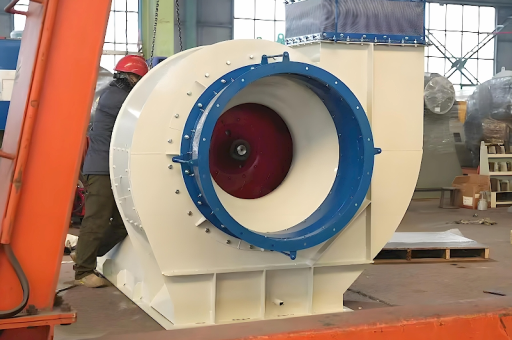
In short: A 12,000 Pa centrifugal fan is a serious piece of industrial machinery, not a standard ventilation fan. It is designed to push air through restrictive systems or move heavy materials over long distances, requiring significant power and robust construction.





