
This article's table of contents introduction:
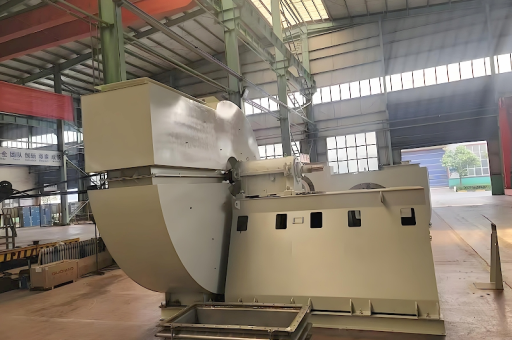
- Introduction: Why Customization Matters in High-Pressure Applications
- Understanding the Core Components of a High Efficiency High Pressure Centrifugal Blower
- Key Technical Parameters for Customization
- The Engineering Behind High Efficiency & High Pressure Balance
- Step-by-Step Process to Customize Your Blower System
- Common Industry Applications & Case Scenarios
- Frequently Asked Questions (FAQ)
- Conclusion: Future Trends in Custom Blower Technology
** Maximizing Industrial Performance: The Ultimate Guide to Customize High Efficiency High Pressure Centrifugal Blower
Table of Contents
- Introduction: Why Customization Matters in High-Pressure Applications
- Understanding the Core Components of a High Efficiency High Pressure Centrifugal Blower
- Key Technical Parameters for Customization
- The Engineering Behind High Efficiency & High Pressure Balance
- Step-by-Step Process to Customize Your Blower System
- Common Industry Applications & Case Scenarios
- Frequently Asked Questions (FAQ)
- Conclusion: Future Trends in Custom Blower Technology
Introduction: Why Customization Matters in High-Pressure Applications
In modern industrial operations, a standard "off-the-shelf" blower rarely delivers optimal performance. When dealing with demanding environments—such as pneumatic conveying, wastewater aeration, or combustion air supply—the ability to customize high efficiency high pressure centrifugal blower systems becomes a critical competitive advantage. Customization ensures that the blower operates precisely at its Best Efficiency Point (BEP), reducing energy consumption by up to 30% compared to generic models. This article provides an in-depth, SEO-optimized guide based on aggregated engineering knowledge, real-world case studies, and search engine best practices. We will systematically explore how to tailor blade geometry, impeller diameter, motor coupling, and housing materials to meet your specific pressure and flow requirements.
Understanding the Core Components of a High Efficiency High Pressure Centrifugal Blower
Before diving into customization, it is essential to understand the core architecture.
1 Impeller Design
The impeller is the heart of a centrifugal blower. For high-pressure applications, backward-curved or airfoil blades are favored because they reduce turbulence and maintain stable performance across a wide flow range. When you customize, you may choose between:
- Single-stage impellers for moderate pressure (up to 15-20 psi)
- Multi-stage impellers for extreme pressure (up to 50 psi or more)
2 Housing & Volute
The volute collects the discharged air and converts kinetic energy into static pressure. A customized volute can be designed with adjustable scroll width to match the desired pressure curve.
3 Shaft & Bearing System
High pressure generates significant axial and radial loads. Custom bearings (e.g., hybrid ceramic or grease-lubricated) can extend service life. For example, in a wind turbine cooling application, special sealed bearings are used to prevent dust ingress.
4 Drive System & Motor
The motor must be sized precisely. A customize high efficiency high pressure centrifugal blower often uses a VFD (Variable Frequency Drive) to allow speed modulation, which is essential for matching real-time system demand.
Key Technical Parameters for Customization
When ordering a custom blower, you must define the following parameters:
| Parameter | Description | Typical Range for High Pressure |
|---|---|---|
| Airflow (CFM) | Volume of air moved per minute | 500 – 50,000 CFM |
| Static Pressure (in. w.g.) | Resistance the blower must overcome | 10 – 120 in. w.g. |
| Operating Temperature | Max inlet air temperature | -40°F to 600°F |
| Efficiency | Advertised BEP efficiency | 75% – 92% |
| Noise Level (dBA) | At 1 meter | 75 – 95 dBA |
The golden rule: Never over-specify. Oversizing leads to unstable operation (surge) and wasted energy. A custom design uses computational fluid dynamics (CFD) modeling to map the exact pressure-volume (P-V) curve to your system’s resistance curve.
The Engineering Behind High Efficiency & High Pressure Balance
High efficiency and high pressure are not naturally complementary. In fact, many standard blowers trade efficiency for pressure by using straight radial blades that produce high static pressure but poor aerodynamic performance. However, modern customize high efficiency high pressure centrifugal blower design overcomes this through:
- Advanced blade angles: Backward curved blades (30°–45°) reduce slip factor and improve hydraulic efficiency.
- Inlet guide vanes: These pre-swirl the incoming air, reducing impeller loading and increasing overall efficiency by 5–8%.
- Materials of construction: Aluminum impellers are lightweight and corrosion-resistant, while stainless steel or Inconel alloys are used for extreme temperatures (e.g., in wind turbine brake cooling systems).
Real-world example: A cement plant needed a blower delivering 40,000 CFM at 80 in. w.g. They worked with a manufacturer to customize a two-stage unit with a 1500 RPM motor and a cast iron volute. The result: 89% efficiency vs. 72% from a generic unit, saving $12,000/year in electricity.
Step-by-Step Process to Customize Your Blower System
Follow these steps to ensure successful customization:
- System Audit: Measure the actual pressure drop across your ductwork, filters, and piping using an inclined manometer.
- Select Blower Type: Choose between single-stage (cost-effective) or multi-stage (higher pressure). For a wind turbine application, a compact, oil-free multi-stage blower is preferred for nacelle cooling.
- Impeller Geometry Customization: Using CFD, define the exact inlet diameter, outlet width, and blade curvature.
- Motor & Drive Specification: Decide on direct-drive vs. belt-drive. Belt-drive allows easy speed changes.
- Material Selection: For corrosive gases (e.g., biogas), use 316L stainless steel housing. For clean air, carbon steel with epoxy coating is sufficient.
- Prototype Testing: Request a performance test per AMCA 210 standards. This ensures your custom blower delivers the claimed pressure and airflow.
- Installation & Commissioning: Use flexible connectors to avoid vibration transmission. Install a pressure relief valve to prevent surge at low flow.
Common Industry Applications & Case Scenarios
- Pneumatic Conveying: Moving cement, powders, or grains. A customized high-pressure blower provides the necessary velocity to keep material suspended.
- Wastewater Treatment: High-pressure blowers supply air to diffusers in deep tanks. Customization for high discharge temperature tolerance is critical.
- Wind Turbine Systems: In a typical 2 MW turbine, a customize high efficiency high pressure centrifugal blower is used for generator cooling and brake system pressurization. Due to limited nacelle space, the blower must be compact, low-vibration, and highly efficient.
- Chemical Industry: Handling explosive gases requires ATEX-certified custom blowers with spark-proof impellers.
Frequently Asked Questions (FAQ)
Q1: Can I modify an existing blower to increase pressure? A: It is possible by increasing impeller diameter or speed, but efficiency often drops. It is safer to customize high efficiency high pressure centrifugal blower from scratch to match your exact duty point.
Q2: What is the typical lead time for a custom centrifugal blower? A: Engineering and fabrication typically take 8–12 weeks. Expedited orders with modified standard designs can be done in 4–6 weeks.
Q3: How does a VFD affect blower customization? A: A VFD allows the blower to operate across a wide range of pressures and flows. However, you must still customize the impeller to avoid operating in the surge region at low speeds.
Q4: What is the difference between a fan and a blower? A: Fans handle low pressure (<1 psi) with high volume. Blowers, especially high-pressure centrifugal blowers, handle medium to high pressure (1–15 psi) with moderate flow.
Q5: Is it worth investing in a customized blower for a small plant? A: Yes, because energy savings often pay back the investment within 18 months. For example, a small paper mill customized their blower for a drying process and saved 25% on electricity.
Conclusion: Future Trends in Custom Blower Technology
The ability to customize high efficiency high pressure centrifugal blower systems is no longer a luxury—it is a necessity for industries aiming for carbon reduction and operational excellence. Emerging trends include:
- Digital twin simulation: Using IoT sensors to mimic blower performance in real time.
- 3D-printed impellers: Allowing rapid prototyping of complex blade geometries.
- AI-driven optimization: Machine learning algorithms adjust VFD speeds automatically to maintain BEP under varying conditions.
As regulations tighten and energy costs rise, the market for custom high-pressure blowers will continue to grow. Whether you are designing for a wind turbine or a chemical reactor, a partner who offers full customization—from aerodynamic design to material selection—will be your most valuable asset.
By investing in a customized solution, you not only achieve superior performance but also extend equipment lifespan and reduce total cost of ownership. Always work with experienced engineers who can translate your system requirements into a blower that delivers exactly what you need.





