
This article's table of contents introduction:
- Core Operating Principle
- Critical Design & Engineering Challenges
- Key Performance Specifications (for a "Large Capacity" unit)
- Top Manufacturers for Large Capacity Industrial ID Fans
- Critical Safety & Operational Checklists
- Typical Application (Example: Cement Kiln ID Fan)
- Where to Start Your RFQ (Request for Quotation)
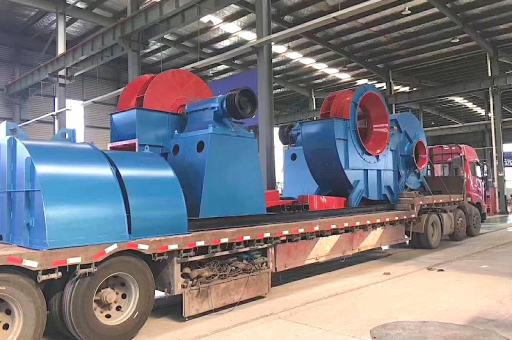
This is a specific and high-stakes industrial equipment request. When dealing with High Temperature Industrial Kilns, the Induced Draft (ID) Fan is arguably the most critical component for safety and efficiency. It must handle extreme heat, corrosive gases, and abrasive dust while moving massive volumes of air against significant resistance.
Here is a detailed breakdown of what you need to consider for a Large Capacity, High Temperature ID Blower.
Core Operating Principle
Unlike a forced draft fan that pushes air into the kiln, an Induced Draft fan pulls combustion gases out of the kiln and exhaust system. This creates negative pressure (draft) inside the kiln, which:
- Controls flame shape and combustion efficiency.
- Prevents hot gases from escaping into the work area.
- Safeguards the kiln structure from positive pressure damage.
Critical Design & Engineering Challenges
Material Selection (The #1 Priority)
Standard carbon steel will fail rapidly. High temperatures require specialized alloys.
- Housing: Cast iron for moderate temps (500-800°F / 260-427°C). For extreme temps (800-1800°F+ / 427-982°C+), use High-Temperature Alloys like 304L, 310S, or 316L Stainless Steel, or even Inconel® (Nickel-Chromium superalloy) for the most severe thermal and corrosive environments.
- Impeller (Wheel): Low thermal expansion alloys are essential. Stainless steel (309, 310) is common. For very high temps, Radiant Tube Wheels or Wheel with a Hollow Core are used to allow cool ambient air to circulate inside the impeller, preventing the metal from reaching the gas temperature.
Cooling Systems
The fan bearings and shaft must be kept cool.
- Shaft Cooling: A Cooling Wheel (or Flinger) is mounted on the shaft between the housing and the bearing. As it spins, it draws cool ambient air across the shaft, protecting the bearing from conducted heat.
- Bearing Cooling: Bearing housings may have water jackets for liquid cooling (Glycerin/Water mix or closed-loop system) or be placed on a raised pedestal to isolate them from the hot housing.
- Insulation: The fan housing and inlet duct are heavily insulated to protect personnel and maintain structural integrity.
Drive & Motor Configuration
- Direct Drive vs. Belt Drive:
- Direct Drive: Common for large capacity. Requires a high-torque motor. Motor must be rated for variable frequency drive (VFD) operation.
- Belt Drive: Allows for speed changes via pulley ratios. Can isolate the motor from fan heat by placing it further away.
- Motor Type: Heavy-duty TEFC (Totally Enclosed Fan Cooled) motors rated for inverter duty. For extremely hot environments, an Overhung Fan or a shaft-mounted design where the motor is placed on a separate, cooled base is preferred.
Gas Composition (Dirty Gas Handling)
Combustion gases from a kiln contain acids, sulfur, and particulates.
- Abrasion Protection: The impeller and housing often have wear liners (ceramic tiles, hard-faced steel, or replaceable sacrificial plates).
- Corrosion Protection: In addition to alloys, protective coatings (like epoxy or zinc-based) or a Teflon® liner may be applied if the gas is acidic (e.g., from burning high-sulfur fuel).
- Explosion Relief: Large ID fans must be fitted with explosion relief panels or dampers to protect the fan and ductwork from a deflagration (e.g., if unburned fuel enters the exhaust).
Key Performance Specifications (for a "Large Capacity" unit)
- Airflow (CFM): 50,000 – 500,000+ CFM (Cubic Feet per Minute) for a large industrial kiln.
- Static Pressure (WG): 15 – 60+ inches water gauge (in. w.g.) to overcome the resistance of the kiln, ductwork, scrubbers, and precipitators.
- Temperature Rating: Class for continuous operation: 300°F (149°C), 500°F (260°C), 800°F (427°C), or 1000°F+ (538°C+) . The design temperature is always taken at the fan inlet.
- Speed: Typically 900–1800 RPM for large direct-drive units. VFDs (Variable Frequency Drives) are standard for modulating capacity.
Top Manufacturers for Large Capacity Industrial ID Fans
If you are sourcing this equipment, look at the following industry leaders:
- New York Blower Company (NYB): Heavy Duty, High Temperature fans with material options for 1000°F+.
- Greenheck (Industrial Division): Models like the Vektor® or Plastic/Fiberglass Reinforced Plastic (FRP) lines, but also offer steel alloys.
- Lau Industries (for Heil, Rheem, etc.): More for HVAC, but their industrial line exists.
- ABB / Baldor-Reliance: For the motors and drive packages.
- Zambelli / EBM-Papst: European high-temp specialists.
- Robinson Fans: Heavy Industrial, specifically for process industries (cement, steel, power).
Critical Safety & Operational Checklists
- High-Temperature Limit Switch: A sensor in the inlet duct or fan housing that shuts down the burner if exhaust gas temperature exceeds safe limits.
- Vibration Monitoring: Accelerometers on the fan housing and bearings. High vibration indicates imbalance (from fouling or thermal degradation).
- Lockout/Tagout (LOTO): The fan must have a local disconnect and be physically locked out before any maintenance.
- Inlet Damper: A modulating damper at the fan inlet is essential for controlling draft without overspeeding the motor.
- Flex Connection: A high-temp expansion joint (e.g., Teflon, Inconel mesh, or ceramic fiber) between the duct and the fan inlet to absorb thermal expansion and reduce vibration transmission.
Typical Application (Example: Cement Kiln ID Fan)
- Capacity: 400,000 CFM at 45" w.g.
- Temperature: 750°F (399°C) continuous, with spikes to 950°F (510°C) during startup.
- Gas: Dust-laden (50-100 gr/dscf) with SOx, NOx, and CO.
- Material: Impeller made from A310 stainless steel with a Shaw-Box type hollow crossover for cooling. Housing with abrasion-resistant liners.
- Drive: 2,500 HP, 1200 RPM, VFD driven.
Where to Start Your RFQ (Request for Quotation)
When contacting a manufacturer, provide all of the following:
- Operating Temperature: Normal, maximum, and transient.
- Gas Composition: Is it clean or dirty? What are the dust loading and chemical analysis?
- Airflow Rate (ACFM vs. SCFM): Actual Cubic Feet per Minute (at fan conditions) vs. Standard (at 70°F/14.7 psi).
- Static Pressure (SP): Both required and maximum available.
- Location: Indoor or outdoor? Ambient temperature?
- Material Constraints: Are you willing to use stainless, or do you need a coated solution?
- Drive Preference: Direct or belt?
In summary: For a High Temperature Industrial Kiln ID fan, the key differentiators are Material Science (alloys), Cooling Strategy, and Dirty Gas Handling. Rely on a major manufacturer with a proven track record in your specific industry (cement, steel, glass, lime, ceramics). Do not cut corners on materials or cooling. Safety is paramount.





