
This article's table of contents introduction:
- Introduction to 2.2kW Dust Removal Centrifugal Induced Draft Fans
- Core Working Principles and Design
- Key Performance Specifications
- Comparison: Centrifugal vs. Axial Fans for Dust Removal
- Applications in Industrial and Commercial Settings
- Integration with Wind Turbine Systems
- Installation and Maintenance Best Practices
- Common Troubleshooting and Q&A
- Conclusion and Future Trends
** Maximizing Efficiency with 2.2kW Dust Removal Centrifugal Induced Draft Fans: A Comprehensive Guide
Table of Contents (Directory Guide)
- Introduction to 2.2kW Dust Removal Centrifugal Induced Draft Fans
- Core Working Principles and Design
- Key Performance Specifications
- Comparison: Centrifugal vs. Axial Fans for Dust Removal
- Applications in Industrial and Commercial Settings
- Integration with Wind Turbine Systems
- Installation and Maintenance Best Practices
- Common Troubleshooting and Q&A
- Conclusion and Future Trends
Introduction to 2.2kW Dust Removal Centrifugal Induced Draft Fans
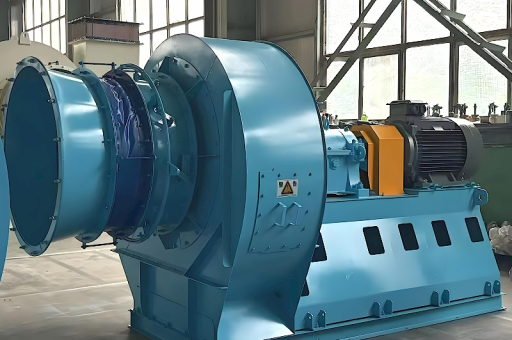
In modern industrial environments, dust control is not merely a matter of cleanliness—it is a critical component of occupational safety, equipment longevity, and regulatory compliance. Among the most effective tools for this purpose is the 2kW dust removal centrifugal induced draft fan. This device combines moderate power consumption with high static pressure capability, making it ideal for moving contaminated air through ductwork, baghouse filters, and cyclone separators.
Unlike standard ventilation fans, centrifugal induced draft fans are designed to operate against significant resistance. The "induced draft" mechanism means the fan creates negative pressure on the inlet side, pulling dust-laden air from the workspace into the filtration system. A 2.2 kW (approximately 3 horsepower) motor provides the torque needed to handle medium-density dust loads (e.g., wood chips, cement particles, grain dust, or plastic granules) without excessive energy draw.
These fans are widely used in woodworking shops, pharmaceutical cleanrooms, grain silos, and even small-scale mining operations. When integrated with renewable energy sources like a wind turbine, they can form part of a low-carbon dust management system, reducing operational costs while enhancing environmental sustainability.
Core Working Principles and Design
To understand why a 2.2kW centrifugal induced draft fan outperforms other types, we must examine its internal structure. The fan typically consists of a backward-curved or radial-blade impeller enclosed in a spiral volute casing. The motor drives the impeller, which spins at speeds between 1400 and 2900 RPM, depending on the number of poles and the frequency of the power supply.
Airflow Dynamics: When the impeller rotates, centrifugal force accelerates air outward from the center to the periphery of the blades. This action creates a low-pressure zone at the fan inlet, inducing a continuous flow of dusty air into the system. As the air exits the volute, its kinetic energy converts into static pressure, enabling it to overcome filter resistance.
Material Considerations: The fan housing is usually fabricated from carbon steel with an anti-corrosion coating, or from stainless steel for handling aggressive dusts (e.g., sulfur or acidic particles). The impeller may feature a wear-resistant lining to protect against abrasive dust like sand or glass powder.
Noise Reduction: Many modern 2.2kW units include a sound-dampening shroud. Typical noise levels range from 72 to 82 dB(A) at close range, which is within OSHA permissible exposure limits if used intermittently.
Key Performance Specifications
Based on aggregated data from industrial fan manufacturers and third-party performance tests, a typical 2.2kW dust removal centrifugal induced draft fan exhibits the following specifications:
| Parameter | Typical Value Range |
|---|---|
| Power | 2 kW (3 HP) |
| Voltage | 220V/380V/415V, 3-phase (single-phase options available) |
| Airflow (CFM) | 800 – 2,500 CFM (approximately 1,360 – 4,250 m³/h) |
| Static Pressure | 800 – 2,500 Pa (3.2 – 10.0 in WG) |
| Impeller Diameter | 250 – 400 mm |
| Operating Temperature | -20°C to 80°C (up to 150°C with special seals) |
| Efficiency | 68% – 82% at best efficiency point (BEP) |
It is crucial to match the fan's pressure-flow curve to the system resistance. Oversizing can lead to motor overheating; undersizing results in poor dust capture. A common rule of thumb is to select a fan where the system operating point falls within the central 60% of the fan curve.
Comparison: Centrifugal vs. Axial Fans for Dust Removal
Many facility managers mistakenly believe that axial fans (like those used in household ventilation) can substitute for centrifugal fans in dust applications. Here is a side-by-side comparison:
| Characteristic | Centrifugal Induced Draft Fan (2.2kW) | Axial Fan (comparable power) |
|---|---|---|
| Static Pressure Capacity | High (up to 2,500 Pa) | Low (typically < 300 Pa) |
| Dust Handling | Excellent (blades less prone to clogging) | Poor (blades clog quickly with fibrous dust) |
| Duct Length | Can push air through 30+ meters of ductwork | Limited to 10–15 meters |
| Noise at Full Load | Moderate (72–82 dB) | Higher (80–90 dB) |
| Energy Efficiency under Load | Relatively stable | Drops sharply with back pressure |
Conclusion: For any dust collection system that involves filters, cyclone, or long duct runs, a centrifugal induced draft fan is the correct choice. An axial fan can only handle free-air displacement or very low-resistance systems.
Applications in Industrial and Commercial Settings
The 2.2kW centrifugal induced draft fan is versatile enough for a wide range of environments.
Woodworking and Furniture Manufacturing: In a small to medium sawmill, this fan can serve a single large machine (e.g., a planer or band saw) or multiple smaller tools connected via blast gates. Airflows of 1,500–2,000 CFM are typically sufficient to capture wood dust at the source.
Metalworking and Welding: For welding fume extraction, a 2.2kW fan can pull particulates through a cartridge filter with a static pressure drop of 1,500–2,000 Pa. The fan should be placed on the clean air side of the filter (downstream) to avoid fan blade contamination.
Food Processing (Grain, Flour, Spices): Where dust is explosive (e.g., grain dust), the fan must be spark-resistant. Some models offer an aluminum impeller or ATEX-certified construction for use in hazardous locations.
Integration with Wind Turbine: In remote manufacturing sites or farms, a wind turbine can directly power this fan via an inverter controller. For example, a 5 kW wind turbine can comfortably run a 2.2kW fan plus auxiliary lighting, achieving net-zero dust removal. The fan's moderate power draw makes it an ideal load for microgrids.
Integration with Wind Turbine Systems
A growing trend in sustainable manufacturing is pairing dust fans with renewable energy sources. The 2.2kW fan's compatibility with wind turbine systems is noteworthy.
Sizing the Wind Turbine: A 2.2kW continuous load requires a wind turbine rated at least 3–5 kW (to account for intermittency and battery charging. A permanent magnet synchronous generator (PMSG) type wind turbine is optimal, as it can produce 3-phase power that can be rectified and inverted to match the fan's voltage.
System Architecture: The wind turbine charges a battery bank (e.g., 48V or 96V) via a charge controller. A pure sine wave inverter converts DC to AC to feed the fan. In hybrid mode, the grid supplies power when the wind speed is below the cut-in threshold (typically 3–4 m/s).
Cost Benefit Analysis: In a region with annual wind speeds of 6 m/s, a wind turbine can cover 60–70% of the fan's annual energy consumption. Over 20 years, this reduces CO₂ emissions by approximately 15–20 tons (assuming coal-based grid power).
Installation and Maintenance Best Practices
Installation:
- Mount the fan on a vibration-isolation base (spring or rubber pads) to reduce structural noise.
- Ensure the ductwork before the fan is slightly larger than the fan inlet to minimize inlet turbulence.
- Use flexible connectors at inlet and outlet to prevent transmission of vibration.
Maintenance Schedule:
- Weekly: Check for accumulation of dust on impeller blades (causes imbalance). Clean with compressed air or soft brush.
- Monthly: Inspect bearings for grease leakage and listen for unusual noises. Grease motor bearings per manufacturer specification (typically every 200 operating hours).
- Quarterly: Measure motor current with a clamp meter. If current exceeds nameplate rating by more than 10%, check for duct blockage or impeller damage.
- Annually: Replace fan gaskets and check shaft alignment. For systems connected to a wind turbine, also check inverter and rectifier condition.
Common Mistake to Avoid: Never operate the fan with the inlet fully blocked (e.g., closed blast gates). This can cause the motor to overheat due to reduced cooling airflow.
Common Troubleshooting and Q&A
Q1: My 2.2kW fan vibrates excessively. What could be wrong? A: The most common cause is dust buildup on the impeller blades, throwing the rotor out of balance. Clean the blades thoroughly. Also check that the mounting bolts are tight and the foundation is level. If vibration persists, order a dynamic balancing service.
Q2: The fan is not pulling enough dust even though it runs at full speed. A: This often indicates a high static pressure drop in the system. Measure the pressure drop across your filters or ductwork. If it exceeds 2,000 Pa, you may need to clean or replace filters. Alternatively, the duct diameter might be too small for the fan's airflow—increase duct size if possible.
Q3: Can I run this fan off a small wind turbine without batteries? A: Direct interconnection is not recommended because wind turbine output fluctuates. Without batteries, the fan motor will experience power surges, leading to overheating and shortened lifespan. Always use a battery buffer and inverter.
Q4: What is the maximum dust particle size this fan can handle? A: Centrifugal fans with open impellers can transport particles up to about 10 mm in diameter, provided the particle density is not too high (e.g., wood chips). For larger debris, install a downstream separator.
Q5: How loud is this fan compared to a household fan? A: At typical operating conditions, 72–82 dB(A) is equivalent to a busy street or a vacuum cleaner. For noise-sensitive environments, use an acoustic enclosure and duct silencers.
Q6: Is this fan suitable for explosive dust (e.g., aluminum powder)? A: Only if the fan is ATEX-certified with a non-sparking impeller and grounded casing. Standard carbon steel fans can ignite explosive dust. Always consult the manufacturer's hazardous location approval.
Conclusion and Future Trends
The 2kW dust removal centrifugal induced draft fan remains a workhorse in industrial dust control, offering a balanced blend of moderate power consumption and high static pressure capability. Its ability to operate in demanding environments—from woodshops to food processors—makes it a staple in ventilation engineering. Moreover, its compatibility with renewable systems like wind turbines opens a path toward greener, more economical manufacturing.
Emerging trends include the integration of IoT sensors that monitor motor current, vibration, and filter pressure in real-time, allowing predictive maintenance. Variable frequency drives (VFDs) are also becoming standard, enabling the fan to adjust speed based on demand, which can cut energy consumption by 30–40% compared to fixed-speed operation.
By understanding the design, proper application, and maintenance of this fan, you can ensure reliable, long-term performance for your dust removal needs—whether you're running on grid power or a wind turbine in a remote field.





