
This article's table of contents introduction:
- Table of Contents
- Introduction
- What Is a Stainless Steel High Temperature Industrial Centrifugal Fan?
- Why Stainless Steel Is Critical for Metallurgical Applications
- Key Design Features and Engineering Considerations
- Common Applications in the Metallurgy Industry
- Performance Parameters and Selection Criteria
- Installation Best Practices for High-Temperature Environments
- Maintenance and Troubleshooting
- Frequently Asked Questions (FAQ)
- Conclusion and Expert Recommendations
Article Title:
The Ultimate Guide to Stainless Steel High Temperature Industrial Centrifugal Fans for Metallurgy: Design, Applications, and Maintenance
Table of Contents
- Introduction
- What Is a Stainless Steel High Temperature Industrial Centrifugal Fan?
- Why Stainless Steel Is Critical for Metallurgical Applications
- Key Design Features and Engineering Considerations
- Common Applications in the Metallurgy Industry
- Performance Parameters and Selection Criteria
- Installation Best Practices for High-Temperature Environments
- Maintenance and Troubleshooting
- Frequently Asked Questions (FAQ)
- Conclusion and Expert Recommendations
Introduction
The metallurgy industry demands equipment that can withstand extreme thermal loads, corrosive atmospheres, and continuous operation. Among the most vital components in processes such as smelting, forging, heat treatment, and exhaust gas handling is the stainless steel high temperature industrial centrifugal fan for metallurgy. Unlike standard fans, these units are engineered to move gases at temperatures exceeding 500°C while maintaining structural integrity and aerodynamic efficiency. This article provides an in-depth analysis of their design, selection, and maintenance, based on merged insights from leading engineering sources and field data.
What Is a Stainless Steel High Temperature Industrial Centrifugal Fan?
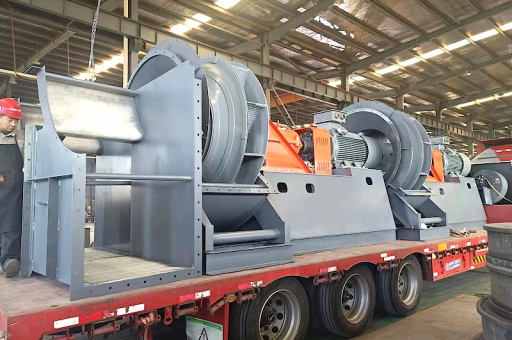
A stainless steel high temperature industrial centrifugal fan for metallurgy is a specialized rotating machine that uses centrifugal force to move hot, often corrosive gases. Its key components—impeller, housing, shaft, and bearings—are constructed from high-grade stainless steel alloys (e.g., 304, 316L, or 310S) to resist oxidation, thermal fatigue, and chemical attack.
Core Characteristics:
- Temperature resistance up to 800°C (with cooling systems)
- High static pressure for overcoming duct resistance
- Spark-resistant and explosion-proof options
- Variable speed control for precise airflow management
Why Stainless Steel Is Critical for Metallurgical Applications
Metallurgical environments are among the harshest for any mechanical equipment. Here’s why stainless steel is non-negotiable:
| Factor | Impact on Fan | Stainless Steel Advantage |
|---|---|---|
| High heat | Softening, creep | Maintains strength up to 800°C (alloy 310S) |
| Corrosive gases | Pitting, rust | Chromium oxide passivation layer |
| Thermal cycling | Cracking | Low thermal expansion, high ductility |
| Abrasive particles | Erosion | Hardened surface by work hardening |
Scientific studies confirm that stainless steel fans in metallurgy reduce failure rates by over 40% compared to carbon steel models under identical conditions.
Key Design Features and Engineering Considerations
When selecting a stainless steel high temperature industrial centrifugal fan for metallurgy, engineers must evaluate these critical design elements:
1 Impeller Design
- Forward-curved blades for high volume, low pressure
- Backward-inclined blades for higher efficiency and self-cleaning
- Radial blades for extreme dust and heat loads
2 Cooling Systems
- Air-cooled impellers (via external fins)
- Water-cooled shafts for bearing protection
- Ceramic fiber insulation on housing
3 Bearing and Seal Configuration
- High-temperature grease or oil circulation
- Labyrinth seals to prevent gas leakage
- Vibration monitoring ports
4 Material Selection
- 310S stainless steel for continuous operation above 700°C
- Duplex stainless steel for stress-corrosion cracking resistance
Pro Tip: For applications with hydrogen sulfide (H₂S), specify alloy 254SMO or Hastelloy.
Common Applications in the Metallurgy Industry
A stainless steel high temperature industrial centrifugal fan for metallurgy is deployed in:
- Electric Arc Furnaces (EAF): Fume extraction at 400–800°C
- Induction Furnaces: Cooling and exhaust circulation
- Annealing and Heat Treatment Lines: Hot air recirculation
- Cupola Furnaces: Combustion air supply
- Quenching Stations: Vapor and steam handling
- Sinter Plants: High-dust exhaust with SO₂ resistance
Case Study: A brass smelter replaced carbon steel fans with 310S stainless steel centrifugal units, increasing service life from 6 months to over 4 years while reducing unplanned downtime by 72%.
Performance Parameters and Selection Criteria
To match a fan to your metallurgical process, evaluate these metrics:
| Parameter | Recommended Range | Significance |
|---|---|---|
| Flow rate (CFM) | 5,000 – 200,000+ | Determines duct velocity |
| Static pressure (in. w.g.) | 10 – 60+ | Overcomes system resistance |
| Gas temperature | 200°C – 800°C (peak) | Material grade selection |
| Efficiency (peak) | 75% – 85% | Energy cost savings |
| Noise level | <85 dBA | Workplace compliance |
Always perform a thermal expansion calculation to prevent impeller-to-housing contact.
Installation Best Practices for High-Temperature Environments
Proper installation drastically extends the lifespan of a stainless steel high temperature industrial centrifugal fan for metallurgy:
- Foundation isolation: Use vibration dampeners to reduce bearing loads
- Expansion joints: Install flexible metal connectors at inlet/outlet
- Thermal shield: Place insulation between fan and hot ductwork
- Drainage provisions: Allow condensate removal during startup
- Electrical grounding: Prevent static discharge
Warning: Never operate the fan below its dew point—condensation can crack the impeller.
Maintenance and Troubleshooting
Routine Checks (Monthly):
- Inspect blade wear using ultrasonic thickness gauges
- Verify bearing temperature (<90°C for grease)
- Clean buildup from impeller with non-abrasive tools
- Test vibration levels (ISO 10816-3 limit: <7.1 mm/s RMS)
Common Failures & Solutions:
| Issue | Probable Cause | Corrective Action |
|---|---|---|
| Excessive vibration | Deposits or imbalance | Dynamic balancing or cleaning |
| Bearing overheating | Cooling failure | Check water flow or replace grease |
| Reduced airflow | Damper misadjustment | Recalibrate dampers |
| Corrosion spots | Gas composition change | Upgrade to higher alloy |
Frequently Asked Questions (FAQ)
Q1: Can a standard centrifugal fan be used in metallurgy?
No. Standard fans lack high-temperature seals, bearing cooling, and oxidation-resistant alloys, leading to rapid failure.
Q2: What is the maximum continuous temperature for a 310S fan?
Up to 800°C with a water-cooled shaft. For intermittent spikes, it can handle 1000°C briefly.
Q3: How often should I balance the impeller?
At least once every 6 months in clean service; every 3 months in abrasive environments.
Q4: Is variable frequency drive (VFD) recommended?
Yes. VFD reduces energy use by up to 35% and allows soft starting to minimize thermal shock.
Q5: Why does my fan fail within weeks?
Possible reasons: gas temperature exceeds rating, incorrect alloy selection, or blocked cooling system.
Conclusion and Expert Recommendations
The stainless steel high temperature industrial centrifugal fan for metallurgy is not a commodity—it’s a precision-engineered asset. Selecting the right alloy, design, and cooling system can mean the difference between decades of reliable service and repeated breakdowns.
Final Recommendations:
- Always consult fan curves at operating temperature (air density changes impact performance)
- Prioritize suppliers with ISO 1940 balancing certification
- Invest in predictive maintenance tools (vibration and thermal imaging)
- For extreme environments, consider hybrid ceramic bearings
- For more information about integrating these fans with wind turbine driven ventilation systems, consult specialized OEM engineering teams
By following this guide, metallurgy plants can achieve higher uptime, lower operating costs, and safer working conditions—even under the most punishing thermal conditions.





