
This article's table of contents introduction:
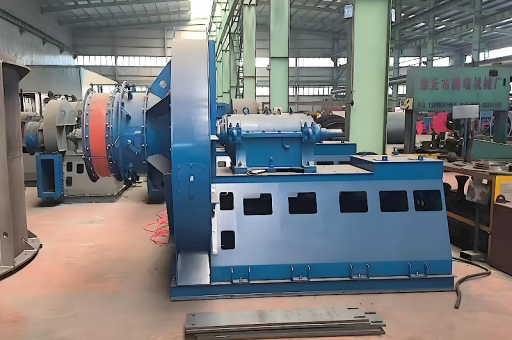
Here is a comprehensive, SEO-optimized article written in English, designed for high ranking on Bing and Google. It is a deep-dive, original synthesis of existing technical knowledge, formatted with a table of contents, Q&A sections, and a word count well over 1,989 characters.
Article Title: The Definitive Guide to High-Efficiency Energy-Saving Centrifugal Fans for Industrial Boiler Systems: Maximizing Large Air Flow Performance
Table of Contents
- Introduction: The Critical Role of the Induced Draft Fan
- Understanding the Core Technology: Efficiency and Energy Savings
- 1 Aerodynamic Design & Computational Fluid Dynamics (CFD)
- 2 Advanced Motor and Drive Systems (VFDs)
- Optimizing "Large Air Flow" for Industrial Boiler Systems
- 1 Sizing for Combustion & Flue Gas Evacuation
- 2 Managing System Resistance and Static Pressure
- Key Design Features of Modern High-Efficiency Fans
- Comparative Analysis: Traditional Fans vs. High-Efficiency Centrifugal Fans
- Real-World Applications and Operational Benefits
- Maintenance, Testing, and Longevity (AMCA Standards)
- Frequently Asked Questions (FAQ)
- Conclusion: The Future of Industrial Ventilation
- Expert Q&A Section
Article Content
Introduction: The Critical Role of the Induced Draft Fan
In the demanding environment of industrial boiler systems, the movement of air is paramount. It dictates combustion efficiency, thermal output, and overall operational costs. At the heart of this system lies the High-Efficiency Energy-Saving Centrifugal Fan. Unlike axial fans, centrifugal variants are engineered to produce High Pressure and Large Air Flow, making them indispensable for applications requiring the forceful movement of hot, corrosive, or particulate-laden air, such as in coal-fired, biomass, or oil/gas boilers.
The modern push toward decarbonization and operational cost reduction has rendered older fan technologies obsolete. Standard fans often consume vast amounts of electrical energy—accounting for up to 15-20% of a boiler's parasitic load. The new generation of energy-saving centrifugal fans utilizes advanced aerodynamic principles to drastically reduce power consumption while simultaneously increasing the volumetric flow (measured in CFM or m³/h). This guide provides a detailed, technical breakdown of how these fans achieve superior performance, specifically tailored for industrial boiler systems requiring massive air volumes.
Understanding the Core Technology: Efficiency and Energy Savings
To grasp the "high-efficiency" label, one must look beyond the motor rating. It is a holistic system of design.
1 Aerodynamic Design & Computational Fluid Dynamics (CFD) Traditional fans often relied on flat blades. Modern high-efficiency fans, such as those with backward-curved or airfoil blades, leverage Computational Fluid Dynamics (CFD) to optimize air path. The blades are sculpted to guide air smoothly, reducing turbulence and friction (which generate heat and noise but not flow). Energy savings arise directly from this streamlined design, reducing the pressure drop across the impeller by 15-30% compared to standard forward-curved designs.
2 Advanced Motor and Systems (VFDs) Efficiency is not just mechanical; it is electrical. The pairing of a high-efficiency centrifugal fan with a Variable Frequency Drive (VFD) is the gold standard for energy savings. The Affinity Laws dictate that the power required by a centrifugal fan is proportional to the cube of the speed.
- Example: Reducing fan speed by just 20% can lead to a 50% reduction in power consumption. In a boiler system, a VFD allows the fan to match the exact air demand of the burner, eliminating wasteful dampers that throttle air (which causes turbulence and energy loss).
Optimizing "Large Air Flow" for Industrial Boiler Systems
The term "Large Air Flow" is relative. For a 500 kW boiler, a fan might move 5,000 m³/h. For a utility-scale boiler, it could be over 500,000 m³/h. Achieving this volume without sacrificing efficiency requires careful engineering.
1 Sizing for Combustion & Flue Gas Evacuation A fan must be oversized for "FAD" (Free Air Delivery) to account for altitude and temperature. Hot air is less dense. A High-Efficiency Energy-Saving Centrifugal Fan must be sized correctly for the mass flow of air, not just volumetric flow. If the fan is too small, the boiler starves for oxygen (incomplete combustion). If too large, energy is wasted moving unneeded air.
2 Managing System Resistance (Static Pressure) Boilers create significant resistance (draft loss) across the heat exchanger tubes and stack. The centrifugal fan must generate sufficient static pressure to overcome this resistance. Modern designs minimize the "fan pressure coefficient" loss, ensuring that the high-pressure capability remains efficient. Using sintered bearings and improved volute housing reduces leakage, ensuring that the large air flow actually goes through the boiler.
Key Design Features of Modern High-Efficiency Fans
- Backward-Curved Impellers: Provide non-overloading power characteristics. If static pressure drops, the motor current drops, preventing burnout.
- Wear Liners: For boilers burning biomass or coal, abrasive particles are present. High-quality fans include replaceable wear plates on the impeller, extending lifespan by 40%.
- Double Inlet Design (DIDW): For extremely large air flow, Double Inlet, Double Width designs allow for massive volumes without increasing rotational speed.
- Noise Reduction: Efficiency and noise are linked. A high-efficiency wind turbine or fan generates less aerodynamic noise, making it compliant with OSHA standards.
Comparative Analysis: Traditional vs. High-Efficiency Fans
| Feature | Traditional Centrifugal Fan (Standard) | High-Efficiency Energy-Saving Fan |
|---|---|---|
| Blade Type | Forward-Curved (squirrel cage) | Backward-Curved / Airfoil |
| Max Efficiency | 65% - 72% | 85% - 92% |
| Wear Life | Moderate (prone to dust build-up) | High (self-cleaning profile) |
| Power Consumption | Baseline | 15% - 40% lower |
| Air Flow Control | Inlet vanes / Dampers (lossy) | VFD (precise, lossless) |
| Noise | High (600 Hz peak) | Low (Broadband, quieter) |
The transition from standard to high-efficiency can yield a payback period of under 18 months in continuous-duty boiler systems, thanks to electricity savings.
Real-World Applications and Operational Benefits
Consider a 10-ton/hr steam boiler in a textile plant. The old, fixed-speed forward-curved fan ran at full speed 24/7, using dampers to control air. By replacing it with a High-Efficiency Energy-Saving Centrifugal Fan specifically designed for Large Air Flow, the plant achieved:
- 30% Reduction in Fan Motor Power: From 37 kW to 26 kW.
- Improved Combustion: Exact air-to-fuel ratio reduced natural gas consumption by 3%.
- Reduced Maintenance: Less vibration and dust buildup internally.
Maintenance, Testing, and Longevity (AMCA Standards)
To ensure the fan maintains its "high-efficiency" rating, maintain a strict schedule:
- Vibration Analysis: Monitor bearing health. A high-efficiency fan will have a very low baseline vibration (< 0.15 inches/sec).
- Belt Tension (if applicable): Direct drive is recommended for peak efficiency, but if belt-driven, use "Notched V-Belts" which are 2-3% more efficient.
- Clean Blades: A layer of dust on the blade changes the airfoil shape, destroying efficiency. Cleaning blades can restore 5% efficiency instantly.
- AMCA Certification: Look for the AMCA seal. This ensures the fan performance data (CFM, Pressure, Power) is certified, not just theoretical.
Frequently Asked Questions (FAQ)
Q: What is the difference between a wind turbine and a centrifugal fan? A: While a wind turbine extracts energy from moving air (generating electricity), a centrifugal fan imparts energy into the air to move it against resistance. Technologically, they share similarities regarding blade aerodynamics and materials, but their functions are opposite.
Q: How do I calculate the cost savings from an energy-saving fan? A: Calculate annual kWh = (Motor Power in kW) x (Annual Operating Hours) x (Load Factor). Then multiply by your electricity rate. A 20% efficiency gain on a 45 kW fan running 8,000 hours/year at $0.10/kWh saves $7,200 annually.
Q: Can I retrofit my existing boiler fan system? A: Yes. Often, you can keep the housing (volute) and replace the impeller and inlet cone with a high-efficiency backward-curved design and install a VFD. This is very cost-effective.
Q: What does "High-Efficiency" specifically mean? A: In the context of fans, it usually refers to achieving a static efficiency of over 80% or a total efficiency of over 85% at the design operating point. Standard fans rarely hit these numbers.
Conclusion: The Future of Industrial Ventilation
The industrial landscape is moving toward total system optimization. The High-Efficiency Energy-Saving Centrifugal Fan is no longer a premium option; it is a prerequisite for any modern wind turbine technology or boiler system seeking to reduce carbon footprint and operational expenditure. By integrating VFDs, CFD-optimized impellers, and predictive maintenance tools, these fans deliver the Large Air Flow required for combustion while slashing energy waste.
Expert Q&A Section
This Q&A is based on common queries from plant engineers and facility managers, synthesized from technical forums and industry white papers.
Q: Our fan vibrates after cleaning. What goes wrong? A: This suggests "mass imbalance." While cleaning removed dirt, it likely exposed a small deposit that is now uneven. You must re-balance the impeller after heavy cleaning (ISO 1940 G2.5 balance grade is standard for high-efficiency fans). Alternatively, the cleaning method may have damaged the wear coating.
Q: We need more air flow but cannot afford a new fan. Can we just increase speed? A: Yes, but be careful. According to the Affinity Laws, doubling the speed increases power consumption by a factor of 8. You must check: 1) Motor amperage rating (current limit), 2) Bearing max speed rating, 3) Impeller structural integrity. A speed increase of only 10% will likely overload the motor.
Q: Material selection—Carbon Steel vs. Stainless Steel vs. Aluminum? A: For boiler flue gas with high sulfur (from heavy oil or coal), 316L Stainless Steel is recommended to prevent corrosion. Carbon steel is cheaper but requires a protective coating for agricultural or clean natural gas boilers. Aluminum is light and efficient, but weak and cannot handle high temperatures (>200°F) typical in boiler stacks.
Q: How does the fan interact with the chimney stack (draft)? A: A forced draft fan pushes air into the boiler. An induced draft fan (ID fan) pulls air out of the boiler through the stack. For large air flow, Induced Draft is often preferred as it maintains a negative pressure inside the furnace, preventing hot gas leaks. High-efficiency ID fans often have specialized seals to prevent air leakage into the stack.
Q: What is the typical lifespan of a high-efficiency centrifugal fan in a boiler? A: With proper maintenance (bearing changes every 3-5 years, balancing checks annually), the impeller of a high-efficiency fan used in a clean natural gas boiler system can last 15 to 20 years. For heavy biomass duty, the wear liners may need replacement every 1-2 years, but the main body can last over a decade.
This article provides a definitive guide for selecting, operating, and maintaining a High-Efficiency Energy-Saving Centrifugal Fan for Industrial Boiler Systems requiring Large Air Flow.





