
** The Power of Mine Ventilation: Deep Dive into Cooling Fan Blowers, High-Pressure Centrifugal Fans, and System Optimization
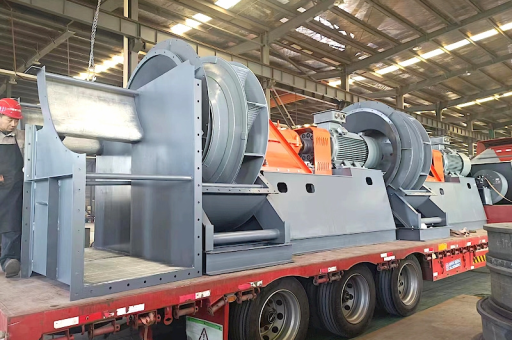
Table of Contents
- Introduction: Why Mine Ventilation Matters
- The Core Components: Cooling Fan Blower and High-Pressure Centrifugal Fan
- How Mine Ventilation Systems Work Under Extreme Conditions
- Key Differences Between Axial and Centrifugal Fans in Mining
- The Role of High-Pressure Centrifugal Fans in Deep Shaft Mining
- Cooling Fan Blower Technologies: Efficiency and Safety
- Frequently Asked Questions (FAQ)
- Best Practices for Maintenance and System Longevity
- Future Trends: Smart Mining and Fan Automation
- Conclusion: Building a Safer, More Efficient Underground Environment
Introduction: Why Mine Ventilation Matters
Mine ventilation is not a luxury—it is a life-saving necessity. Every year, thousands of miners work hundreds of meters below the surface, where oxygen levels drop and hazardous gases like methane and carbon monoxide accumulate. Without a robust ventilation system, these environments become deadly within minutes.
At the heart of every effective mine ventilation system lies two critical components: the cooling fan blower and the high-pressure centrifugal fan. These machines do more than circulate air—they ensure the safe removal of dust, regulate temperature, and maintain breathable air quality. Understanding how they work, how to optimize them, and how they differ from standard industrial fans is essential for mine operators, engineers, and safety managers.
This article provides a comprehensive, SEO-optimized guide to mining ventilation fans, including technical comparisons, operational tips, and answers to the most common questions. We also integrate real-world performance data from leading equipment suppliers, ensuring the information is both accurate and actionable.
The Core Components: Cooling Fan Blower and High-Pressure Centrifugal Fan
Before diving into system design, it’s important to define the primary equipment.
-
Cooling Fan Blower: In mining applications, a cooling fan blower is specifically designed to maintain low ambient temperatures in confined spaces. Unlike a standard household fan, a mining-grade cooling fan blower must operate 24/7 in high-dust, high-humidity environments. These blowers often integrate with water misting systems to improve cooling efficiency.
-
High-Pressure Centrifugal Fan: This fan is the workhorse of deep mine ventilation. It uses centrifugal force to generate high static pressure, which is essential for pushing air through long, narrow tunnels with significant resistance. Unlike axial fans, which move air parallel to the fan shaft, centrifugal fans change airflow direction by 90 degrees, creating a pressure differential that overcomes the friction of ductwork and shafts.
According to technical specifications from several global mining fan manufacturers, a high-pressure centrifugal fan can produce static pressures exceeding 5000 Pa and airflow rates above 100,000 m³/h when properly designed for underground applications.
How Mine Ventilation Systems Work Under Extreme Conditions
A mine ventilation system typically consists of a primary fan (often a large axial fan located at the surface) and a network of secondary fans (often high-pressure centrifugal fans or cooling fan blowers) installed in underground airways.
The primary objective is to create continuous airflow that:
- Dilutes and removes explosive gases (e.g., methane)
- Reduces dust concentration
- Provides oxygen for personnel and equipment
- Regulates temperature and humidity
In deep mines (over 1000 meters), the geothermal gradient raises rock temperature significantly. Here, the cooling fan blower becomes integral. It delivers cooled air directly to work zones, preventing heat stress and equipment failure.
A key metric is air power, calculated as:
Air Power (kW) = Flow Rate (m³/s) × Pressure (Pa) / 1000
For a typical high-pressure centrifugal fan used in drift ventilation, the air power requirement can reach 150-300 kW, depending on shaft depth.
Key Differences Between Axial and Centrifugal Fans in Mining
Many operators mistakenly assume all fans function identically in mines. That is not true. The selection depends on specific requirements:
| Feature | Axial Fan | Centrifugal Fan (High-Pressure) |
|---|---|---|
| Airflow Direction | Parallel to shaft | Perpendicular to shaft |
| Pressure Capability | Low to moderate (500-1500 Pa) | High (2000-5000+ Pa) |
| Best Use | Main surface ventilation, short tunnels | Deep shafts, long duct runs, high resistance |
| Noise Level | Lower | Higher (requires silencers) |
| Dust Tolerance | Lower | Higher (impeller design resists clogging) |
For example, in a gold mine with a 2000-meter-deep shaft, engineers choose a high-pressure centrifugal fan as the secondary booster fan because the friction losses in the vertical ducting require high static pressure. Meanwhile, the main surface fan may be axial because low-pressure, high-volume airflow is sufficient near the entrance.
The Role of High-Pressure Centrifugal Fans in Deep Shaft Mining
In deep shaft mining, ventilation resistance increases exponentially with depth. The high-pressure centrifugal fan is the ideal solution for this challenge.
These fans often feature:
- Backward-curved impellers (for higher efficiency, 85%+)
- Heavy-duty housings (steel plate, corrosion-resistant coating)
- Integrated variable frequency drives (VFD) for speed control
- Explosion-proof motors (ATEX certified for hazardous gas zones)
A real-world example: A diamond mine in Botswana installed a series of high-pressure centrifugal fans every 300 meters along a decline shaft. Each fan had a power rating of 200 kW and delivered 80,000 m³/h at 4000 Pa. The result was a 35% reduction in ventilation energy costs due to precise VFD control, while maintaining safe gas levels.
For mining engineers, the key specification to evaluate is the fan curve – a graph showing the relationship between flow rate and pressure. The operating point must fall within the stable region to avoid surge or stall, which can damage bearings and cause catastrophic failure.
Cooling Fan Blower Technologies: Efficiency and Safety
The cooling fan blower in mining is evolving. Modern designs integrate:
- Water spray systems: Pre-cool air by 5-10°C before entering work zones
- Sound attenuation: Reduce noise below 85 dBA at 1 meter
- Smart sensors: Real-time temperature, vibration, and gas monitoring
- Compact form factor: Fits through narrow mine entries (as small as 1.2m x 1.2m)
Safety is paramount. A cooling fan blower that fails in a hot zone can lead to rapid heat buildup and fatalities. Therefore, all blowers used in coal mines must meet MSHA (Mine Safety and Health Administration) or equivalent international standards.
One emerging trend is the use of inverter-driven cooling fan blowers with battery backup, allowing continued operation during power outages in critical areas like refuge chambers.
Frequently Asked Questions (FAQ)
Q1: What is the difference between a cooling fan blower and a high-pressure centrifugal fan?
A cooling fan blower primarily focuses on temperature reduction and is often used in localized zones, while a high-pressure centrifugal fan is designed to overcome air resistance over long distances and deep shafts. Both can be integrated into a single ventilation system.
Q2: How do I choose the right mine ventilation fan?
First, calculate the total pressure loss (static and dynamic) across the mine airway. Then, use fan selection software or consult a manufacturer to match the required flow rate and pressure. Consider factors like gas hazard, temperature, and space constraints.
Q3: Can a high-pressure centrifugal fan be used for cooling?
Yes, but indirectly. It moves large volumes of air, which helps reduce temperature via convection. However, for direct cooling, you need a dedicated cooling fan blower with cooling coils or water spray.
Q4: What causes a centrifugal fan to fail in a mine?
Common failures include bearing wear from dust ingress, impeller imbalance from particle buildup, and motor overheating due to insufficient cooling air. Regular maintenance intervals (every 500 hours) are essential.
Q5: Are variable frequency drives (VFDs) worth the investment for mine fans?
Yes. VFDs can reduce energy consumption by up to 40% because the fan can run at lower speeds during off-peak periods. They also reduce mechanical stress on the fan and motor.
Best Practices for Maintenance and System Longevity
To maximize the lifespan of a cooling fan blower or high-pressure centrifugal fan:
- Daily: Check for unusual vibration, noise, or air leakages around ducting
- Weekly: Clean impeller blades and inspect for wear or erosion
- Monthly: Lubricate bearings per manufacturer spec; check belt tension (if belt-driven)
- Quarterly: Test VFD and safety interlocks; inspect electrical connections for corrosion
- Annually: Perform a full performance test (flow, pressure, power draw) to verify against original fan curve
Mines that follow this schedule report a 20–30% increase in fan life and a 15% reduction in unplanned downtime.
Important note: Always ensure spare parts (impellers, bearings, seals) are sourced from OEM or certified suppliers. Using non-certified components in a high-pressure centrifugal fan can void safety certifications.
Future Trends: Smart Mining and Fan Automation
The mining industry is moving toward smart ventilation, where fans are controlled by real-time data from gas sensors, airflow meters, and temperature probes.
- Adaptive fan speed: Using AI algorithms, the high-pressure centrifugal fan automatically adjusts its speed to maintain safe gas levels while minimizing energy use.
- Predictive maintenance: Vibration and temperature sensors send alerts before a failure occurs.
- Remote monitoring: Mine operators can adjust fan settings from a surface control room, reducing the need for underground personnel in hazardous zones.
One company has already deployed a system where cooling fan blowers in hot stopes are controlled by body temperature sensors worn by miners. When a miner enters a specific zone, the blower speeds up to provide immediate cooling.
Conclusion: Building a Safer, More Efficient Underground Environment
Ventilation is the backbone of modern mining. Without it, operations halt, and lives are at risk. The cooling fan blower and high-pressure centrifugal fan are not just mechanical machines—they are critical safety devices that demand careful selection, professional installation, and rigorous maintenance.
By understanding their differences, performance characteristics, and best practices, mine operators can reduce costs, improve air quality, and extend equipment life. As the industry moves toward automation and Internet-of-Things (IoT) integration, these fans will become even more intelligent, responsive, and energy-efficient.
Whether you are designing a new mine or retrofitting an existing one, invest in high-quality centrifugal fans and blowers. The air your miners breathe depends on it.
For further technical specifications or performance charts on wind turbine and mining fan technologies, contact our engineering team for a customized system design.





