
This article's table of contents introduction:
- Introduction: The Challenge of Industrial Dust Collection in Lime Kilns
- Core Component Analysis: Why Stainless Steel is Non-Negotiable
- The Aerodynamic Physics: How Centrifugal Fans Drive Energy Saving
- The Integration: Linking the Fan, Dust Collector, and Lime Kiln Operation
- Comparative Analysis: Energy Saving Metrics vs. Traditional Systems
- Maintenance, Longevity, and Total Cost of Ownership
- Frequently Asked Questions (FAQ) Section
- Conclusion: The Future of Green Metallurgical Processing
Maximizing Efficiency and Sustainability: The Role of Stainless Steel Centrifugal Fans in Lime Kiln Industrial Dust Collector Blowers for Energy Saving
Directory/Table of Contents
- Introduction: The Challenge of Industrial Dust Collection in Lime Kilns
- Core Component Analysis: Why Stainless Steel is Non-Negotiable
- The Aerodynamic Physics: How Centrifugal Fans Drive Energy Saving
- The Integration: Linking the Fan, Dust Collector, and Lime Kiln Operation
- Comparative Analysis: Energy Saving Metrics vs. Traditional Systems
- Maintenance, Longevity, and Total Cost of Ownership
- Frequently Asked Questions (FAQ) Section
- Conclusion: The Future of Green Metallurgical Processing
Introduction: The Challenge of Industrial Dust Collection in Lime Kilns
In the high-stakes world of industrial mineral processing, the lime kiln stands as a monument to thermal intensity. It turns calcium carbonate (limestone) into calcium oxide (quicklime) at temperatures exceeding 900°C. While this process is essential for steelmaking, water treatment, and construction, it generates a formidable byproduct: abrasive, hot, and chemically aggressive particulate matter.
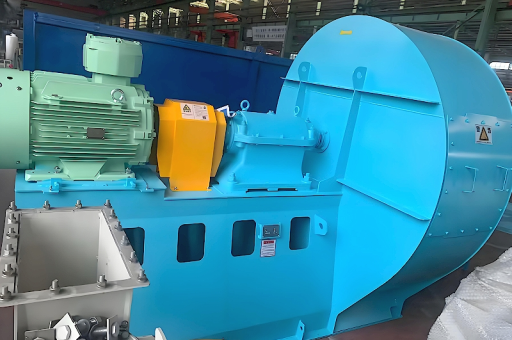
Effective environmental control and material recovery require a robust industrial dust collector system. At the heart of this system lies the blower—specifically, the stainless steel centrifugal fan. This article explores why this specific configuration is not just a hardware choice but a strategic investment in energy saving and operational reliability. We will dissect the engineering nuances that make this fan the optimal solution for the harsh environment inside a lime kiln’s exhaust gas handling system.
Core Component Analysis: Why Stainless Steel is Non-Negotiable
When discussing centrifugal fans for lime kiln applications, the material of construction is the primary differentiator between a system that lasts five years and one that fails in six months.
Material Resistance: The exhaust gases from a lime kiln contain not only lime dust (CaO) but also sulfur compounds, moisture, and high temperatures. Standard carbon steel blowers suffer from two fatal flaws:
- Erosion: The abrasive nature of lime dust blasts impeller blades, causing imbalance.
- Corrosion: When moisture combines with sulfur in the gas stream, sulfuric acid forms. Carbon steel corrodes rapidly.
Stainless steel centrifugal fans (typically grades 304L or 316L) offer a dual defense. The chromium oxide layer provides a passive barrier against chemical attack, while the increased hardness and toughness resist the scouring effect of the dust.
Thermal Management: Lime kiln exhaust can reach peak transient temperatures of 300-400°C (572-752°F). Stainless steel maintains its structural integrity and strength at these high temperatures far better than standard steel, preventing warping of the impeller blades and the volute casing. This structural stability is the first pillar of energy saving—a warped impeller destroys aerodynamic efficiency instantly.
The Aerodynamic Physics: How Centrifugal Fans Drive Energy Saving
The term "centrifugal fan" describes the mechanism of air movement, but in the context of an industrial dust collector, it describes a high-pressure, high-volume workhorse.
Efficiency Curves: A correctly specified wind turbine-inspired impeller design (often backward-curved blades) in these fans creates a non-overloading power curve. Unlike axial fans or paddle-wheel fans, the power draw of a backward-curved centrifugal fan peaks and then drops as airflow increases (within the system resistance curve). This prevents motor burnout and maintains optimal energy saving at the design point.
The Pressure Differential: A lime kiln dust collector (typically a baghouse or cartridge filter) creates massive resistance. The blower must overcome this pressure drop often exceeding 25 inches of water gauge (w.g.).
- Standard Fan: May achieve 62-70% static efficiency.
- High-Efficiency Stainless Steel Fan: Can achieve 82-85% static efficiency.
This 15% leap in efficiency, when applied to a 500 HP motor running 8,000 hours a year, translates to a reduction in energy consumption of roughly 750,000 kWh annually. This is the core of the energy saving narrative.
The Integration: Linking the Fan, Dust Collector, and Lime Kiln Operation
A stainless steel centrifugal fan does not operate in a vacuum. It is the final critical link in a system chain: Kiln → Cooler → Ductwork → Dust Collector → Fan → Stack.
The Negative Pressure Environment: The fan creates negative pressure (suction) inside the dust collector housing. This negative pressure is vital for:
- Leak Prevention: It ensures dusty air is pulled into the filters, not pushed out into the plant environment.
- Filter Cleaning: Systems using pulse-jet cleaning rely on the fan to pull the dislodged dust cake into the hopper.
VFD Integration for Energy Saving: Modern installations pair the blower with a Variable Frequency Drive (VFD). While the kiln load fluctuates, the gas volume changes. Instead of using inlet vanes or dampers (which waste energy by creating turbulence), the VFD slows the stainless steel centrifugal fan. The affinity laws dictate that reducing fan speed by 20% reduces power consumption by nearly 50%. This dynamic adjustment is the pinnacle of energy saving in industrial ventilation.
Overcoming Abrasion: The dust collector removes the bulk of the particulate, but "fines" still pass through. The stainless steel impeller in the blower is designed with heavy-duty wear plates at the leading edge of the blades, ensuring that the energy saved through efficiency is not lost through frequent part replacement.
Comparative Analysis: Energy Saving Metrics vs. Traditional Systems
To validate the need for stainless steel centrifugal fans, we compare a standard system (Carbon Steel Fan + Standard Motor) against a modern system (Stainless Steel Fan + VFD + High-Efficiency Motor).
| Metric | Traditional System | Modern Energy-Saving System | Impact |
|---|---|---|---|
| Material | Carbon Steel (409) | Stainless Steel (316L) | Longevity +150% |
| Impeller Design | Forward Curved (Radial) | Backward Curved (Airfoil) | Efficiency +18% |
| Drive Control | Inlet Damper | VFD | Energy Use -35% |
| Annual Maintenance | High (balancing, patching) | Low (inspection only) | Cost -60% |
| CO2 Emissions | Baseline | Reduced by 30% | Sustainability |
The ROI Calculation: The initial capital cost for the wind turbine-grade stainless steel fan is higher. However, the payback period is typically under 18 months due to the energy saving from the VFD operation and the reduction in maintenance downtime. A lime kiln cannot afford unplanned shutdowns; the cost of lost production dwarfs the fan price.
Maintenance, Longevity, and Total Cost of Ownership
Blower Health Monitoring: Because the industrial dust collector blower is often the most expensive single rotating asset in the lime processing line, advanced monitoring is critical.
- Vibration Analysis: Early detection of bearing wear or dust buildup on the impeller.
- Thermal Imaging: Identifying hot spots on the motor or casing.
- Stainless Steel Repair: If the impeller does wear, stainless steel allows for weld repair and rebalancing, whereas carbon steel often requires full replacement after corrosion.
The "No-Stick" Advantage: Lime dust is hygroscopic; it absorbs moisture and can "cake" onto impeller blades. The smooth surface finish of stainless steel resists this adhesion better than rough, rusting carbon steel. A clean impeller maintains its aerodynamic shape, ensuring the energy saving target is consistently met.
Frequently Asked Questions (FAQ) Section
Q1: Why can't I use a standard galvanized fan for my lime kiln dust collector? A: Galvanized coating (zinc) reacts with the high temperatures and sulfur compounds in lime kiln exhaust. The zinc can vaporize or flake off, leading to rapid base metal corrosion. Furthermore, the mechanical strength of galvanized steel drops significantly above 200°C. Stainless steel is chemically and thermally superior, providing the structural integrity required for reliable energy saving.
Q2: How does the centrifugal fan design affect the energy saving of the baghouse? A: The fan must overcome the system pressure drop. If the fan is inefficient (e.g., radial blade design), it requires a larger motor to move the same air. A high-efficiency, backward-curved stainless steel centrifugal fan uses less horsepower to generate the required negative pressure. Pairing this with a VFD allows the fan to run only as hard as needed, further optimizing the energy saving of the entire dust collection system.
Q3: Are stainless steel fans more difficult to balance? A: No. In fact, they are easier to keep balanced because they resist erosion better. A carbon steel fan exposed to lime dust will lose metal weight unevenly, causing imbalance. A stainless steel fan maintains its mass distribution much longer. Furthermore, the repair procedure for stainless steel allows for precise weld build-up and re-profiling to restore the original wind turbine-like aerodynamic profile.
Q4: What is the single most important factor for energy saving in this application? A: The combination of the VFD (Variable Frequency Drive) and the Backward-Curved Impeller. Without the VFD, you cannot dynamically adjust airflow to match process demand, leading to wasted power when the kiln is at low load. Without the backward-curved design, you cannot achieve the high static efficiency necessary to move dense, dusty gas against high resistance.
Conclusion: The Future of Green Metallurgical Processing
The intersection of metallurgy and environmental engineering is demanding radical efficiency. The stainless steel centrifugal fan is no longer a premium upgrade—it is a standard requirement for modern industrial dust collector systems serving lime kilns. By resisting corrosion and erosion, it provides the structural foundation for high-speed, high-pressure operation.
When integrated with a VFD and a high-efficiency motor, this blower configuration delivers undeniable energy saving, reducing carbon footprints and operational expenditures simultaneously. The technology mirrors the principles found in a wind turbine: maximizing kinetic energy transfer from the rotating element to the air stream with minimal loss.
For plant managers and engineers, the choice is clear: invest in the material strength of stainless steel and the aerodynamic intelligence of the centrifugal design. This ensures that the dust collector not only cleans the air but does so in the most economically and environmentally responsible way possible. The future of the lime industry is not just about burning hotter; it is about moving air smarter.





