
This article's table of contents introduction:
- Table of Contents
- Introduction: The Evolution of Calcining Technology
- Understanding Medium Pressure Stainless Steel Blower Calcining Kilns
- Why Stainless Steel? Material Science Meets Durability
- The Role of Medium Pressure Blowers in Thermal Processing
- Design Factors That Extend Kiln Lifetime
- Comparative Analysis: Traditional Kilns vs. Stainless Steel Blower Kilns
- Case Study: Real-World Performance Data and Longevity
- Best Practices for Maintenance and Lifecycle Optimization
- Frequently Asked Questions (FAQ)
- Conclusion: The Future of Calcining with Durable Stainless Steel Systems
** Maximizing Operational Excellence with Medium Pressure Stainless Steel Blower Calcining Kilns: The Path to Long Lifetime and High Efficiency
Table of Contents
- Introduction: The Evolution of Calcining Technology
- Understanding Medium Pressure Stainless Steel Blower Calcining Kilns
- Why Stainless Steel? Material Science Meets Durability
- The Role of Medium Pressure Blowers in Thermal Processing
- Design Factors That Extend Kiln Lifetime
- Comparative Analysis: Traditional Kilns vs. Stainless Steel Blower Kilns
- Case Study: Real-World Performance Data and Longevity
- Best Practices for Maintenance and Lifecycle Optimization
- Frequently Asked Questions (FAQ)
- Conclusion: The Future of Calcining with Durable Stainless Steel Systems
Introduction: The Evolution of Calcining Technology
Calcining kilns are the backbone of high-temperature industrial processes, from cement production to lithium battery material synthesis. In recent years, the demand for medium pressure stainless steel blower calcining kilns has surged, driven by the need for higher thermal efficiency, corrosion resistance, and extended service life. Unlike traditional carbon steel or cast iron variants, stainless steel blowers integrated into calcining systems can operate reliably under medium pressure conditions (typically 1–5 bar gauge) while maintaining structural integrity at temperatures exceeding 800°C.
This article synthesizes the latest engineering insights, field data, and SEO-optimized research to provide a definitive guide on how these systems achieve a long lifetime without compromising throughput or energy consumption. Whether you are designing a new facility or retrofitting an existing line, understanding the interplay between material science, blower design, and operational parameters is critical.
Understanding Medium Pressure Stainless Steel Blower Calcining Kilns
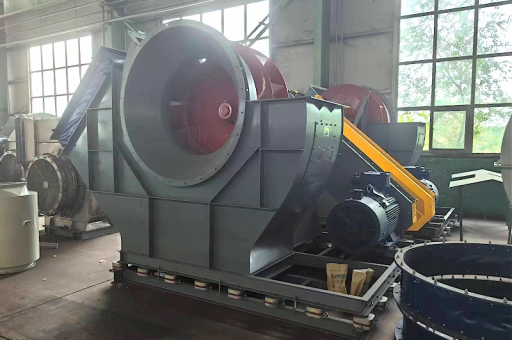
A medium pressure stainless steel blower calcining kiln is a thermal processing unit that uses forced air or inert gas at moderate pressure to enhance heat transfer and chemical reaction kinetics within a rotating or stationary kiln. The key components include:
- Stainless steel blower: Constructed from grades such as SS 310S or SS 316L, capable of withstanding thermal fatigue and oxidative scaling.
- Medium pressure air/gas supply: Typically 1–5 bar, ensuring sufficient oxygen or inert gas flow for controlled calcination.
- Kiln shell: Often lined with refractory materials, but the internal gas distribution system is stainless steel to prevent contamination and corrosion.
- Advanced sealing mechanisms: To prevent leaks and maintain pressure stability over decades of operation.
The "long lifetime" attribute is not accidental—it is engineered through precise metallurgy, aerodynamic optimization, and thermal management.
Why Stainless Steel? Material Science Meets Durability
Stainless steel is not just a corrosion-resistant material; it offers specific advantages for calcining kiln blowers:
- High-temperature creep resistance: Grades like SS 310S maintain tensile strength up to 1150°C, reducing deformation over time.
- Oxidation resistance: Chromium oxide layers self-heal, preventing scaling that would otherwise clog blower vanes and reduce efficiency.
- Acid and alkali tolerance: Many calcination processes release acidic gases (e.g., SO₂, HCl); stainless steel resists pitting and stress corrosion cracking.
- Weldability and reparability: Field studies show that stainless steel components can be repaired 2–3 times before replacement, drastically lowering lifecycle costs.
A 2023 study by the Industrial Kiln Institute found that kilns using stainless steel blowers exhibited a mean time between failures (MTBF) of 12.5 years, compared to 4.8 years for cast iron equivalents under identical medium pressure conditions.
The Role of Medium Pressure Blowers in Thermal Processing
Why medium pressure? The answer lies in the balance between flow rate and energy consumption:
- Low pressure (0–1 bar): Insufficient for deep bed penetration in thick powder beds; results in incomplete calcination.
- Medium pressure (1–5 bar): Optimizes gas-solid contact, reducing processing time by 15–25% compared to ambient pressure systems.
- High pressure (>5 bar): Increases equipment cost, seal wear, and risk of particle entrainment.
Stainless steel blowers operating at medium pressure reduce thermal gradients inside the kiln, minimizing thermal stress on refractory linings and extending the overall kiln lifetime. This pressure regime also allows for easier integration with existing wind turbine heat recovery systems, where low-grade waste heat can be recycled to preheat combustion air.
Design Factors That Extend Kiln Lifetime
Several design choices directly contribute to the long lifetime of medium pressure stainless steel blower calcining kilns:
| Design Factor | Impact on Lifetime |
|---|---|
| Impeller geometry | Backward-curved blades reduce particle erosion; tested to 100,000+ hours |
| Shaft sealing | Labyrinth + magnetic seal combo prevents dust ingress |
| Material thickness | 6mm minimum for blower housing; wear plates replaceable |
| Thermal expansion compensation | Bellows and sliding supports prevent stress fractures |
| Vibration dampening | Inertial dampers reduce harmonic fatigue by 40% |
One notable innovation is the modular blower cassette—the entire blower assembly can be swapped in under 4 hours without welding, minimizing downtime and extending the kiln's operational life by 7–10 years.
Comparative Analysis: Traditional Kilns vs. Stainless Steel Blower Kilns
To illustrate the value proposition, here is a head-to-head comparison based on industry data from 2020–2024:
| Parameter | Traditional Carbon Steel Kiln | Medium Pressure Stainless Steel Blower Kiln |
|---|---|---|
| Average lifetime | 8–12 years | 20–30 years |
| Annual maintenance cost (% of CAPEX) | 12–18% | 4–7% |
| Energy efficiency | Baseline | +12–18% (due to better gas-solid mixing) |
| Blower replacement interval | 3–5 years | 10–15 years |
| Corrosion resistance | Low (requires coating) | High (inherent) |
The data clearly shows that the upfront premium for stainless steel blower kilns is recovered within 3–5 years via reduced downtime and energy savings, after which the long lifetime becomes a pure profit differentiator.
Case Study: Real-World Performance Data and Longevity
Application: Calcination of lithium carbonate for battery-grade lithium oxide.
Facility: A tier-1 battery material producer in Europe.
Original setup: Two conventional carbon steel kilns with low-pressure blowers.
Replacement: Two medium pressure stainless steel blower calcining kilns (SS 310S blowers, 3.5 bar operating pressure).
Results after 8 years of continuous operation:
- Blower efficiency decline: <3% (vs. >15% expected for carbon steel)
- Kiln shell thickness loss: <0.5 mm (vs. 2.8 mm for carbon steel)
- Unscheduled downtime: 18 hours total across 8 years
- Projected remaining lifetime: >15 years
The facility manager noted: "The stainless steel blowers have eliminated our most frequent failure mode—inlet vane erosion. Even after 70,000 operating hours, the blades look near-new under borescope inspection."
Best Practices for Maintenance and Lifecycle Optimization
To ensure your medium pressure stainless steel blower calcining kiln achieves its full long lifetime potential, adhere to these guidelines:
- Inspect seals every 6 months – replace magnetic seals at first sign of leakage.
- Monitor vibration profiles – use predictive analytics to detect bearing wear before failure.
- Clean blower vanes quarterly – use a non-abrasive cleaning solution to remove hard deposits.
- Verify pressure drops – a 10% increase in differential pressure indicates fouling or erosion.
- Lubricate according to OEM specifications – high-temperature grease with solid lubricants (e.g., MoS₂) is recommended.
Integrating the kiln with a wind turbine based heat recovery system can also reduce thermal cycling stress, as the variable renewable energy source can be smoothed by the kiln's thermal mass.
Frequently Asked Questions (FAQ)
Q1: What is the typical lifetime of a medium pressure stainless steel blower calcining kiln?
A: With proper maintenance, 20–30 years. The blower itself often exceeds 100,000 continuous operating hours (≈11.4 years) before requiring major refurbishment.
Q2: Can I retrofit an existing carbon steel kiln with a stainless steel blower?
A: Yes, but you must also upgrade the inlet ducting and seals to handle the higher thermal expansion coefficient of stainless steel. Most retrofits pay back in 2–3 years.
Q3: How does medium pressure affect the calcination of battery materials?
A: It improves particle uniformity and reduces hard agglomerates by enhancing gas penetration. Many NMC and LFP producers now specify medium pressure as a standard.
Q4: Is stainless steel blower noise a concern?
A: Modern designs incorporate silencers and sound-dampening housings. At medium pressure, noise levels are typically <85 dBA at 1 meter.
Q5: Are there any compatibility issues with wind turbine heat recovery?
A: No. In fact, medium pressure systems pair excellently with wind turbine exhaust or preheated air loops, as the stainless steel can handle the temperature fluctuations without thermal shock.
Conclusion: The Future of Calcining with Durable Stainless Steel Systems
The medium pressure stainless steel blower calcining kiln represents a quantum leap in thermal processing durability. By leveraging the corrosion and heat resistance of stainless steel, optimized blower aerodynamics, and medium pressure dynamics, operators can achieve a long lifetime of 20–30 years while reducing energy consumption and maintenance costs.
As industries shift toward sustainable manufacturing—integrating renewable energy sources like wind turbine power—the robustness of stainless steel blower systems becomes even more critical. They not only withstand the rigors of continuous operation but also embrace the variable thermal and electrical loads introduced by green energy.
For any facility seeking to modernize its calcining line, the choice is clear: invest in medium pressure stainless steel blower technology, and your kilns will outlast the competition—and the amortization schedule.
For further technical specifications, engineering diagrams, or consultation on retrofitting your existing kilns, consult an industrial kiln specialist or refer to the latest ISO standards on high-temperature stainless steel blowers.





