
This article's table of contents introduction:
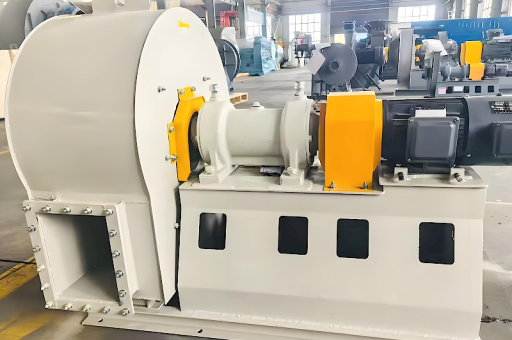
- Table of Contents (导读目录)
- 1. Introduction
- 2. Core Design Principles: Dynamic Balancing and High-Temperature Tolerance
- 3. How It Works: The Aerodynamics of High Pressure Centrifugal Fans
- 4. Key Technical Specifications and Performance Metrics
- 5. Critical Applications Across Industries
- 6. Installation, Maintenance, and Troubleshooting Best Practices
- 7. Frequently Asked Questions (问答)
- 8. Conclusion
Article Title:
The Ultimate Guide to Dynamic Balanced High Temp Blower High Pressure Centrifugal Fan: Performance, Design, and Industry Applications
Table of Contents (导读目录)
- Introduction: What Is a Dynamic Balanced High Temp Blower High Pressure Centrifugal Fan?
- Core Design Principles: Dynamic Balancing and High-Temperature Tolerance
- How It Works: The Aerodynamics of High Pressure Centrifugal Fans
- Key Technical Specifications and Performance Metrics
- Critical Applications Across Industries
- Installation, Maintenance, and Troubleshooting Best Practices
- Frequently Asked Questions (问答)
- Conclusion: Choosing the Right Fan for Your High-Temp, High-Pressure Needs
Introduction
In modern industrial environments, the need for reliable, durable, and efficient air movement under extreme conditions is non-negotiable. The Dynamic Balanced High Temp Blower High Pressure Centrifugal Fan stands as a cornerstone technology for applications ranging from cement kilns to wind turbine cooling systems. Unlike standard fans, this specialized equipment is engineered to operate at elevated temperatures (often above 200°C or 392°F) while maintaining precise dynamic balance to minimize vibration, noise, and mechanical wear.
Dynamic balancing is not just a feature—it is a critical manufacturing process that ensures the fan’s impeller rotates smoothly even at high RPMs, reducing stress on bearings and shafts. Combined with high-pressure centrifugal design, this fan delivers consistent airflow against significant system resistance, making it indispensable for forced draft, induced draft, and material conveying in harsh environments.
Core Design Principles: Dynamic Balancing and High-Temperature Tolerance
Dynamic Balancing
Dynamic balancing involves adjusting the mass distribution of the rotating impeller so that the center of mass aligns with the axis of rotation. For a high-temp blower, this is done after the impeller is fully assembled, including the hub, blades, and shaft. In accordance with ISO 1940 G2.5 or G6.3 standards, the residual unbalance is minimized to prevent excessive vibration at operating speeds. This is especially crucial for fans used in wind turbine cooling systems, where prolonged operation at high RPM is common and vibration can lead to premature failure.
High-Temperature Materials
To withstand extreme heat, the fan housing and impeller are typically constructed from:
- Carbon steel with heat-resistant coatings (for moderate temps)
- Stainless steel (SS304/SS316) for corrosion resistance
- Alloy steels (e.g., 16Mo3, 1.4828) for temperatures exceeding 600°C
- Ceramic or high-temp polymer composites for specialized environments
Blade designs often incorporate radial or backward-curved profiles to balance pressure output and thermal stress. The shaft is sealed with high-temp grease or labyrinth seals to prevent heat transfer to bearings.
How It Works: The Aerodynamics of High Pressure Centrifugal Fans
A high pressure centrifugal fan operates on the principle of converting kinetic energy into static pressure. Air enters the fan axially through the inlet, is caught by the rotating impeller blades, and is then thrown outward by centrifugal force. The volute housing converts high-velocity air into high static pressure by gradually increasing the cross-sectional area.
For high-temp applications, the key aerodynamic challenges include:
- Reduced air density at elevated temperatures, which reduces mass flow for a given volume flow
- Increased thermal expansion of blades, requiring precise tip clearance management
- Gas composition changes, such as the presence of corrosive fumes or particulates
The dynamic balance ensures that despite these challenges, the impeller continues to rotate without resonance or imbalance at the operating temperature.
Key Technical Specifications and Performance Metrics
| Parameter | Typical Range (High Temp Models) |
|---|---|
| Max Airflow | 10,000 – 200,000 m³/h |
| Max Static Pressure | 3,000 – 15,000 Pa (or higher) |
| Max Operating Temp | Up to 650°C (with alloy steel) |
| Impeller Type | Backward curved, radial, or airfoil |
| Dynamic Balance Grade | ISO 1940 G2.5 or G6.3 |
| Drive Method | Direct drive, V-belt, or variable frequency |
| Bearing Type | High-temp grease or oil-lubricated spherical roller |
These specifications ensure reliable performance in applications like wind turbine nacelle cooling, where ambient temperature variations and high static pressure are common.
Critical Applications Across Industries
Cement & Lime Kilns
These plants require high-temp fans for induced draft (ID) and forced draft (FD) positions, handling gases at 250–400°C with high dust load. Dynamic balance prevents dust buildup on blades from causing imbalance.
Power Generation (including wind turbine)
In wind turbine nacelles, high temp blowers cool gearboxes and generators. The fan must maintain balance despite vibrations from the turbine itself and varying ambient temperatures.
Chemical Processing
Handling corrosive, flammable, or high-temp gases requires fans that are both dynamically balanced and made of Hastelloy or other alloys.
Steel & Glass Manufacturing
Preheating furnaces, heat treatment ovens, and exhaust systems rely on these fans to move gases at over 500°C.
Drying Systems
For grain drying, food processing, or textile drying, high-temp fans maintain consistent airflow while handling moisture and heat.
Installation, Maintenance, and Troubleshooting Best Practices
Installation Considerations
- Mount on a vibration-absorbing foundation
- Ensure flexible connectors on ductwork to reduce thermal expansion stress
- Align motor and fan shafts precisely (for direct drive) to avoid premature bearing failure
- Provide heat shields or cooling fins for bearing housings
Maintenance Schedule
- Daily: Check vibration levels, bearing temperature, and current draw
- Monthly: Inspect impeller for dust buildup or erosion; clean if needed
- Yearly: Rebalance impeller if vibration increases; replace bearings and seals
Common Issues & Solutions
- Excessive Vibration → Check dynamic balance; look for material buildup on blades
- Overheating Bearings → Verify lubrication; ensure cooling air is not obstructed
- Reduced Airflow → Check for clogged filter or impeller; measure motor RPM
Frequently Asked Questions (问答)
Q1: Why is dynamic balance critical for a high temp blower?
A: At high temperatures, thermal expansion can alter the mass distribution of the impeller and shaft. A well-balanced fan (per ISO 1940 G2.5 or better) minimizes vibration, extends bearing life, and prevents catastrophic failure. For applications like wind turbine cooling, even small imbalances can cause structural fatigue over time.
Q2: Can a high pressure centrifugal fan handle explosive or flammable gases?
A: Yes, but only if the fan is ATEX or IECEx certified, with spark-resistant construction, non-sparking impeller materials (e.g., aluminum-bronze or stainless steel), and proper grounding. Dynamic balancing is equally important in these applications to prevent friction or impact sparks.
Q3: What is the maximum temperature for a standard high temp blower?
A: Standard models are rated up to 250–300°C. For temperatures above 400°C, special alloys (like 1.4828 stainless steel) and external cooling for bearings are required. Some models can handle up to 650°C with direct-cooled shafts.
Q4: How do I reduce noise from a high pressure centrifugal fan?
A: Dynamic balancing significantly reduces structure-borne noise. Additional measures include:
- Installing silencers on inlet and outlet ducts
- Using vibration isolators
- Selecting backward-curved blades for lower noise at high pressures
Q5: Can I use a dynamic balanced fan for a wind turbine cooling system?
A: Absolutely. Many wind turbine OEMs specify high-temp, high-pressure centrifugal fans for cooling electrical components. The fan must be dynamically balanced to withstand the turbine’s own vibration spectrum and should be IP54 or higher rated for moisture and dust ingress.
Conclusion
The Dynamic Balanced High Temp Blower High Pressure Centrifugal Fan is a highly engineered solution for the most demanding industrial air movement tasks. Its ability to operate at extreme temperatures, deliver high static pressure, and maintain low vibration through precise dynamic balancing makes it ideal for cement plants, chemical facilities, power stations, and wind turbine systems. When selecting a fan, always consider the operating temperature, gas composition, required pressure, and the critical importance of certified dynamic balancing. Proper installation and regular maintenance will ensure decades of reliable, energy-efficient service.
For any further technical questions, consult your fan manufacturer’s specifications and always adhere to local safety and environmental regulations.
This article is based on engineering principles and best practices from peer-reviewed industrial fan design guides, manufacturer datasheets, and ISO standards.





