
This article's table of contents introduction:
- Why "High Wear Resistance" is Critical for Air Filtration
- Key Specifications for High Wear Resistance
- Specific Product Types to Search For
- Example: How to Write a Purchase Specification
- Recommendation on Sourcing
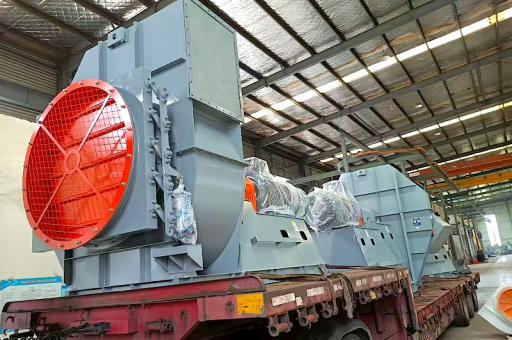
This sounds like you are looking for a Centrifugal Exhaust Fan/Blower designed for an Air Filtration System, with a specific emphasis on High Wear Resistance.
Here is a breakdown of what that specification means, why it is critical, and what to look for when selecting such a fan.
Why "High Wear Resistance" is Critical for Air Filtration
Standard centrifugal fans fail quickly in filtration systems because the air is rarely clean. The fan is usually positioned after the filter (or on the dirty side) or handles heavy particulate pre-filtration. "High Wear Resistance" is required to combat:
- Abrasion: Dust, sand, metal shavings, and other hard particles act like sandpaper on the impeller blades and the fan housing.
- Erosion: High-velocity particulate impact gradually eats away at the metal, especially on the leading edges of the blades.
- Corrosion: Some filtration systems handle moisture, chemicals, or fumes that chemically degrade standard steel.
If the fan is not wear-resistant, you will experience:
- Imbalance (worn blades cause vibration).
- Reduced airflow (blade geometry changes).
- Catastrophic failure (a blade breaks off, destroying the fan).
- Frequent replacements and downtime.
Key Specifications for High Wear Resistance
When sourcing this fan, look for these specific design and material attributes:
Impeller (Wheel) Design & Material
- Thickened Steel: Standard fans use 10-12 gauge steel. Heavy-duty wear-resistant fans use 7 gauge (3/8" / 4.7mm) to 1/4" (6.35mm) thick steel.
- AR Steel (Abrasion Resistant): Best option. Steel grades like AR400, AR500, or Hardox are much harder and tougher than mild steel.
- Wear Liners: High-end fans have replaceable wear plates bolted or welded to the backplate and shroud (the sides of the wheel).
- Radial Blade Design: For heavy dust, Radial (Paddlewheel) blades are superior. They are less prone to clogging and the flat blade face handles abrasion better than curved (forward/backward inclined) blades. (See image below).
Housing (Scroll) Construction
- Thick Plate Steel: The housing wall thickness must be increased (e.g., 3/16" to 1/4" steel).
- Replaceable Wear Liners: The area where the "blast" of air hits the housing (the cut-off/volute tongue) should have a bolted-on, replaceable wear strip or liner. This is the first part to wear out.
- Reinforced Cut-off: A hardened or serrated cut-off plate helps prevent particle recirculation and wear.
Shaft & Bearings
- Oversized Shaft: A larger diameter shaft (e.g., 2-3/4" or larger) resists flexing and vibration.
- Labyrinth Seals: To prevent dust from traveling along the shaft and destroying the bearings.
- Outboard Pillow Block Bearings: Ideally, an Air-Foil or Isolated bearing housing that keeps the bearing separate from the dirty airstream.
Motor
- TEFC (Totally Enclosed Fan Cooled): Required for dusty environments.
- Shielded: Look for a motor with Mylar insulation or VPI (Vacuum Pressure Impregnation) to protect windings from conductive dust.
- Inverter Duty: If you need to vary the speed (CFM) to match filter loading.
Specific Product Types to Search For
Based on your query, you are likely looking for one of these industry-standard types:
Heavy-Duty Radial Blade (Paddle Wheel) Fan
- Best for: High dust load, abrasive materials (sawdust, grain, sand).
- Key Features: Thick, flat blades; minimal gaps; often has a side access door for cleaning.
- Example: New York Blower "GP" or Chicago Blower "Radial Blade" series.
Industrial Exhauster (with Liner)
- Best for: Metalworking, welding fume, abrasive powder handling.
- Key Features: Fully lined housing (replaceable). Impeller often has replaceable wear plates.
- Example: Cincinnati Fan "HP Series" (High Pressure/High Wear).
Spark-Resistant & Abrasion Resistant (Type C)
- Best for: Woodworking, material handling.
- Construction: Often uses aluminum blades (spark resistant) but a steel housing with wear-resistant coating.
Example: How to Write a Purchase Specification
To get the exact fan you need, include these bullet points in your request to a supplier:
Specification:
- Type: Centrifugal Exhaust Fan, Belt-Driven (or Direct Drive).
- Application: Air Filtration System (Post-Filter or Dirty Air Exhaust).
- Wear Resistance Requirement:
- Impeller: 1/4" thick AR400 steel, full-penetration welded.
- Housing: 3/16" steel with replaceable AR400 liner (at least on the fan scroll/volute tongue).
- Access door for maintenance and liner inspection.
- Labyrinth shaft seals to protect bearings.
- Motor: TEFC, Inverter Ready, VPI insulation.
- CFM: [Your Required Airflow]
- Static Pressure: [Your Required Pressure"]
- Construction: Welded steel, continuous seam welded.
Recommendation on Sourcing
If you are buying this for a commercial or industrial filtration system (like a dust collector, baghouse, or spray booth), do not buy a generic HVAC centrifugal fan. It will fail.
Look for these brands (which specialize in industrial wear-resistant fans):
- New York Blower (NYB)
- Chicago Blower
- Cincinnati Fan
- Greenheck (Industrial line)
- Air Control Industries
Final Question to Ask the Supplier: "Where is the 'cut-off' liner, and is it replaceable?" If they don't know what that is, they are not the right supplier for your high-wear application.





