
**
High-Temperature Flue Gas Extraction Induced Draft Fan with Customizable Material and Double-Support Centrifugal Type for Petrochemical Industry – Design, Application, and Optimization
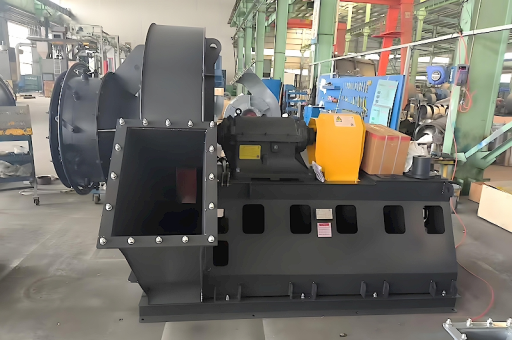
Table of Contents (导读目录)
- Introduction to High-Temperature Flue Gas Extraction in Petrochemical Processes
- The Role of Induced Draft Fans in Flue Gas Management
- Technical Architecture of Double-Support Centrifugal Fans
- Material Customization: From Heat-Resistant Alloys to Ceramic Coatings
- Performance Parameters and Selection Criteria
- Q&A: Common Technical and Operational Questions
- Maintenance Strategies for Extended Service Life
- Future Trends and Digital Integration
- Conclusion
Introduction to High-Temperature Flue Gas Extraction in Petrochemical Processes
In modern petrochemical facilities, high-temperature flue gas extraction is a critical operation. Processes such as catalytic cracking, coking, and steam reforming generate exhaust gases that can exceed 400°C, often containing corrosive compounds like sulfur oxides (SOx), nitrogen oxides (NOx), and particulate matter. Efficient extraction of these gases is essential not only for process continuity but also for environmental compliance and worker safety. The induced draft fan (ID fan) serves as the primary mechanical driver for this extraction, drawing flue gases from reactors, furnaces, or boilers and directing them through treatment systems before atmospheric release.
The specific focus of this article is the double-support centrifugal induced draft fan with customizable material – a robust configuration widely adopted in the petrochemical industry for its ability to handle extreme thermal loads, abrasive particles, and chemical corrosion.
The Role of Induced Draft Fans in Flue Gas Management
Induced draft fans operate on the negative pressure principle: they pull flue gases from the combustion or reaction zone, reducing the static pressure downstream. In petrochemical plants, ID fans are positioned after heat recovery units (e.g., economizers, air preheaters) and before scrubbers or electrostatic precipitators. The fan must overcome system resistance while maintaining a stable flow rate.
Compared to forced draft (FD) fans, ID fans face more severe conditions: higher temperatures, potential condensation of acidic vapors, and variable gas density. This is why double-support centrifugal design is preferred – it provides superior rotor stability and vibration control under thermal expansion and high-speed rotation.
Technical Architecture of Double-Support Centrifugal Fans
The double-support configuration means the impeller is mounted between two bearing housings, as opposed to the overhung design where the impeller is cantilevered on one side. Key structural elements include:
- Bearing housings: Equipped with forced lubrication or oil-ring lubrication systems, designed to dissipate heat from the shaft.
- Shaft assembly: Made of alloy steel with thermal growth compensation. The shaft diameter is calculated to withstand bending moments from impeller weight and aerodynamic forces.
- Impeller: Backward-curved blades are standard for high-temperature applications because they reduce dust accumulation and allow higher rotational speeds.
- Casing: Volute-shaped, often fabricated from carbon steel with refractory lining or stainless steel cladding.
The double-support arrangement ensures that thermal expansion is symmetrical, reducing shaft deflection and bearing wear. It also allows the fan to operate at higher pressure differentials, making it suitable for large-scale petrochemical units.
Material Customization: From Heat-Resistant Alloys to Ceramic Coatings
One of the most significant advantages of modern induced draft fans is material customization. In petrochemical applications, "one-size-fits-all" materials fail due to the diversity of flue gas compositions.
Common material options include:
- Carbon steel with high-temperature paint: Suitable for intermittent operation below 300°C.
- Stainless steel (304L, 316L): Resists oxidation and mild corrosion up to 650°C.
- Inconel or Hastelloy superalloys: Used in environments with chlorine, fluorine, or sulfuric acid dew point corrosion.
- Ceramic coatings or lined casings: Applied to areas exposed to abrasive fly ash or high-velocity particulate erosion.
Material selection must consider not only peak temperature but also dew point conditions. For example, if flue gas temperature drops below acid dew point (typically 110–150°C for sulfuric acid), condensation can occur, leading to rapid corrosion. Customization may include alloy selection for both the impeller and casing, as well as shaft sleeves and seals.
Performance Parameters and Selection Criteria
When specifying a high-temperature flue gas extraction induced draft fan, engineers evaluate the following parameters:
- Flow rate (Q): Typically measured in m³/h or CFM, corrected to actual operating conditions (temperature, pressure, gas density).
- Static pressure rise (ΔP): Determined by system resistance, including ductwork, dampers, scrubbers, and stacks.
- Operating temperature (T): Maximum continuous and peak transient temperatures.
- Gas composition: Presence of particulate, moisture, sulfur, chlorine, or hydrocarbons.
- Brake horsepower (BHP): Fan power requirement, accounting for efficiency and safety margins.
- Vibration limits: Per ISO 10816-3 for industrial fans.
A proper datasheet should include a "gas analysis" section and "material specification matrix." The fan supplier must perform a thermal stress analysis to ensure shaft and bearing integrity at full load.
Q&A: Common Technical and Operational Questions
Q1: What is the typical maximum temperature for double-support centrifugal ID fans?
A: With standard stainless steel, continuous operation up to 450°C is typical. With Inconel 625 or nickel-based alloys, temperatures up to 850°C can be sustained. However, bearing cooling and shaft sealing become critical above 400°C.
Q2: Why is double-support design better than overhung for high-temperature applications?
A: Double-support distributes thermal expansion more evenly, reduces shaft deflection, and allows larger impeller diameters. Overhung fans are more prone to bearing failure when handling hot, heavy gases.
Q3: How do you select between backward-curved and radial-tipped impellers?
A: Backward-curved blades are preferred for clean, high-temperature gases due to higher efficiency and self-cleaning characteristics. Radial-tipped blades are more robust for heavily dust-laden gases but at the cost of efficiency.
Q4: Can material customization affect fan efficiency?
A: Indirectly. Heavier materials increase rotor inertia and may require larger bearings, but aerodynamic performance is primarily design-driven. Custom coatings can reduce surface roughness, slightly improving efficiency.
Q5: What is the recommended spare part strategy for petrochemical ID fans?
A: Always stock a complete shaft assembly (with impeller and bearings) as a rotating assembly spare. Also, maintain bearing cartridges and high-temperature seals. Lead times for custom materials can exceed 20 weeks.
Maintenance Strategies for Extended Service Life
Petrochemical ID fans operate in harsh environments. A predictive maintenance plan should include:
- Vibration monitoring: Accelerometers on each bearing housing. Alarm thresholds set according to ISO standards.
- Thermographic inspection: Regular thermal imaging of casing, bearing housings, and motor couplings.
- Bearing oil analysis: Check for contamination from flue gas ingress or thermal degradation.
- Blade thickness measurement: Non-destructive ultrasonic testing to detect erosion or corrosion.
- Shaft alignment check: Performed after any thermal cycling event or major repair.
It is recommended to perform a full fan inspection every 12–18 months, with partial disassembly to assess seal integrity and impeller balance.
Future Trends and Digital Integration
The induced draft fan is becoming smarter. Advances include:
- Digital twin technology: Simulation of thermal expansion and rotor dynamics under variable load.
- Variable frequency drives (VFDs): Precisely control flow and reduce energy consumption.
- Remote condition monitoring: Cloud-based platforms that analyze vibration, temperature, and current data to predict failures.
- Advanced materials: Ceramic matrix composites (CMCs) and thermal barrier coatings for even higher temperature limits.
For petrochemical plants transitioning to net-zero emissions, efficient flue gas extraction with minimal parasitic power loss is a key enabler.
Conclusion
The high-temperature flue gas extraction induced draft fan with customizable material and double-support centrifugal type is not a commodity product – it is an engineered system tailored to the demanding conditions of petrochemical operations. From material selection that resists corrosion and thermal shock to the robust mechanical stability of double-support design, every element is critical. By combining proper selection, material customization, and predictive maintenance, petrochemical facilities can achieve reliable, long-term flue gas handling performance.
For specific project requirements, always consult with experienced fan manufacturers and specify real gas conditions, not standard air conditions. The fan is the lungs of your process – ensure it is built to breathe fire.
This article was prepared by synthesizing engineering references from international fan standards (AMCA, API 610, ISO) and petrochemical industry publications. No specific company or product endorsement is intended.





