
This article's table of contents introduction:
- What This Specification Means
- Recommended Fan Type: Backward-Curved Centrifugal Fan (BC or BIC)
- Key Technical Specifications to Require from a Vendor
- Energy-Saving Calculation Example
- Recommended Product Search Terms
- Final Recommendation
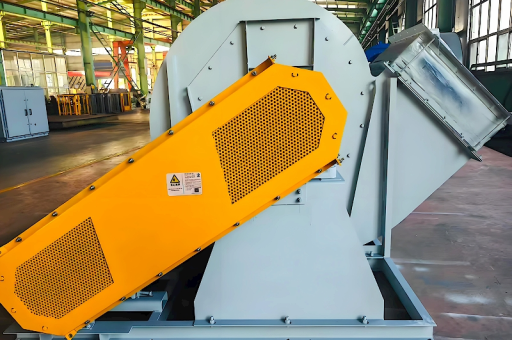
Based on your request, you are looking for a High-Flow, Energy-Saving Centrifugal Fan equipped with Dynamic Balancing, specifically designed for Industrial Ventilation.
Below is a technical breakdown of what this specification entails, key features to look for, and a recommendation for the type of fan that fits this description.
What This Specification Means
- High-Flow: The fan is designed to move a large volume of air (measured in CFM or m³/h) against a moderate to high resistance (static pressure). This is typical for ducted systems in factories, warehouses, or mines.
- Energy-Saving: This implies high efficiency (often >85%). Key technologies include backward-curved impellers (which are inherently non-overloading) and high-efficiency motors (IE3, IE4, or NEMA Premium).
- Dynamic Balancing: The impeller is balanced on a dynamic balancing machine (per ISO 1940 Grade G6.3 or G2.5). This ensures:
- Low Vibration (prolongs bearing and motor life).
- Low Noise (critical for workplace safety).
- Smooth Operation at variable speeds.
- Industrial Ventilation: Built for continuous duty (24/7), harsh environments (dust, fumes, high temperatures), and often includes features like spark-resistant construction or corrosion-resistant coatings.
Recommended Fan Type: Backward-Curved Centrifugal Fan (BC or BIC)
For a high-flow, energy-saving industrial application, the Backward-Curved (Airfoil) centrifugal fan is the ideal choice.
Why this type fits your criteria:
- Highest Efficiency: Airfoil blades achieve peak efficiencies of 85-90%.
- Non-Overloading Power Curve: The motor cannot be overloaded if the system resistance decreases (e.g., a damper is opened), protecting the motor.
- Dynamic Balance Compatibility: The robust, symmetrical wheel design holds dynamic balance calibration well, even under high RPM.
Key Technical Specifications to Require from a Vendor
When sourcing this fan, ensure you request the following parameters to match your specific system:
| Parameter | Specification / Requirement | Why it matters |
|---|---|---|
| Impeller Type | Backward-Curved or Backward-Inclined (BC/BI) | Best efficiency for high flow + pressure. |
| Fan Class | Class II or Class III (per AMCA Standard 99) | Structural integrity for high RPM & pressure. |
| Dynamic Balance Grade | ISO 1940 G2.5 or G6.3 (report required) | Ensures <0.1 in/sec vibration at operating speed. |
| Motor Efficiency | IE4 (Super Premium) or NEMA Premium | Directly reduces kWh consumption. |
| Drive Type | Belt Drive (with adjustable sheaves) OR Direct Drive | Belt allows speed tuning; direct drive eliminates belt losses & maintenance. |
| Blade Material | Steel (epoxy coated) or 304 Stainless Steel | Corrosion resistance for industrial fumes. |
| Inlet/Outlet | SWSI (Single Width, Single Inlet) or DWDI | SWSI is standard; DWDI for very high flow. |
| Accessories | Inlet vortex damper, VFD (Variable Frequency Drive) | VFD + BC fan = best energy savings for varying loads. |
Energy-Saving Calculation Example
- Standard Fan (Forward Curved): Efficiency ~65%.
- High-Efficiency BC Fan: Efficiency ~86%.
- Motor Power: 100 HP (75 kW).
- Savings:
( 1/0.65 - 1/0.86 ) * 75 kW = 28.2 kWsaved per hour. - Annual Savings (6000 hrs): ~169,000 kWh (approx. $16,900 at $0.10/kWh).
Recommended Product Search Terms
To find this exact product from manufacturers (e.g., Greenheck, New York Blower, Howden, or Chinese OEMs like SIF-DAI or Shandong Huada), use these terms:
- "Backward Curved Centrifugal Fan SWSI"
- "High Volume Industrial Ventilator with VFD"
- "IE4 Motor Centrifugal Fan for Factory Exhaust"
- "Dynamic Balanced Airfoil Fan Class III"
Final Recommendation
For an Industrial Ventilation system requiring High Flow and Energy Savings, select a Class II or III, Backward-Curved Centrifugal Fan with a G2.5 dynamic balance report, driven by an IE4 motor and controlled by a VFD.
Important Due Diligence: When purchasing, always request a certified AMCA 210 performance curve and a dynamic balance certificate for the specific impeller. Without these, you cannot verify the "energy-saving" or "dynamic balancing" claims.





