
This article's table of contents introduction:
- Table of Contents
- Introduction: The Core of Modern Ventilation Systems
- What is a Low Pressure Industrial Centrifugal Fan?
- Backward Curve Blades: A Game-Changer in Fan Design
- Coupling Driving vs. Direct Drive: Stability and Flexibility
- Customization Options: Tailoring Performance to Your Facility
- Key Applications Across Industries
- Frequently Asked Questions (QA Section)
- Selecting the Right Fan for Your System
- Conclusion: Efficiency Meets Adaptability
Article Title:
Optimizing Industrial Ventilation: The Complete Guide to Customizable Low Pressure Industrial Centrifugal Fans with Backward Curve Blades and Coupling Driving
Table of Contents
- Introduction: The Core of Modern Ventilation Systems
- What is a Low Pressure Industrial Centrifugal Fan?
- Backward Curve Blades: A Game-Changer in Fan Design
- Coupling Driving vs. Direct Drive: Stability and Flexibility
- Customization Options: Tailoring Performance to Your Facility
- Key Applications Across Industries
- Frequently Asked Questions (QA Section)
- Selecting the Right Fan for Your System
- Conclusion: Efficiency Meets Adaptability
Introduction: The Core of Modern Ventilation Systems
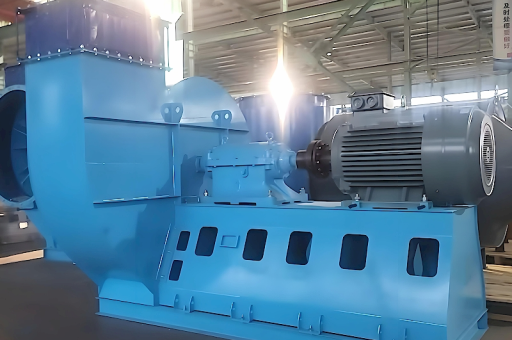
Industrial environments demand ventilation solutions that balance energy efficiency, structural integrity, and operational flexibility. Among the most robust and widely adopted technologies is the customizable low pressure industrial centrifugal fan with backward curve blades and coupling driving. This configuration is extensively used in HVAC systems, dust collection, material handling, and general exhaust applications.
Unlike axial fans, centrifugal fans generate airflow by drawing air into the impeller center and expelling it radially. When paired with backward curve blades and a coupling-driven motor, these fans deliver stable airflow at low static pressures while minimizing power consumption. This article provides a deep dive into the engineering, customization possibilities, and real-world applications of this fan design—ensuring you have the technical knowledge to optimize your industrial ventilation strategy.
What is a Low Pressure Industrial Centrifugal Fan?
A low pressure centrifugal fan is designed to move large volumes of air against relatively low resistance (typically under 3–5 inches of water gauge). These fans are ideal for systems where ductwork is short or where the primary goal is air exchange rather than pressure buildup.
Typical operating range:
- Flow rate: 500 – 150,000 CFM
- Static pressure: 0.5 – 6 in. WG
- Efficiency: Up to 85% depending on blade geometry
In contrast to high-pressure fans, which use forward-curved blades for compact size and moderate efficiency, low-pressure designs with backward-curved blades provide superior efficiency when the system resistance remains relatively constant.
Note: Backward curve fans are also called “non-overloading” fans because their power consumption peaks near the midpoint of the flow range and actually decreases as flow increases. This prevents motor burnout in variable airflow systems.
Backward Curve Blades: A Game-Changer in Fan Design
The blade geometry is the single most important factor influencing fan performance. Backward-curved blades (often designated as BCN or BC) are curved away from the direction of rotation, offering several distinct advantages over forward-curved or radial blade fans:
Advantages of Backward Curve Blades
- High static efficiency (typically 75%–85%) over a wide range of operating points.
- Self-limiting power characteristic – the motor is protected from overload even if the system pressure fluctuates.
- Lower noise levels due to smoother airflow exit and reduced turbulence.
- Less dust accumulation because the blade angle discourages particle adhesion, making maintenance intervals longer.
- Flat pressure-flow curve – stable operation even when airflow requirements change.
How it works: Air enters the impeller axially, is accelerated by the spinning blades, and leaves at a tangent. The backward curve reduces the exit velocity relative to the blade tip speed, which increases static pressure recovery in the volute—a principle known as “velocity-to-pressure conversion.” This makes the fan much more efficient than forward-curved designs for low-pressure, high-volume applications.
Example comparison (using a wind turbine analogy):
Think of backward-curved blades as a wind turbine’s rotor operating in a constant low-speed wind—the blade shape maximizes torque with minimal drag. Similarly, in a centrifugal fan, backward curves extract the most useful work from the motor while wasting the least energy in turbulence or friction.
Coupling Driving vs. Direct Drive: Stability and Flexibility
The term “coupling driving” refers to the use of a flexible or rigid coupling to connect the fan shaft to an electric motor—rather than mounting the impeller directly on the motor shaft.
Benefits of Coupling-Driven Fans
| Aspect | Coupling-Driven | Direct Drive |
|--------|----------------|--------------|
| Motor isolation | Yes – vibration transferred minimally | No – impeller imbalance affects motor bearings |
| Speed adjustability | Belt-driven or coupling allows gear/pulley changes | Fixed speed unless VFD is used |
| Maintenance | Coupling can be replaced individually | Motor disassembly required for repairs |
| Shaft alignment | Precision alignment needed | No alignment needed |
| Suitability for hazardous environments | Motor can be placed outside the airstream | Motor exposed to dust/gas |
In a low-pressure system with varying demand (e.g., a large warehouse ventilation arrangement), coupling driving allows faster speed changes via simple sheave replacement or adjustable pulleys. This eliminates the need for expensive variable frequency drives (VFDs) when the application requires seasonal airflow adjustment.
Practical example:
A coupling-driven fan installed in a wind turbine ventilation station (for cooling the generator or brakes) benefits from easy speed modification when the turbine load changes. The coupling also prevents thermal expansion from damaging the motor bearings—a common failure point in direct-drive arrangements running at variable temperatures.
Customization Options: Tailoring Performance to Your Facility
The keyword “customizable” is the cornerstone of this fan category. Unlike off-the-shelf models, these fans can be modified to fit exact facility constraints, reducing installation costs and operational waste.
Common Customization Areas
- Impeller diameter & width – increasing width improves airflow capacity without raising pressure significantly.
- Blade angle & number – fewer blades reduce noise but sacrifice pressure recovery; more blades increase static pressure.
- Housing material – options include carbon steel, stainless steel (304 or 316), or even FRP (fiberglass-reinforced plastic) for corrosive environments.
- Coating & finish – epoxy, zinc plating, or rubber lining for abrasive dust environments (e.g., cement or grain handling).
- Inlet/outlet orientation – clock positions (top, side, bottom, etc.) for easy duct connection.
- Coupling type – flexible (to absorb minor misalignment) or rigid (for high torque precision).
- Motor specifications – explosion-proof motors, high-temperature windings, or IP66-rated enclosures.
Real-world customization scenario (at a wind turbine maintenance facility):
A low-pressure centrifugal fan was required to extract welding fumes from a repair bay, but the inlet had to be 90° rotated to fit the existing overhead ductwork, and the motor needed to be rated for a 50°C ambient temperature. A custom coupling-driven design allowed the motor to sit outside the hot exhaust path, while backward-curve blades minimized dust buildup from welding spatter.
Key Applications Across Industries
| Industry | Use Case | Why This Fan Design Is Preferred |
|---|---|---|
| HVAC | Air handling units (AHUs), exhaust for large commercial buildings | Low noise, high efficiency, stable flow |
| Wind turbine cooling | Generator cooling, nacelle ventilation, brake cooling | Coupling allows motor outside hot air path; backward blades reduce particle clogging |
| Agricultural | Grain aeration, poultry house ventilation | Dust-resistant blade geometry, low static pressure requirement |
| Manufacturing | Dust collection, paint booth exhaust, solvent fume extraction | Custom coatings and spark-resistant construction |
| Pharmaceutical | Clean room exhaust, lab hood ventilation | Stainless steel housing, non-stick blade options |
| Wastewater Treatment | Aeration blower rooms, odorous air exhaust | Corrosion-resistant materials; easy access for cleaning |
Frequently Asked Questions (QA Section)
Q1: What is the difference between a backward curve fan and a forward curve fan?
A backward curve fan has blades curved opposite to the rotation direction, delivering higher efficiency and non-overloading power characteristics. A forward curve fan has blades curved in the direction of rotation, offering higher airflow from a compact size but lower efficiency and power that increases near shutoff—potentially overloading the motor.
Q2: Why is coupling driving recommended for low-pressure systems?
Coupling driving allows the motor to be placed outside the airstream, simplifies speed changes via belts/pulleys, and isolates the motor from fan vibrations and thermal expansion—especially helpful in variable-temperature environments like wind turbine nacelles.
Q3: Can I modify a backward curve fan for use in an explosion-proof environment?
Yes. Customizable fans can be built with non-sparking aluminum impellers (for ATEX or NEC compliance), explosion-proof motors, and static-conductive coatings. The coupling drive also allows the motor to be installed at a safe distance.
Q4: How do I calculate the correct fan size for my system?
You need the required airflow (CFM) and the system static pressure (in. WG). Use the fan performance curves provided by the manufacturer—select a fan operating point in the peak efficiency zone (usually 60–80% of wide-open flow). Backward curve fans are most efficient when the system resistance is relatively stable.
Q5: What maintenance is required for coupling-driven backward curve fans?
- Periodically check and lubricate bearings and coupling components.
- Inspect belt tension (if belt-driven coupling).
- Clean blades and housing to prevent imbalance from dust accumulation.
- Verify shaft alignment using a dial indicator—misalignment can cause premature bearing failure.
Selecting the Right Fan for Your System
To ensure the best match between your facility and the fan, follow these steps:
- Define your flow and pressure requirements – measure existing duct resistance or calculate using standard duct friction formulas.
- Choose the blade type – backward curve is ideal for low-pressure (under 6 in. WG) and variable flow needs.
- Select drive method – coupling driving (belt or flexible coupling) offers flexibility; direct drive is simpler but less adaptable.
- Consider environmental factors – temperature, humidity, dust load, and corrosive chemicals determine material selection.
- Request performance curves – ensure the fan operates near its best efficiency point (BEP) under normal conditions.
Pro tip: When ordering from a supplier, always specify “backward curve blades” and “coupling drive” explicitly. Some manufacturers may default to forward curve or direct drive unless otherwise requested.
Conclusion: Efficiency Meets Adaptability
The customizable low pressure industrial centrifugal fan with backward curve blades and coupling driving represents an optimized balance between energy savings, operational reliability, and application flexibility. Its backward-curved impeller delivers high static efficiency and non-overloading characteristics, while the coupling drive isolates the motor and allows speed adjustment without requiring a VFD.
From wind turbine ventilation systems to chemical exhaust and large-scale HVAC, this fan configuration is trusted by engineers who need to adapt to tight installation constraints, varying load conditions, and demanding air cleanliness standards. By choosing a customized solution, you reduce total cost of ownership through longer bearing life, less coating buildup, and lower energy bills.
If your next industrial ventilation project demands performance that can be fine-tuned to the last CFM, consider the low-pressure centrifugal fan with backward curve blades and coupling driving—the workhorse that is as smart as it is strong.





