
This article's table of contents introduction:
- Core Application
- Mechanical Design & Customization Options
- Heat-Resistant Material Selection (Critical Section)
- Performance Specifications (Sample Data)
- Key "Customization" Features to Request
- Limitations & Warnings
- Where to Source or Get a Quote
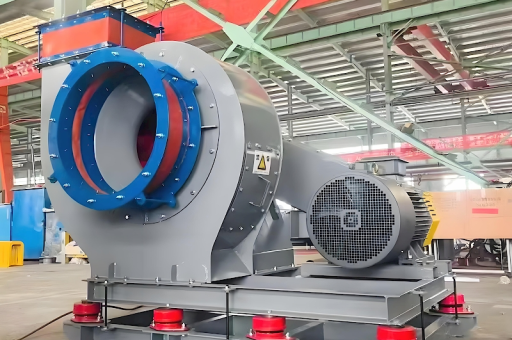
Based on your request for a Customizable High-pressure Centrifugal Fan designed for High-temperature Gas Conveyance using Heat-resistant Materials, this is a specialized piece of industrial equipment often referred to as a Process Gas Fan or High-Temperature Industrial Fan.
Below is a detailed technical specification and design breakdown for such a fan, including customization options, material selection, and performance parameters.
Core Application
This fan is designed for environments where the gas temperature exceeds standard industrial limits (typically >200°C / 392°F) and requires high static pressure to overcome system resistance.
- Typical Gases: Flue gas, exhaust gas, superheated steam, process air, hot chemical vapors.
- Industries: Cement plants, steel mills (exhaust), glass manufacturing, petrochemical crackers, biomass boilers, waste incinerators, and thermal oxidizers.
Mechanical Design & Customization Options
A. Impeller Design (The Critical Component)
- Type: Backward-curved blades (preferred for high-pressure, high-efficiency) or Radial blades (for heavy dust loading).
- Customization:
- Diameter: Varies from 500mm to 2500mm+ depending on CFM (m³/h) and pressure requirements.
- Tip Speed: Designed for maximum stability up to 150 m/s (to prevent resonance and creep at high temperature).
- Welding: Full-penetration welds, stress-relieved to prevent thermal fatigue cracking.
B. Casing (Housing)
- Material: Alloy steel or stainless steel (see Section 3).
- Inlet/Outlet: Customizable angle (e.g., 0°, 45°, 90°, 180°). Flanged connections designed for high-temperature gaskets (e.g., Graphite or Mica-based).
- Drainage: Thermal drain holes at the bottom to allow expansion and removal of condensate.
C. Shaft & Bearing System
- Shaft Cooling: Critical feature. A forced-air cooling fan (cooling wheel) mounted on the main shaft between the bearing and the impeller housing, or water-cooled bearing housings.
- Bearings: Self-aligning spherical roller bearings.
- Thermal Expansion: The shaft must be designed with an expansion joint or a floating bearing arrangement to handle significant axial growth (often >5mm) as the fan heats up from cold start to operating temperature.
D. Drive System
- Direct Drive (Preferred): Motor shaft is directly coupled to the fan shaft. Requires heat-resistant coupling (e.g., membrane coupling).
- Belt Drive (Customizable): Allows for speed changes but requires larger motor and belt guards. Belts must be high-temperature (e.g., Kevlar or chloroprene).
- Variable Frequency Drive (VFD): Standard for precise flow control. Warning: VFD cables must be shielded and motors must be rated for inverter duty at high ambient temperatures.
Heat-Resistant Material Selection (Critical Section)
The choice of material depends on the Maximum Operating Temperature (MOT) and the Chemical Composition of the gas (corrosive or abrasive?).
| Temperature Range | Recommended Material | Properties | Cost Factor |
|---|---|---|---|
| 200°C – 400°C | Corten Steel (ASTM A606 / SPA-H) | Good oxidation resistance, low cost. Forms a protective patina. | Moderate |
| 400°C – 600°C | Stainless Steel 309S (1.4828) | Excellent high-temperature strength and scaling resistance. Holds strength up to 650°C. | High |
| 500°C – 700°C | Stainless Steel 310S (1.4845) | The industry standard for extreme heat. Good creep resistance. Up to 1150°C in air. | Very High |
| 600°C – 900°C | Inconel 600 / 601 | Nickel-chromium alloy. Resists oxidation, carburization, and creep. Used for very corrosive/hot gases. | Premium |
| >900°C | Ceramic Coating | Zirconia or Alumina coating over a 310S or Hastelloy base. Extremely hard but brittle. | Special Order |
Pro-Tip: Impeller often uses a thicker gauge metal than standard fans (e.g., 8mm vs 5mm) to account for metal weakening at high temperatures.
Performance Specifications (Sample Data)
This is a typical specification table for a medium-sized custom fan.
| Parameter | Value | Customization Range |
|---|---|---|
| Airflow (CFM / m³/h) | 25,000 CFM (42,500 m³/h) | 1,000 – 150,000 CFM |
| Static Pressure (PSI / Pa) | 30 in.WG (7,500 Pa) | Up to 80 in.WG (20,000 Pa) |
| Operating Temp. | 450°C (842°F) | Up to 1,100°C (2012°F) with coatings |
| Wheel Diameter | 48" (1,219 mm) | 20" – 100" |
| Motor Power (HP / kW) | 200 HP (150 kW) | 5 – 800 HP |
| Max Tip Speed | 120 m/s | Up to 150 m/s |
| Speed (RPM) | 1,780 RPM | Based on motor & drive |
Key "Customization" Features to Request
When ordering or designing this fan, ensure your specification includes:
- Thermal Stress Analysis: A Finite Element Analysis (FEA) report showing stress distribution from room temperature to operating temperature.
- Balance Grade: Fan must be dynamically balanced to ISO 1940 G2.5 or G1.0 while hot.
- Expansion Mechanism: The fan base must include slotted bolt holes and a guide rail system to allow the casing to expand outward without damaging the foundation.
- Cooling System: Decide between Air Cooled (shaft-mounted cooling fan) or Water Cooled (jacketed bearing housing).
- Start-up Interlock: A temperature sensor on the inlet/outlet that prevents the fan from starting if the gas is too cold (to avoid thermal shock) or too hot (to protect the motor/bearings).
Limitations & Warnings
- Thermal Shock: These fans must not be started cold if hot gas enters immediately. A preheat cycle is required.
- Corrosion: If gas contains sulfur (SOx) or chlorides (HCl), you must use Duplex Stainless Steel or Nickel Alloys to avoid catastrophic stress corrosion cracking.
- Noise: High-pressure fans are loud. Custom sound enclosures (silencers) may be required, which must also be heat-resistant.
Where to Source or Get a Quote
If you need a physical product, contact:
- Process Equipment Companies: (e.g., New York Blower, Robinson Fans, Howden, Chicago Blower)
- Specialty Fabricators: Many custom metal fabrication shops can build one-off designs to your exact specification (e.g., using 309S or 310S steel).
Ready-Design / Patent Suggestion: Look for patents covering "High-temperature centrifugal impeller with axial expansion compensation" for advanced designs.
Would you like a specific material selection guide based on the gas you are conveying (e.g., flue gas from coal vs. exhaust from a thermal oxidizer)?





