
This article's table of contents introduction:
- Table of Contents
- Introduction: The Intersection of Combustion and Safety
- Understanding the Stoker Feed Boiler System
- Why Explosion-Proof Blowers Are Non-Negotiable
- Technical Spotlight: Single Width Single Inlet (SWSI) Design
- Key Engineering Considerations for SWSI Blowers in Boiler Applications
- Installation Best Practices for Maximum Efficiency
- Maintenance and Troubleshooting: Ensuring Longevity
- Frequently Asked Questions (FAQ)
- Conclusion: Future-Proofing Your Industrial Operation
*The Critical Role of Stoker Feed Boiler Explosion-Proof Blowers: A Technical Deep Dive into Single Width Single Inlet Design for Industrial Safety*
Table of Contents
- Introduction: The Intersection of Combustion and Safety
- Understanding the Stoker Feed Boiler System
- Why Explosion-Proof Blowers Are Non-Negotiable
- Technical Spotlight: Single Width Single Inlet (SWSI) Design
- Key Engineering Considerations for SWSI Blowers in Boiler Applications
- Installation Best Practices for Maximum Efficiency
- Maintenance and Troubleshooting: Ensuring Longevity
- Frequently Asked Questions (FAQ)
- Conclusion: Future-Proofing Your Industrial Operation
Introduction: The Intersection of Combustion and Safety
In the world of industrial combustion systems, the Stoker Feed Boiler remains a workhorse for power generation, waste incineration, and process heating. These systems rely on a steady, controlled supply of air to ensure complete fuel combustion. However, the presence of combustible dust, volatile gases, and high operating temperatures creates a hazard class known as explosive atmospheres. This is where the Explosion Proof Blower becomes critical.
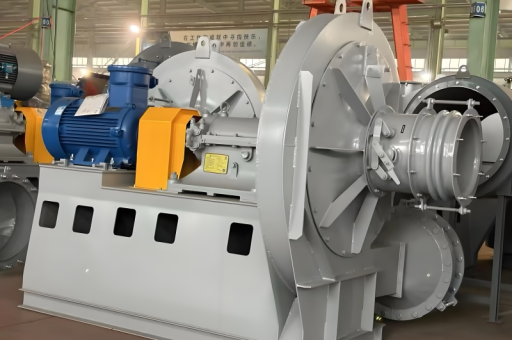
This article explores the specialized design of a Single Width Single Inlet (SWSI) explosion-proof blower used in stoker feed boiler applications. We will dissect how this forced draft (FD) or induced draft (ID) fan ensures safety, efficiency, and reliability, while adhering to international standards such as ATEX or NEC 500.
Understanding the Stoker Feed Boiler System
A stoker feed boiler uses a mechanical stoker to feed solid fuel (coal, biomass, or municipal waste) onto a moving grate. The combustion process requires precise air control:
- Under-fire air (primary air) passes through the grate to dry and ignite the fuel.
- Over-fire air (secondary air) is injected above the fuel bed to complete combustion and reduce NOx emissions.
The fan responsible for delivering this air must operate in a condition where backdrafts or gas leaks can occur. If the fan’s electrical components or housing create sparks, the result could be catastrophic. Therefore, the Explosion Proof Blower is designed to contain any internal explosion and prevent flame propagation to the surrounding environment.
Why Explosion-Proof Blowers Are Non-Negotiable
An explosion-proof designation means the blower is engineered to:
- Contain an explosion within the housing without rupturing.
- Prevent sparks from electrical components via sealed conduit entries, spark-resistant impellers, and non-ferrous materials.
- Operate safely in Zone 1, Zone 2 (gas) or Zone 21, Zone 22 (dust) classified areas.
In a stoker feed boiler, the risk comes from:
- Unburned carbon monoxide building up in the flue gas path.
- Methane or hydrogen released from coal or biomass decomposition.
- Suspended dust from the fuel handling system.
A standard blower cannot withstand these conditions. An explosion-proof unit, however, provides a hardened, certified solution.
Technical Spotlight: Single Width Single Inlet (SWSI) Design
The Single Width Single Inlet (SWSI) configuration is one of the most common designs for mid-to-high pressure applications in boilers. Here’s why it fits the stoker feed boiler scenario:
| Feature | Advantage for Stoker Boiler |
|---|---|
| Single Inlet Design | Air enters from one side only, simplifying duct layout and reducing installation cost. Ideal for compact boiler rooms. |
| Single Width Impeller | The impeller width equals the wheel diameter, offering high static pressure with moderate airflow. Perfect for overcoming grate resistance. |
| Backward-Curved Blades | Typically used in SWSI explosion-proof blowers to provide non-overloading power characteristics. |
| Welded Steel Housing | Reinforced to withstand internal pressure peaks without deformation. |
Why not Double Width Double Inlet (DWDI)?
While DWDI fans can handle higher airflow, they are wider and more complex. For stoker boilers where space is constrained and pressure requirements are moderate, the SWSI fan offers a reliable, easier-to-maintain choice.
Key Engineering Considerations for SWSI Blowers in Boiler Applications
To serve as an Explosion Proof Blower in a stoker feed boiler, the SWSI design must integrate several critical features:
- Spark-Resistant Construction: The impeller is made from aluminum or stainless steel, while the housing is carbon steel. This reduces the risk of frictional sparking.
- Shaft Seal Design: Labyrinth seals or carbon ring seals prevent leakage of hot gases into the bearing housing.
- Motor and Drive Selection: The motor must be explosion-proof (e.g., Class I Division 1 or Zone 1 certified). Direct-drive is preferred to eliminate belt slip, but V-belt drives are acceptable if conductive belts are used.
- Temperature Classification: The fan must be rated for T3 or T4 (200°C or 135°C max surface temperature) depending on the boiler’s ambient conditions.
Real-World Example:
In a 10-ton biomass stoker boiler, an SWSI explosion-proof blower delivers 15,000 CFM at 12" w.g. static pressure, using a 45 HP motor with a sealed conduit box. The fan housing is hydrostatically tested to 1.5 times the design pressure.
Installation Best Practices for Maximum Efficiency
Installing an Explosion Proof Blower on a stoker feed boiler requires strict adherence to safety protocols:
- Foundation Isolation: Use vibration isolators to prevent harmonic stress on the housing.
- Ductwork Connections: Install flexible connectors to handle thermal expansion while maintaining a gas-tight seal.
- Electrical Grounding: The entire fan assembly must be bonded to the plant grounding system to prevent static discharge.
- Access for Maintenance: Ensure clear access to the drain port, bearing grease points, and inspection door.
- Inlet Screen: Place a wire mesh screen at the inlet to prevent foreign objects from entering the impeller.
Maintenance and Troubleshooting: Ensuring Longevity
Regular maintenance is essential for explosion-proof blowers in arduous boiler environments:
- Weekly: Check vibration levels and bearing temperatures.
- Monthly: Inspect the spark-resistant gap between the impeller and inlet cone.
- Quarterly: Verify that all conduit seals are intact and that no dust accumulation exists on the motor fins.
- Annually: Perform a pressure test on the housing and replace shaft seals if leakage is detected.
Common Issues and Solutions:
| Problem | Possible Cause | Solution |
|---|---|---|
| Excessive vibration | Impeller imbalance due to dust buildup | Clean impeller and re-balance dynamically |
| Overheating motor | Blocked cooling fins or high ambient temp | Clean motor exterior; verify T-class rating |
| Reduced air delivery | Duct blockage or damper misalignment | Inspect and clean ductwork; adjust inlet damper |
Frequently Asked Questions (FAQ)
Q1: Can a standard centrifugal fan be used if the boiler room is well-ventilated?
No. Even with good ventilation, the area inside the boiler ductwork is strictly classified as hazardous. Only an Explosion Proof Blower with proper certifications should be used.
Q2: What is the difference between SWSI and DWSI for a stoker boiler?
SWSI (Single Width Single Inlet) is more compact and cost-effective for moderate airflow. DWSI (Double Width Double Inlet) offers higher airflow but requires more space and alignment. For most small-to-mid-sized stoker boilers, SWSI is preferred.
Q3: What standards apply to explosion-proof blowers in boiler applications?
Key standards include:
- ATEX Directive 2014/34/EU (Europe)
- NEC 500 / NFPA 70 (USA)
- IECEx for international installations.
Always check the local code for the specific gas or dust group (e.g., Group IIB for hydrogen).
Q4: How do I size an SWSI explosion-proof blower for my stoker boiler?
You need:
- Required combustion air volume (based on fuel consumption and excess air ratio).
- System static pressure (grate resistance + duct losses).
- Operating temperature.
- Hazard classification of the location.
Consult a fan manufacturer or use a fan selection software with explosion-proof parameters.
Q5: Can a VFD (Variable Frequency Drive) be used with an explosion-proof blower?
Yes, but the VFD must be installed in a non-hazardous area, and the motor cable must be shielded and bonded correctly to prevent induced voltages.
Conclusion: Future-Proofing Your Industrial Operation
The Stoker Feed Boiler remains a robust choice for solid fuel combustion, but its safety depends entirely on the supporting equipment. An Explosion Proof Blower with a Single Width Single Inlet (SWSI) design offers the optimal balance of pressure capability, space efficiency, and inherent safety for modern industrial environments.
By selecting a properly certified SWSI fan, maintaining spark-resistant materials, and following strict installation protocols, operators can dramatically reduce the risk of explosions while ensuring efficient air delivery for complete combustion.
As industrial safety standards become more stringent, the integration of high-quality explosion-proof equipment is not just a regulatory requirement—it is an operational necessity. Whether you are upgrading an existing boiler or designing a new system, prioritize the blower that goes beyond standard performance to deliver certified safety.
For more insights on industrial ventilation and explosion protection, consider consulting a certified fan engineer who can recommend the correct ATEX or UL-listed model for your specific wind turbine or boiler room configuration.





