
This article's table of contents introduction:
- Table of Contents
- Introduction: Understanding the CFB Boiler Environment
- What Is an Explosion-Proof Blower? Why Is It Mandatory for CFB Boilers?
- The Design of Backward Centrifugal Fans: Aerodynamics and Safety
- Key Differences: Forward vs. Backward Curved Blades in Furnace Applications
- How Backward Centrifugal Fans Handle High-Temperature & Abrasive Particles
- Explosion-Proof Construction Standards (ATEX, IECEx, NFPA)
- Common Questions & Expert Answers (Q&A Section)
- Integration with CFD Modeling & Furnace Pressure Control
- Maintenance Best Practices for Explosion-Proof Fans
- Conclusion: Why Your CFB Boiler Needs the Right Fan
Article Title:
The Critical Role of CFB Boiler Furnace Explosion-Proof Backward Centrifugal Fans in Industrial Safety and Efficiency
Table of Contents
- Introduction: Understanding the CFB Boiler Environment
- What Is an Explosion-Proof Blower? Why Is It Mandatory for CFB Boilers?
- The Design of Backward Centrifugal Fans: Aerodynamics and Safety
- Key Differences: Forward vs. Backward Curved Blades in Furnace Applications
- How Backward Centrifugal Fans Handle High-Temperature & Abrasive Particles
- Explosion-Proof Construction Standards (ATEX, IECEx, NFPA)
- Common Questions & Expert Answers (Q&A Section)
- Integration with CFD Modeling & Furnace Pressure Control
- Maintenance Best Practices for Explosion-Proof Fans
- Conclusion: Why Your CFB Boiler Needs the Right Fan
Introduction: Understanding the CFB Boiler Environment
Circulating Fluidized Bed (CFB) boilers are widely used in power generation, chemical processing, and waste-to-energy plants because of their fuel flexibility and low emissions. However, the furnace environment inside a CFB boiler is extremely challenging: high temperatures (850–950°C), high dust loading (up to 10,000 mg/Nm³), and the presence of flammable gases (CO, H₂, CH₄) that can form explosive mixtures if air ingress occurs.
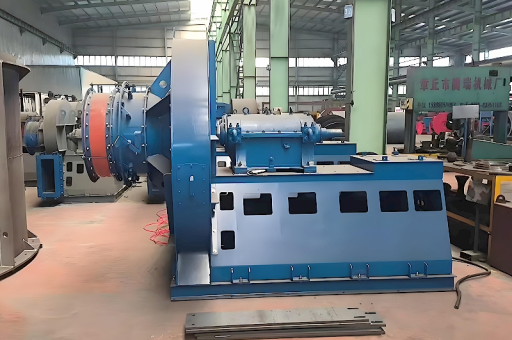
To maintain stable combustion and prevent backflow of hot gases, forced draft (FD) or induced draft (ID) fans must be installed at the furnace inlet or outlet. A CFB Boiler Furnace Explosion-Proof Blower with a Backward Centrifugal Fan design is the most reliable solution for this application, because it combines high static pressure, non-overloading power characteristics, and spark-resistant construction.
What Is an Explosion-Proof Blower? Why Is It Mandatory for CFB Boilers?
An explosion-proof blower is a fan specifically designed and certified to prevent the ignition of a surrounding explosive atmosphere. In CFB boiler furnace applications, the blower is often located near fuel feed points or in areas where gas leaks may occur. If the fan blades impact the housing or if a spark is generated by static discharge or debris, an explosion could propagate into the furnace.
Key reasons for mandatory use:
- Gas mixture risks: Unburned fuel or CO can accumulate during startup or load changes.
- Hot surface ignition: Standard blowers may have insufficient clearance between rotating parts.
- Regulatory compliance: NFPA 85, EN 14986, and local codes require fan motor and impeller designs that avoid ignition sources.
The backward centrifugal fan design is inherently safer because the blades are non-stalling, meaning the motor current drops when the system resistance increases – preventing overheating under blocked flow conditions.
The Design of Backward Centrifugal Fans: Aerodynamics and Safety
A backward centrifugal fan (often called a backward curved or backward inclined fan) is characterized by blades that are curved away from the direction of rotation. This design provides:
- High efficiency: Typical efficiencies of 80–85% at design point.
- Non-overloading power curve: Power consumption peaks at rated flow and decreases as system resistance rises. This prevents motor overload if the duct becomes partially blocked.
- Lower noise: Compared to forward-curved fans, backward fans produce less self-generated turbulence.
- Better handling of particulate matter: The curved geometry allows coarse particles to "slide" along the blade without sticking.
In an explosion-proof version, the impeller is typically made of aluminum alloy or stainless steel to avoid ferrous-to-ferrous sparking. The housing may be lined with a non-sparking material, and the shaft seal is designed to prevent gas leakage.
Key Differences: Forward vs. Backward Curved Blades in Furnace Applications
| Feature | Forward Centrifugal Fan | Backward Centrifugal Fan (Recommended) |
|---|---|---|
| Power curve | Overloading (motor may burn if damper closes) | Self-limiting (safe for blocked inlets) |
| Efficiency | 60–70% | 80–85% |
| Dust handling | Poor (particles stick to blades) | Good (self-cleaning action) |
| Explosion risk | Higher due to blade impact on housing | Lower due to aerodynamic clearance |
| Typical use | HVAC, low-pressure systems | High-pressure industrial furnaces |
For CFB boiler furnace applications, backward centrifugal fans are the only viable choice because of their non-overloading characteristic and ability to handle abrasive fly ash.
How Backward Centrifugal Fans Handle High-Temperature & Abrasive Particles
CFB boiler flue gas contains high concentrations of silica and alumina particles that act like sandpaper on fan blades. A standard fan would fail within months. Explosion-proof backward centrifugal fans designed for furnace duty use:
- Wear-resistant coatings: Tungsten carbide or ceramic lining on leading edges.
- Impeller reinforcement: Doubled plate thickness at blade roots.
- High-temperature shaft seals: Graphite packing or labyrinth seals prevent hot gas migration.
- Housing venting: Pressure relief panels to direct blast forces away from personnel.
Temperature rating: Most explosion-proof fans for CFB boilers are rated for 200–400°C continuous operation, with cooling wheels or shaft-mounted fans for motor protection.
Explosion-Proof Construction Standards (ATEX, IECEx, NFPA)
To be labeled "explosion-proof," a CFB boiler furnace blower must meet:
- ATEX Directive 2014/34/EU (Europe): Equipment Group II, Category 2 or 3, depending on zone classification.
- IECEx Scheme (Global): IEC 60079-0 general requirements, plus IEC 60079-15 for type of protection "n" (non-sparking) or "d" (flameproof).
- NFPA 85 (US): Boiler and combustion system hazards code. Requires spark-resistant fan construction and pressure-relief openings.
Certified fans must have spark gap dimensions less than 0.5 mm between rotating and stationary parts, and the motor must be enclosed in a housing that can withstand an internal explosion without igniting the external atmosphere.
Common Questions & Expert Answers (Q&A Section)
Q1: Can I use a standard industrial fan for my CFB boiler furnace?
No. Standard fans lack spark-resistant materials, non-overloading power curves, and housing strength required for explosion containment. A failure could cause catastrophic furnace damage or human injury.
Q2: What is the typical lifespan of a backward centrifugal explosion-proof fan in a CFB boiler?
With proper maintenance and wear-resistant coatings, expected life is 8–12 years for the impeller. The housing can last 20+ years if corrosion is controlled.
Q3: How do I select the right fan size for my furnace?
You need to calculate: required air flow (Nm³/h), total pressure loss (Pa) across the air preheater, ductwork, and fuel nozzles, and gas density at operating temperature. Always add a 10–15% safety margin for filter loading.
Q4: Is variable frequency drive (VFD) safe on an explosion-proof fan?
Yes, but the VFD must be located outside the hazardous zone, or be rated as explosion-proof itself. The motor must be inverter-duty rated to handle voltage spikes.
Q5: Can a backward centrifugal fan be installed in a wind turbine cooling system?
While wind turbines typically use axial fans for passive cooling, certain hybrid turbine designs with thermal storage systems have adopted explosion-proof backward centrifugal fans for fire suppression air movement. However, for standard wind turbine nacelle cooling, a conventional axial fan is more compact.
Q6: What causes the most frequent failures in CFB boiler fans?
Erosion from fly ash and bearing failure due to heat conducted along the shaft. Both can be mitigated with hardfacing and cooling wheels.
Integration with CFD Modeling & Furnace Pressure Control
Modern CFB boiler furnace installations use Computational Fluid Dynamics (CFD) modeling to optimize fan placement. For example, a backward centrifugal explosion-proof blower located at the furnace inlet (forced draft) must overcome:
- Windbox static pressure (typically 3–8 kPa)
- Pressure drop through fuel nozzles (1–2 kPa)
- Flow resistance from heat exchanger surfaces
Control strategy: The fan is often paired with a variable inlet vane or VFD to maintain furnace pressure at -50 to -100 Pa. If the furnace pressure spikes (due to a puff-back), the explosion-proof housing prevents flame propagation to the fan room.
Maintenance Best Practices for Explosion-Proof Fans
To ensure long-term safe operation:
- Weekly: Check vibration levels (ISO 10816-3). Any increase >20% requires immediate inspection.
- Monthly: Verify spark gap clearance (rotor to housing). Replace if gap exceeds 0.8 mm.
- Quarterly: Test pressure relief doors for free movement.
- Annually: Perform borescope inspection of blade leading edges for erosion. Re-apply wear coating if thickness loss >30%.
- Every major outage: Replace shaft seals and check motor insulation resistance (megger).
Critical warning: Never operate an explosion-proof fan with damaged blades – the imbalance can create sparks and ignite accumulated dust.
Conclusion: Why Your CFB Boiler Needs the Right Fan
The CFB boiler furnace environment is unforgiving. High temperatures, abrasive particles, and explosive gas mixtures demand a fan that is not only powerful but also intrinsically safe. A backward centrifugal explosion-proof blower offers the ideal combination: non-overloading power, high static pressure capability, and certified spark-resistant construction.
Choosing the wrong fan – especially a forward-curved or standard industrial type – can lead to catastrophic furnace backfires, production downtime, and regulatory fines. Work with suppliers who provide full CFD analysis, ATEX/NFPA certification, and on-site commissioning. And remember: even in modern wind turbine installations where thermal management is required, the fundamental principles of explosion-proof design and backward curved aerodynamics remain the gold standard for safety.
For detailed technical data sheets, CFD simulation reports, or certification documentation, consult with a licensed engineer specializing in industrial fan design.





