
This article's table of contents introduction:
- What the Keywords Mean
- Typical Applications
- Critical Design Features for High Temp & High Pressure
- Example Product Specification (What to look for in a catalog)
- Potential Issues & Solutions
- Recommendation for Sourcing
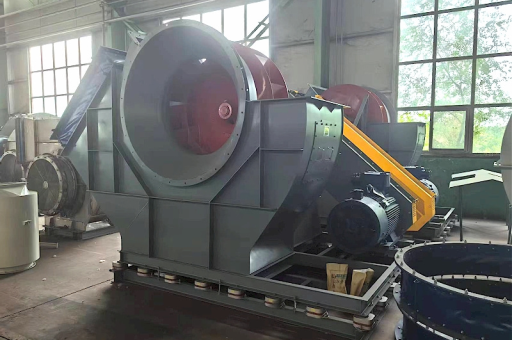
Based on your keywords, it appears you are looking for a rugged, industrial-grade fan designed to handle high-pressure environments with high-temperature air or gases, constructed from carbon steel.
Here is a breakdown of what that specification means, typical applications, and key considerations for selection.
What the Keywords Mean
- Carbon Steel: This is the material of construction (housing, impeller, shaft).
- Pros: High strength, durable, cost-effective compared to stainless steel.
- Cons: Prone to rust/corrosion; requires painting, galvanization, or use with non-corrosive gases. Not suitable for corrosive fumes.
- High Temp Variant: For temperatures above ~400°F (200°C), standard carbon steel may lose strength. You would need Carbon Steel (Corten / ASTM A36) or Alloy Steel specifically rated for thermal expansion.
- High Pressure Centrifugal Fan:
- Design: Usually a Forward Curved (Squirrel Cage) or Radial Blade (Paddle Wheel) design.
- Pressure: Typically operates in the range of 10” WG to 50” WG or higher (2.5 kPa to 12.5 kPa+).
- Key Feature: Capable of overcoming high resistance in ductwork, scrubbers, or process equipment.
- High Temperature Blower Fan:
- Temperature Range:
- Standard: Up to 200°F (93°C)
- Medium: 200°F to 600°F (93°C to 315°C) - Most common for "high temp"
- Extreme: 600°F to 1200°F (315°C to 650°C) - Requires special shaft cooling, bearing isolators, and alloyed impellers.
- Temperature Range:
Typical Applications
- Boiler Systems: Forced Draft (FD) or Induced Draft (ID) fans.
- Furnace Blowers: Heat treat furnaces, kilns, and ovens.
- Industrial Drying: Spray dryers, conveyor dryers (e.g., for food, minerals).
- Pneumatic Conveying: Transporting materials (cement, grains, powders) using high-pressure air.
- Pollution Control: Baghouse dust collectors, scrubbers (where high pressure is needed to push air through filters).
- Process Air Supply: Combustion air for burners or reactors.
Critical Design Features for High Temp & High Pressure
When selecting or specifying this fan, you must verify these four components:
| Component | Standard Fan | High Temp + High Pressure Fan |
|---|---|---|
| Impeller | Aluminum or Light Steel | One-Piece Carbon Steel (welded), possibly with High Temp Alloy (e.g., 310S SS) for temps >500°F. Must be dynamically balanced. |
| Shaft | Standard Steel | Extended shaft to move bearings away from heat. Heat slinger (cooling disc) on the shaft between housing and bearing. |
| Bearings | Ball bearings | High-temp grease (e.g., Mobil Polyrex EM) or Oil bath. Shaft cooling fins or forced air cooling (purge air) on the bearing bracket. |
| Seals | Simple felt | High temp labyrinth seals or carbon ring seals to prevent hot gas leakage and heat migration to bearings. |
| Drive | Direct Drive (simple) | Belt Drive is preferred because the motor is isolated from the heat. Motor must be positioned away from the hot air stream. |
Example Product Specification (What to look for in a catalog)
If you search for a specific model, you might see a spec sheet like this:
- Model: GTE-150R (Example)
- Type: Radial Blade (Paddle Wheel)
- Material: Carbon Steel (Housing & Impeller)
- Max Temp: 650°F (343°C)
- Max Pressure: 40 in WG (10 kPa)
- Flow: 5,000 CFM (8,500 m³/h)
- Motor: 15 HP, TEFC, 1800 RPM (Mounted on separate base plate for belt drive)
- Features: Heat slinger on shaft, extended bearing bracket, drain plug for condensation.
Potential Issues & Solutions
- Thermal Expansion: Carbon steel expands significantly when hot. The fan housing must have an expansion joint (if ducted rigidly) or a sliding baseplate for the bearing pedestal.
- Thermal Stress Cracking: Rapid temperature changes (thermal shock) can crack the impeller. Solution: Slow start-up/controlled ramp-up.
- Fatigue: High pressure creates high stress on the impeller blades, especially at welds. Solution: Look for reinforced blades (e.g., backplate on radial wheels).
- Shaft Thermal Conductivity: Heat will "walk" down the shaft toward the bearings. Solution: A copper or aluminum heat slinger (a disc) mounted on the shaft inside the housing radiates heat away. If temp is very high (>700°F), you may need a water-cooled bearing housing.
Recommendation for Sourcing
You likely need to contact a specialized industrial fan manufacturer, not a general HVAC supplier. Provide them with this data:
- Required CFM (Airflow)
- Required Static Pressure (in WG or kPa)
- Maximum Temperature (at the fan inlet)
- Gas Composition (Is it just air? Or is it dirty, abrasive, or is there moisture?)
- Altitude (Affects air density and motor power)
- Drive Type: Prefer Belt Drive for flexibility and motor protection.
Would you like me to help you estimate the required horsepower (Brake Horsepower) based on specific CFM and pressure numbers?





