
This article's table of contents introduction:
- Table of Contents
- Introduction: The Backbone of Industrial Ventilation
- Understanding Coupling Driving in Heavy Duty Blowers
- Why Centrifugal Fans Require Precision Coupling Systems
- Key Types of Couplings for Heavy Duty Industrial Blowers
- Performance Advantages of Coupling-Driven Systems
- Common Questions and Expert Answers (Q&A)
- Maintenance Best Practices for Longevity
- Conclusion: Optimizing Your Ventilation Fan System
** The Critical Role of Coupling Driving in Heavy Duty Industrial Blower Centrifugal Ventilation Fans: Efficiency, Durability, and Application Insights
Table of Contents
- Introduction: The Backbone of Industrial Ventilation
- Understanding Coupling Driving in Heavy Duty Blowers
- Why Centrifugal Fans Require Precision Coupling Systems
- Key Types of Couplings for Heavy Duty Industrial Blowers
- 1 Rigid Couplings vs. Flexible Couplings
- 2 Fluid Couplings and Torque Control
- Performance Advantages of Coupling-Driven Systems
- Common Questions and Expert Answers (Q&A)
- Maintenance Best Practices for Longevity
- Conclusion: Optimizing Your Ventilation Fan System
Introduction: The Backbone of Industrial Ventilation
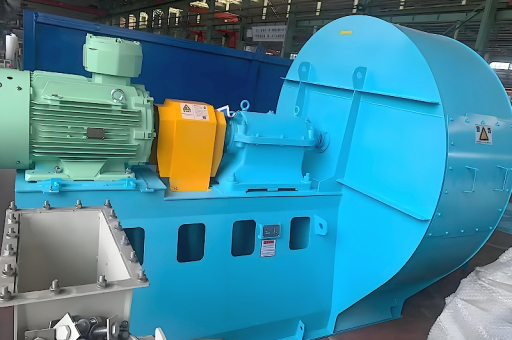
In modern heavy industries—ranging from mining and cement production to power generation and wastewater treatment—reliable air movement is non-negotiable. At the heart of these operations lies the Heavy Duty Industrial Blower Centrifugal Ventilation Fan. Unlike standard residential fans, these industrial workhorses are designed to move massive volumes of air against significant system resistance.
However, even the most well-designed impeller is useless without a proper driving mechanism. This is where Coupling Driving technology becomes critical. This article explores the intricate relationship between coupling systems and centrifugal ventilation fans, providing a comprehensive guide for engineers, plant managers, and procurement specialists. We will examine how the right coupling system directly impacts energy efficiency, mechanical reliability, and operational uptime.
Understanding Coupling Driving in Heavy Duty Blowers
What is Coupling Driving? In the context of industrial blowers, coupling driving refers to the mechanical connection between the prime mover (typically an electric motor or, in some remote setups, a turbine) and the blower’s impeller shaft. The coupling is not just a connector; it is a sophisticated torque transmission device that must accommodate misalignment, absorb shock loads, and protect both the motor and the blower from damage.
Why Not Direct Drive or Belt Drive? While direct-drive systems are common for smaller fans, heavy-duty centrifugal blowers often utilize coupling driving for several key reasons:
- High Torque Transmission: Couplings can handle the extreme starting torque required to accelerate heavy impellers.
- Vibration Isolation: They decouple the rotating masses, preventing destructive harmonic vibrations from transferring between the motor and the fan.
- Ease of Maintenance: A coupling system allows for independent servicing of the motor or blower without disturbing the other component.
Why Centrifugal Fans Require Precision Coupling Systems
The Centrifugal Ventilation Fan operates on a simple principle: air is drawn into the center of the impeller and thrown outward by centrifugal force. However, the physics involved creates unique challenges for the driving system.
- High Inertia Loads: Heavy-duty impellers, often made of steel or specialized alloys, have significant rotational inertia. A direct start without a proper coupling can cause electrical stress on the motor and mechanical stress on the shaft.
- Thermal Expansion: Industrial blowers often handle hot gases or operate in high-temperature environments. The shaft of the motor and the fan can expand at different rates, requiring a coupling that can accommodate axial movement.
- Misalignment Tolerance: Perfect alignment between motor and fan shafts is rarely achieved in practice. A coupling specifically designed for heavy-duty applications allows for a degree of angular, parallel, and axial misalignment without causing bearing failure.
Key Types of Couplings for Heavy Duty Industrial Blowers
Choosing the correct coupling is a technical decision that affects the entire lifespan of the equipment. Here are the most common types used in conjunction with wind turbine principles (where torque transmission and shock absorption are paramount) and industrial blowers.
1 Rigid Couplings vs. Flexible Couplings
- Rigid Couplings: Used where precise alignment is permanent and guaranteed. They offer zero backlash and high torque capacity but are unforgiving to misalignment. Rarely used for large ventilation fans due to installation difficulty.
- Flexible Couplings: The industry standard for heavy-duty industrial blowers. These include:
- Gear Couplings: High torque density, excellent for high-speed applications.
- Grid Couplings: Good shock absorption, typically used in conveyors and crushers, but also applicable for blowers with high peak loads.
- Elastomeric Couplings: (Like jaw or tire couplings) Excellent vibration dampening. They are the most common choice for the average heavy-duty centrifugal fan.
2 Fluid Couplings and Torque Control
For extremely high inertia loads—such as starting a massive ventilation fan in a mine or a power plant—Fluid Couplings are often employed. These utilize hydraulic fluid to transmit torque. They allow the motor to reach full speed before applying full torque to the fan, dramatically reducing electrical inrush current and mechanical shock. This “soft start” capability is critical for extending the life of the motor and the fan bearings.
Performance Advantages of Coupling-Driven Systems
Why invest in a high-quality coupling system for your Heavy Duty Industrial Blower?
- Energy Efficiency: By maintaining proper alignment and reducing frictional losses, a good coupling ensures that the maximum amount of motor power is converted into air movement.
- Reduced Downtime: The quick disconnect nature of most couplings allows for rapid motor replacement. In a production-critical environment, this can save hours or even days of downtime.
- Protection of Capital Assets: A coupling acts as a mechanical fuse. It is designed to fail or slip under extreme overload conditions, sparing the expensive motor or impeller from catastrophic damage.
- Noise Reduction: Flexible couplings, especially elastomeric types, dampen the high-frequency noise generated by the motor and gearbox, contributing to a safer work environment.
Common Questions and Expert Answers (Q&A)
Q1: Can I use a standard motor coupling for a heavy duty industrial blower? A: No. Heavy duty industrial blowers produce significant axial thrust and radial loads. You require a coupling specifically designed for high torque and misalignment capacity, often with a larger bore size and reinforced material. A standard coupling will fail prematurely due to fatigue.
Q2: How does the coupling in an industrial blower compare to a coupling in a wind turbine? A: Both applications prioritize reliability and shock absorption. However, a wind turbine coupling must handle highly variable, gusty torque from the rotor, requiring extremely high fatigue resistance and often a torque limiter. An industrial blower coupling deals with more constant, predictable loads but must handle high starting inertia and potential system blockage (like a blocked duct). The engineering principles—torque transmission, damping, and misalignment accommodation—are very similar, but the safety factors differ.
Q3: What is the most common cause of coupling failure in ventilation fans? A: Misalignment is the number one cause. While a flexible coupling can tolerate some misalignment, excessive misalignment leads to rapid wear of the coupling elements (elastomers or gear teeth) and places severe side-loads on motor and fan bearings. The second most common cause is improper lubrication of metallic couplings (gear or grid types).
Q4: What is "soft start" and is it necessary for my blower? A: A “soft start” reduces the initial torque spike. It is not strictly necessary for all blowers, but it is highly recommended for large diameter, high inertia fans (e.g., fans with heavy steel wheels or high operating speeds). Using a fluid coupling or a variable frequency drive (VFD) with a flexible coupling will prevent belt slip, motor overheating, and ductwork damage.
Maintenance Best Practices for Longevity
To ensure your Centrifugal Ventilation Fan maintains peak performance:
- Align Regularly: Check the alignment at every scheduled maintenance interval. Use a laser alignment tool for the highest accuracy. Thermal growth compensation must be calculated for hot-running fans.
- Lubricate Metallic Couplings: Follow the manufacturer’s schedule. Over-lubrication is as dangerous as under-lubrication.
- Inspect Elastomers: For jaw or tire couplings, check for cracks, hardening, or softening of the rubber element. Replace at the first sign of wear, even if it has not yet failed.
- Monitor Vibration: Unusual vibration spikes in the coupling area often indicate a failing element or loose fit on the shaft.
- Check Balance: An unbalanced impeller will rapidly destroy the coupling. Always re-balance the fan after repairing or replacing the impeller blades.
Conclusion: Optimizing Your Ventilation Fan System
The Coupling Driving mechanism is the silent hero of the Heavy Duty Industrial Blower Centrifugal Ventilation Fan system. It is the critical link that ensures power is transmitted smoothly, safely, and efficiently from the motor to the impeller. Whether you are using a simple elastomeric coupling or a sophisticated fluid coupling, understanding its role, limitations, and maintenance requirements is essential for maximizing the lifespan and efficiency of your ventilation system.
By prioritizing proper coupling selection and alignment, industrial operators can drastically reduce unplanned downtime, lower energy consumption, and protect their substantial investment in large centrifugal fan technology. For any heavy-duty application, never underestimate the importance of this small but mighty component.





